




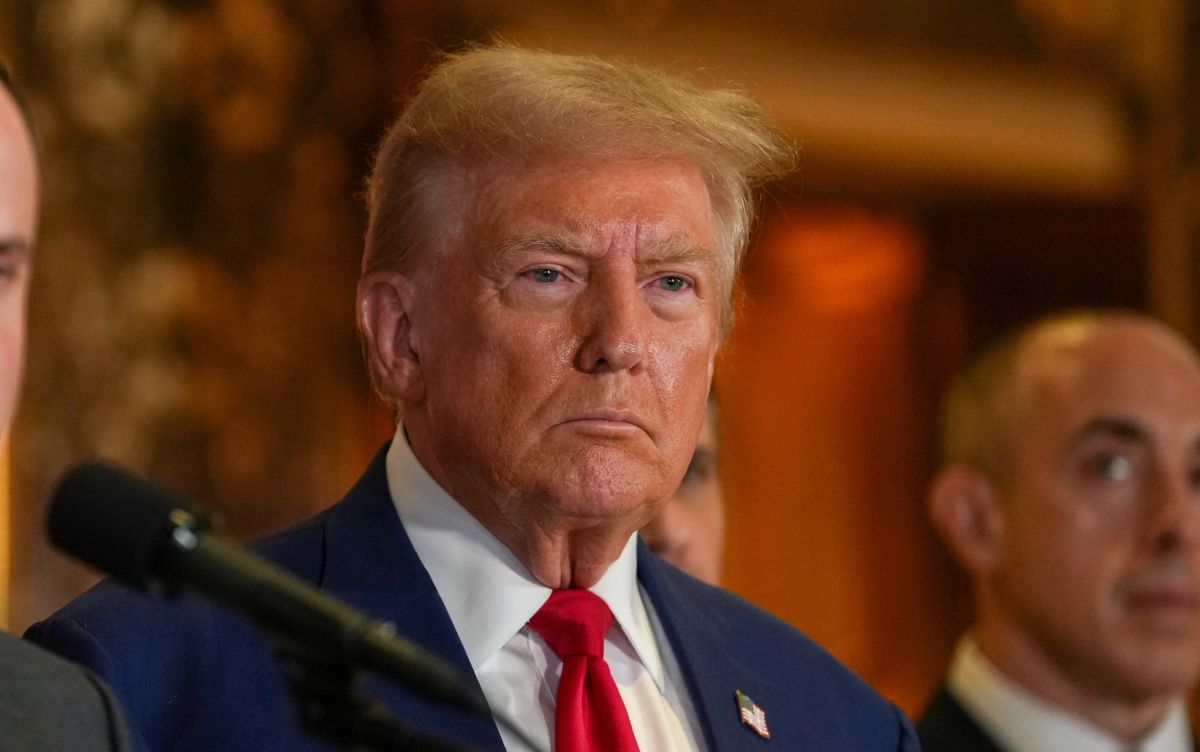
U.S. President Donald Trump last night announced a ban on entry to the U.S. for tourists from 12 countries, as well as travel restrictions for seven more countries, renewing measures that characterized his policy during his first term.
The ban takes effect on Monday at 12:01 AM, a time given to avoid the chaos that occurred at airports nationwide when a similar measure took effect, so to speak, without any warning in 2017.
Trump, who hinted at plans for a ban upon taking office in his second term in January, now appears to be on surer footing as he has the support of the Supreme Court.
The new travel ban has been issued for Afghanistan, Myanmar, Chad, Republic of Congo, Equatorial Guinea, Eritrea, Haiti, Iran, Libya, Somalia, Sudan, and Yemen.
There will also be increased restrictions for tourists from Burundi, Cuba, Laos, Sierra Leone, Togo, Turkmenistan, and Venezuela.
In a video posted on social media, Trump linked the new ban to the terrorist attack in Boulder, Colorado, on Sunday.
He indicated that this attack shows the dangers posed by some visitors who overstay their visas. The Department of Homeland Security stated that the attacker misused a tourist visa.
Trump said that some countries show insufficient screening or have previously refused to take back their citizens. His statements largely rely on the Department of Homeland Security’s annual report on visa overstays for tourists, business visitors, and students arriving by air or sea, singling out countries with a high percentage of those who remained in the country after their visa expired.
“I must act to protect the national security and national interests of the United States and its people,” Trump stated in the proclamation.
The inclusion of Afghanistan on this list angered some supporters who had worked to relocate some of them. The ban includes an exemption for Afghans on special immigrant visas, mainly people who worked most closely with the U.S. government during the two-decade war in that country.
"We cannot have open migration from any country where we cannot safely and reliably vet and screen… That is why today I am signing a new executive order placing travel restrictions on countries including Yemen, Somalia, Haiti, Libya, and numerous others." –President Trump pic.twitter.com/ER7nGM4TO2
— The White House (@WhiteHouse) June 4, 2025
“To include Afghanistan, a country whose people stood with American soldiers for 20 years, is a moral disgrace. It spits in the face of our allies, our veterans, and every value we claim to uphold,” said Sean Van Diver, president of the group dedicated to evacuating Afghans, AfthanEvac.
Trump wrote that Afghanistan lacks a competent or cooperative central authority for issuing passports and other civil documents and has inadequate screening measures. He also cited a high visa overstay rate.
Haiti, which was not included in the travel ban Trump imposed during his first term, is on the list this time due to high visa overstay rates and a large number of people who entered the U.S. illegally. Haitians continue to flee poverty, hunger, and political instability.
The ban was issued after Trump’s suspension of refugee resettlement, which left thousands of people stranded, many having sold their property and having airline tickets ready to come to the U.S. In the 12-month period leading up to September 2024, nearly 20,000 people came to the U.S. as refugees from Congo, which had the single largest number of arrivals. Afghanistan was second with about 14,000 arrivals.
The travel ban follows Trump’s executive order issued on January 20, which required the Department of Homeland Security and the Director of National Intelligence to produce a report on “hostile attitudes” towards the U.S. and to assess whether the entry of citizens from certain countries poses a risk to national security.
During his first term, Trump issued an executive order in January 2017 banning travel to the U.S. for citizens of seven predominantly Muslim countries – Iraq, Syria, Iran, Sudan, Libya, Somalia, and Yemen.
This was one of the most chaotic and confusing moments at the start of his presidency. Travelers from those countries were either barred from boarding flights to the U.S. or detained at U.S. airports if they landed. Among them were students and professors, as well as business people, tourists, or people visiting friends and relatives.
The order, often referred to as the Muslim ban or travel ban, underwent amendments through legal proceedings until one of its forms was upheld by the U.S. Supreme Court in 2018.
The ban applied to various categories of travelers and immigrants from Iran, Somalia, Yemen, Syria, and Libya, plus North Korea and some Venezuelan government officials and their families.
Trump and others defended the original ban, citing national security, stating that it was intended to protect the country and was not based on an anti-Muslim stance.
MORE TOPICS:
ĐOKOVIĆ IN ROLAND GARROS SEMI-FINALS: Nole crushes Zverev, sets up a match with Sinner! (VIDEO)
SERBIAN FLAG UNFURLED NEAR MONT BLANC: Jugoslav’s feat for students back home! (PHOTO)
MILICA GARDAŠEVIĆ FIRST IN ITALY: Great jump of 6.72 meters brings victory to Serbian athlete!
GREAT SUCCESS: Pavle Radenković wins a medal at the European English Language Olympiad!
Source: N1; Photo: Reuters