




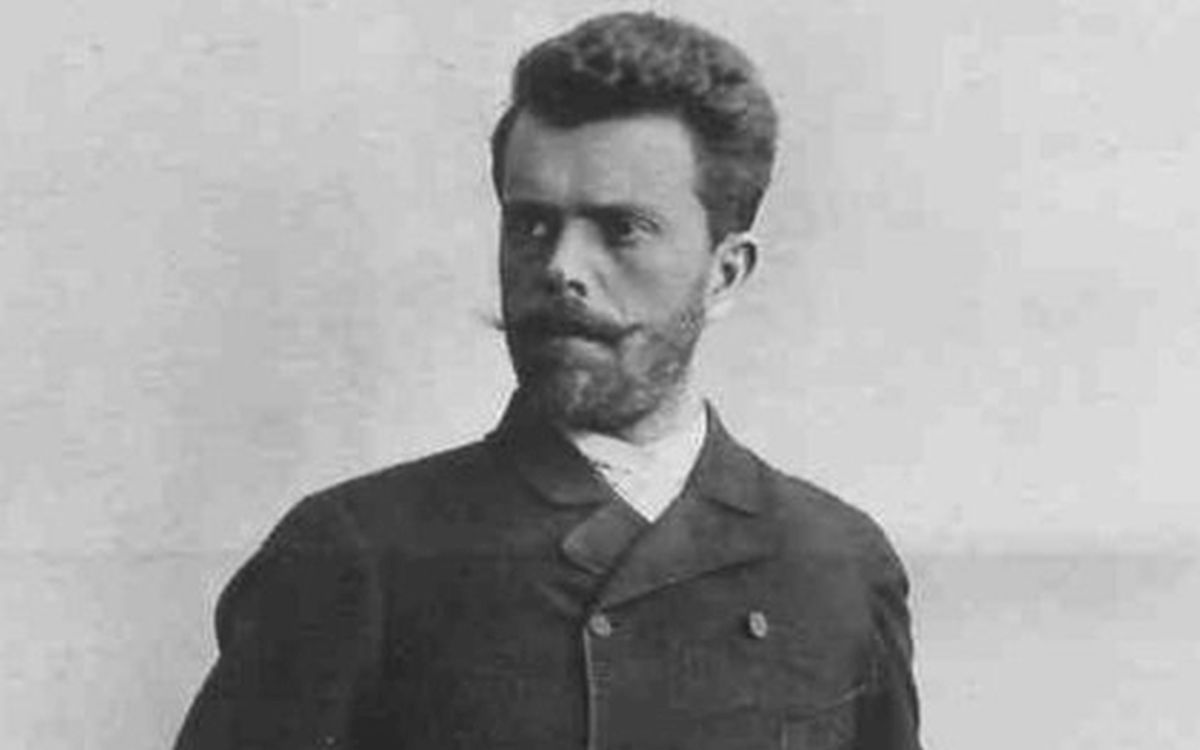
Vojislav Ilić was born in Belgrade on April 4, 1862, as the son of poet Jovan Ilić. Since childhood, he was in poor health. Although born into a poetic and respectable family, Ilić did not care much for school and studying, so he dropped out after the third year of high school. However, he continued to attend lectures at the Great School independently, but never took any exams. He actively participated in the political life of the student youth.
He was a participant in the Serbo-Bulgarian War of 1885.
He entered public service as a proofreader at the State Printing House in 1887. A few years later, he became a teacher at the Serbian school in Turnu Severin. In the same year, 1892, he also became a clerk at the Ministry of Internal Affairs, and in 1893, vice-consul in Priština.
Growing up among bohemians, Vojislav himself began to lead a bohemian lifestyle and frequent well-known Belgrade taverns. Right across from those taverns stood the Theater. At that time, a beautiful young actress named Zora, the daughter of the famous acting couple Kolarović, was beginning to make a name for herself on stage. She was admired by actors, directors, and audiences alike — and even Vojislav could not resist her beauty.

Although he was an excellent match for her, due to the commotion surrounding Zora, her father suddenly decided to marry her off to Milan Teodosijević, a sickly and much older widower and the cashier of the Savings Bank in Zemun. The young poet, experiencing the pain of first love, found comfort in writing verses, which gave rise to one of his early poems, The Wilted Flower:
I loved a lovely maiden,
A fragrant, white rose fair.
She was mine just last evening,
This morning others took her there;
The world has taken my joy,
That’s why I’m pale, a wilted boy.
The second great love of the young poet was the daughter of our famous poet Đura Jakšić — the beautiful Tijana. She was not indifferent to the young poet either and admired his poetic talent. After three years of romance, the young couple married in 1883. Soon they had a daughter, Zorka, and later a son, Momčilo. This new family life gave the young poet strength and inspiration, and his poems began to rise to the top of Serbian poetry.
However, two years later, the young poet experienced his greatest tragedy. First, his son died, followed soon after by his young wife, and then his little daughter.
FIND OUT MORE IN ENGLISH:
He poured his sorrow into poetry, and his true support and great comfort in misfortune became his sister-in-law — Tijana’s sister, whom Nušić described as “a girl with fiery eyes, warm-blooded, lively and frivolous” — Mileva. This led to Ilić’s third great love. Consumed by grief, the two young people grew close without even realizing it. From that came some of the poet’s most famous love verses:
And along the flowered shore, we wander, just the two,
Gently I hold your hand, and in the night I hear you
Breathing hard, your scattered sighs,
Your shy whispers, too…
However, their relatives put an end to the relationship. Even though they tried to see each other in secret and even briefly ran away to Varadin, Mileva was married off in Prokuplje, and shortly after died at the age of 21.
Vojislav then fully turned to taverns. From morning to night, he would sit at a tavern table, drink and write, trying to ease his sorrow, further damaging his already fragile health. His father Jovan, concerned for his son’s life, decided to arrange another marriage for him. A suitable match was found — the young Zorka Filipović, daughter of Ilić’s father’s friend, a cheerful and rosy girl. The wedding was soon arranged, and it became remembered as unusual and joyful — especially because the groom hit an Austrian gendarme who didn’t believe he was getting married, and ended up in jail.
Despite this, the couple spent five happy years together in marriage, which were cut short by the death of the young poet on January 21, 1894.
MORE TOPICS:
Source: Opanak.rs, Foto: Wikimedia Creative Commons