




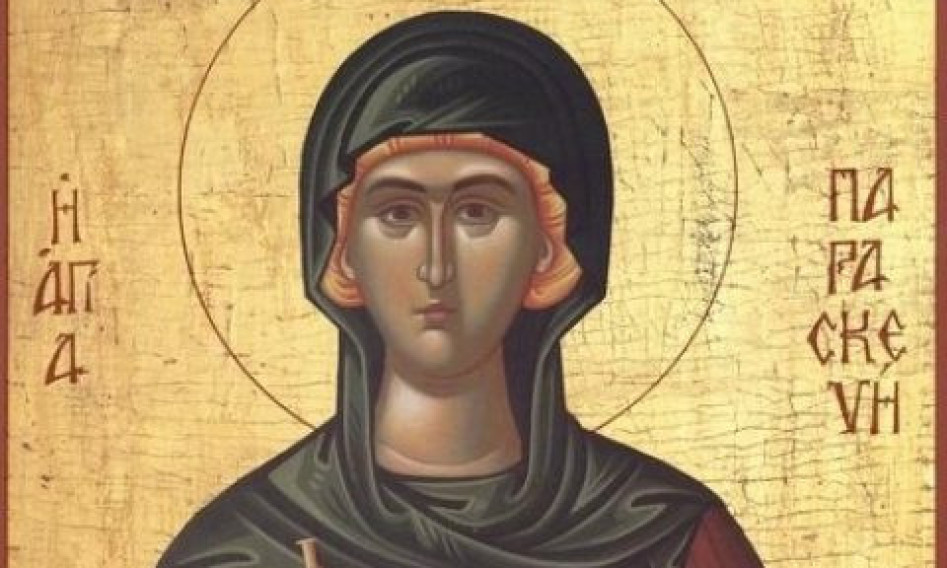
Since ancient times, people have respected Saint Petka Trnova, the great martyr also known as Paraskeva of Rome – a brave woman and a believer who gave her life for her unwavering faith in Christ. Her holy memory is marked on August 8, when believers throughout Serbia respect numerous customs and beliefs related to this holiday.
Although many confuse Trnova Petka with Saint Petka (Paraskeva of Epivata), whom we celebrate on October 27, it is important to know that these are two different saints, separated by almost a millennium of history. Trnova Petka lived in Rome, in the 2nd century, and is known as the protector of women, the blind and all who suffer.
Who was Saint Petka Trnova?
Born as Paraskeva in a prominent Roman family, she nurtured her faith in Christ from an early age. After the death of her parents, she shared everything she had with the poor and decided to live a monastic life. She was wise, beautiful and fearless, so she publicly preached Christianity even when it was strictly forbidden.
In Serbia, Paraskeva of Rome is often confused with the Venerable Mother Paraskeva – Saint Petka, a Greek woman, who is celebrated on October 27, although the two saints are separated by a period of almost a thousand years. They also differ in the different symbols on the icons: Trnova Petka, the protector of the blind, holds a tablet with engraved eyes in her hands, while Saint Petka holds a cross and a sprig of myrtle.
Despite torture and torment before the Roman emperor Antoninus, she remained consistent in her faith. She survived cauldrons of hot oil, lead and resin, a glowing helmet, and even a fight with a huge snake – all by a miracle, as the legend says. She was eventually executed, and her relics were moved to the Bulgarian city of Trnovo, after which the people call her Trnova Petka.
In our people, Trnova Petka is especially respected among women, who consider her their protector. There is a custom for women who want to have children to pray to Saint Petka Trnova, light candles in silence, without noise and celebration, and fast until her day. Girls are advised to turn to her for wisdom, a good marriage and the strength to endure the challenges that life brings.
In many areas, no housework is done – no laundry is washed, no bread is kneaded, no handcrafts are done. It is even believed somewhere that no ash should be taken out, so as not to “extinguish the strength of the home.” New dresses are put on the girls, and the houses are decorated with wreaths so that peace and harmony would reign.
MORE TOPICS:
Source: K1Info Photo: Svetigora