




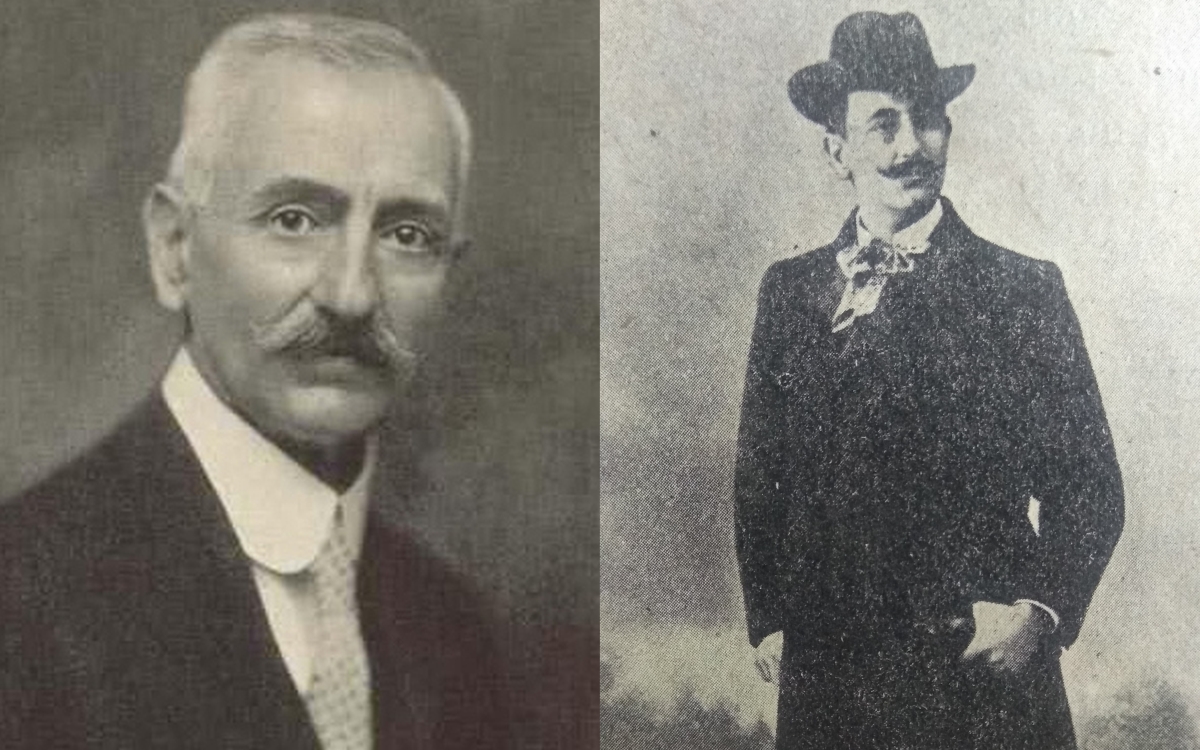
Aleksa Šantić left us a remarkable body of poetry, but what has perhaps been most missed in these lands over the past 30 years is his “neighborly patriotism”—the way he viewed anyone who shared the same land and air with him as a brother, regardless of whether they were Muslim, Croat, or Jew.
It has been 99 years since the great Serbian poet and intellectual Aleksa Šantić passed away, yet his spirit endures through his timeless poetry. Even in modern times, his verses have found life in folk and pop arrangements, turned into hits performed by popular artists, from Himzo Polovina to Jadranka Stojaković, from Emina to Što te nema.
What perhaps has been most absent in the region over the past two decades is Šantić’s brand of patriotism, one that transcended narrow national boundaries. On one hand, he was a nationalist in the purest sense of the term, yet as a man from a multinational environment, he showed deep respect and affection toward non-Serb communities in Herzegovina and his native Mostar. Šantić considered all peoples living in these lands as brothers—Croats, Bosniaks, Jews—and sought their liberation and unity, expressing this ideology in works like Ostajte ovde, a prayer-like appeal to his people bearing the weight of global geostrategic shifts.
His significance as both a poet and a public advocate is evident, and the absence of such figures has been decisive in the bloody conflicts of recent decades, during which the peoples Šantić once called “brothers” suffered immensely—a conflict now continuing through other means, via hatred and distrust.
Early Years with Dučić and Ćorović
Šantić belonged to the literary circle surrounding the Mostar newspaper Zora, founded with Jovan Dučić and Svetozar Ćorović. Contemporary literary scholars argue that his poetry is best understood alongside his biography, filled with great highs and lows, struggles, and constant personal sacrifice for causes he believed in almost blindly.
A native of Mostar, Šantić was deeply connected to his city, rarely leaving it and always returning. His legacy includes anthological poems such as Ostajte ovdje (1896), Emina (1903), Veče na školju (1904), Hasanaginica, Ne vjeruj (1905), Pretprazničko veče (1910), Što te nema? (1897), O klasje moje (1910), Moja otadžbina (1908), and Mi znamo sudbu (1907).
Growing up in a merchant family, his household lacked understanding of his literary talent. He completed commercial schooling in Trieste and Ljubljana, returning to Mostar in 1883, where he found “an unusual stagnation,” a consequence of the recently suppressed Herzegovinian uprising against Austria. Svetozar Ćorović wrote that Šantić was initially “quite withdrawn,” managing accounts in his father’s shop and reading whatever newspapers and books he could access in Mostar. A few years later, he began his literary and social work.
Croatian writer Miljenko Jergović describes Šantić as a unique figure in regional literature:
“Aleksa Šantić is, in a sense, almost hidden, forgotten from today’s perspective, and sidelined. On one hand, he was a prominent Serbian poet of his generation, living, so to speak, in a distant province if viewed from Belgrade. At the same time, he was a Herzegovinian poet, important for the nature of his political and social engagement. That kind of engagement was unusual for the time, and especially unusual for today’s standards.”
Political Struggle Against the Yellow-Black Monarchy
In 1887, Šantić became a contributor to the magazines Golub, Bosanske vile, Nova Zeta, Javor, and Otadžbine. In 1888, he founded and became president of the Serbian Singing Society Gusle, promoting song and national consciousness. He was later elected first vice-president of the Mostar branch of Prosvjeta. In 1896, when Zora was launched, he was one of its first editors.
He briefly went to Geneva in 1902 but could barely last three weeks; in his naive poem Ja ne mogu ovde (I Cannot Stay Here), he sincerely lamented his inability to endure foreign lands. In 1907, Mostar elected him as one of four representatives to the first assembly of the People’s Organization.
During the annexation crisis, he fled to Italy with Svetozar Ćorović and Nikola Kašiković, offering his support to the Serbian government—a stance he would repeat in 1912 at the start of the Balkan Wars. During World War I, Austro-Hungarian authorities arrested him as a prominent Serbian nationalist. Later, he served as a member of the Bosnian Parliament.
MORE TOPICS:
Source: Alo, Foto: Wikimedia Creative Commons