




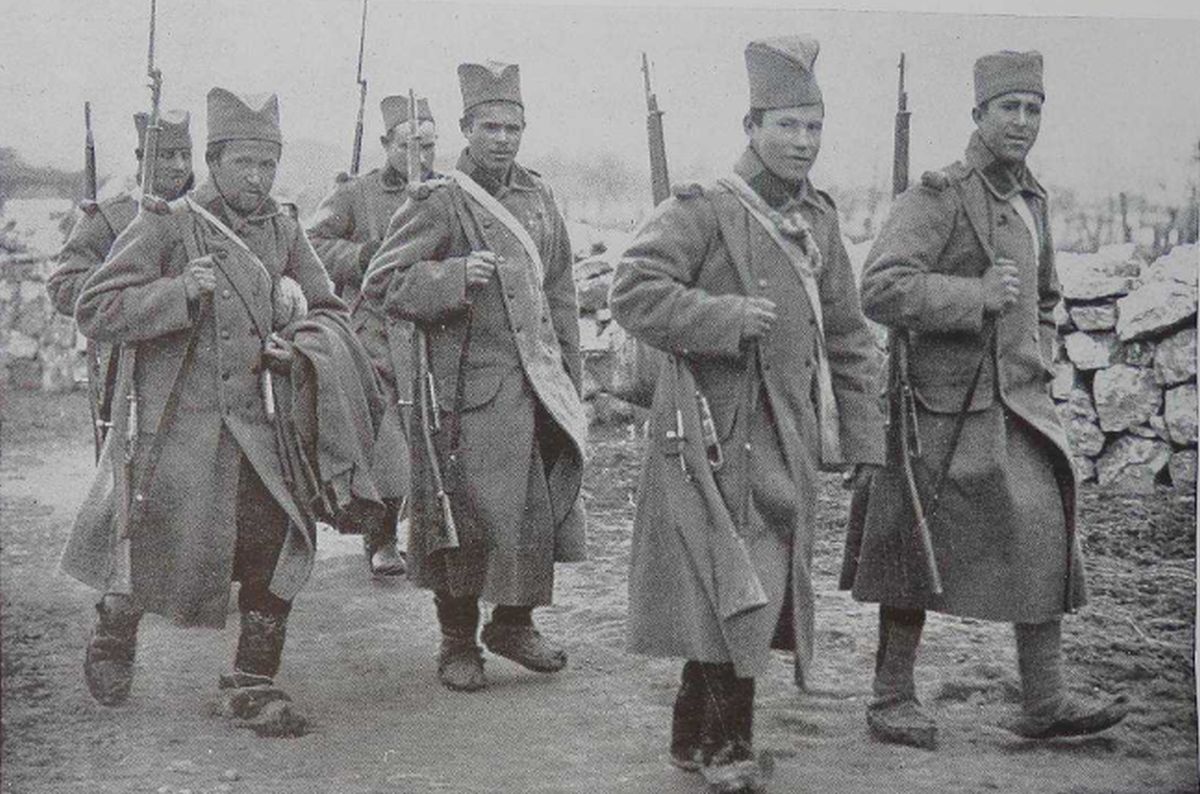
Despite the widespread misconception that World War I began in Sarajevo, the first shots of the conflict were actually fired in Belgrade, on the night between July 28 and 29, 1914.
The initial enemy attack was met by units composed of gendarmes, customs officers, ordinary Belgraders, and even children. One of them was Dušan I. Đonović—the first Serbian casualty of World War I.
On that same day, July 28, 1914, according to the new calendar, Austria-Hungary sent a telegram informing Serbia that they were now in a state of war. The attack on Belgrade immediately followed. Due to the sudden and brutal way in which war was declared, many at first did not believe that conflict was imminent. But the night between July 28 and 29 shattered all illusions…
At the time, the Sava and Danube Rivers marked the state border, making Serbia’s capital a frontline outpost. This is why the first shots of the Great War were fired precisely in Savamala, in what is today Braće Krsmanović Street. The first blood of the greatest conflict Europe had seen up to that point was spilled on the streets of Belgrade.

A City Left to Defend Itself
It may seem unbelievable, but on that first day of the war, there was no defense plan! The army had largely retreated south, leaving Belgrade completely unprotected. Due to the city’s precarious location, some even suggested surrendering it without a fight—but the people of Belgrade would not allow it!
From the forces present in Belgrade that fateful night, a makeshift defense was assembled. The first to engage the enemy on the banks of the Sava were troops made up of gendarmes, customs officers, local citizens, and even children.
One of them was Dušan I. Đonović, a 16-year-old student in his second year at the Royal Academy of Commerce. Armed with a rifle, he joined the Chetniks of Vojvoda Jovan Babunski, and he would become the first Serbian victim of World War I.
Dušan was killed in the gunfire that erupted after the defenders destroyed the old railway bridge over the Sava, which was the only connection between Belgrade and Zemun at the time. Not far from him, that same night, a Hungarian soldier named István Balogh was killed in a boat on the Sava while attempting a landing on Belgrade, making him the first casualty on the enemy side.
FIND OUT MORE IN ENGLISH:
Recognition Delayed for Nine Decades
When the Austro-Hungarian army occupied Belgrade in 1915, István Balogh was given a memorial plaque at the New Cemetery. Meanwhile, recognition for Dušan Đonović took nearly 90 years. It was not until 2004, during the commemoration of the 90th anniversary of World War I, that a memorial plaque was placed in his honor at the First Economics School in Belgrade.
An Obituary as Proof He Existed
Dušan I. Đonović was neither a hero nor a famous figure. History did not record his appearance, so today we do not even know what he looked like. That he once lived, studied, and had dreams and hopes is only known to us thanks to an obituary published in Politika on August 4, 1914, in its first edition after six days of bombing.
That night, after Dušan and István, around 1,000 soldiers and civilians perished. Over the next four years, across Europe, 37 million more would die in a conflict so bloody and horrific that it was only overshadowed by World War II.
As for Serbia, it lost over 1,200,000 soldiers and civilians, nearly a third of its population—an entire generation whose loss the country never fully recovered from.
“Dušan Đonović
– Prva žrtva u našem velikom ratu –
Večeras, oko ponoći, navršiće se osam dana kako su prvi austrijski meci nadrli na našu zemlju i od kako je počeo veliki rat za slobodu i nezavisnost Srpskog Naroda.
U toj znamenitoj noći kao prva žrtva pao je mladi dobrovoljac Dušan Đonović, činovnik Železničke direkcije i četnik u četi vojvode Jovana Babunskog.
Dušan Đonović, primorac po rođenju, brat Jovana Đonovića, koji se istakao u crnogorskom omladinskom pokretu. Čim je Austrija nagovestila rat, Dušan Đonović je prihvatio pušku i stupio u dobrovoljce. On je znao da se za istu stvar Srpski Narod na celom svome prostranstvu pao je pogođen austrijskim metkom na obali Save, braneći slobodu Beograda, onako isto slatko kao da su ga izrešetali kuršumi pod Lovćenom.
Bog da prosti njegovu Junačku dušu!”
— (Čitulja Dušana Đonovića, Politika, 4. avgust/22.jul 1914.)
MORE TOPICS:
Source: Istorijski Zabavnik, Foto: Wikipedia Creative Commons