




Serbs always like to boast about spies, to point out that James Bond was ours, to be proud of the Black Hand, Apis, and to look with admiration at Mustafa Golubić. Generally, stories about secret agents in this region have always gone well and people didn’t care so much whether there was any truth in those stories or not.
We bring you a true story about a man who combined all the parameters mentioned above. He was a “Black-hander”, worked for the Obrenovićs, Karađorđevićs, Tito, Stalin, and was friends with Apis and Golubić.
To add the mythical element, we also point out the fact that in addition to all of the above, he was also a mason.
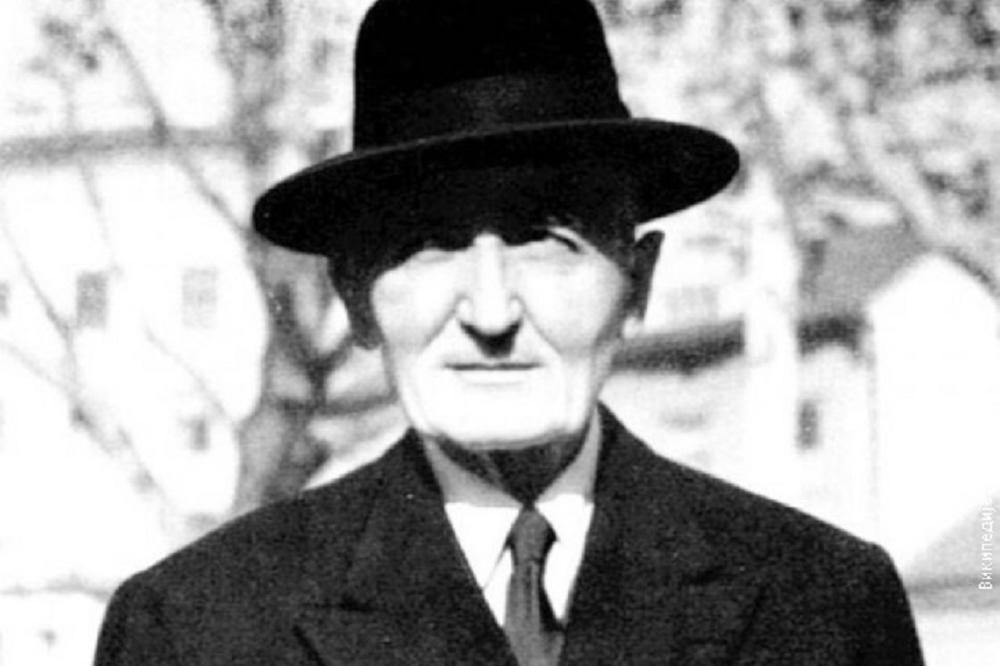
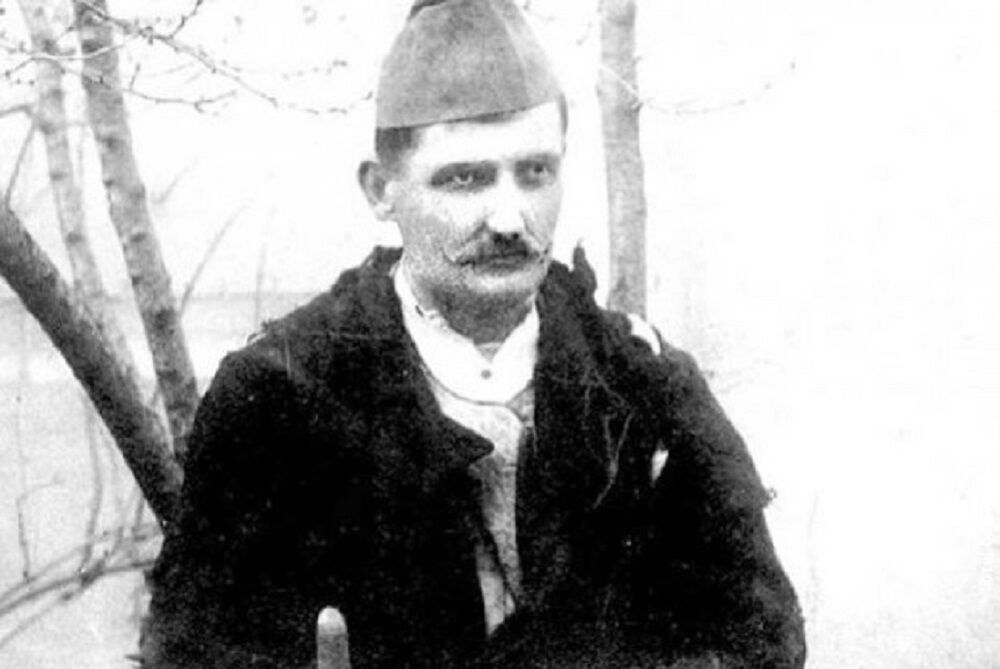
He is Božin Simić.
Božin Simić was a colonel in the Serbian army, and was born on October 20, 1881, in the village of Veliki Šiljegovac, near Kruševac. He comes from a family of teachers.
He graduated from the military academy and became an officer in the army of the Kingdom of Serbia, which was then ruled by the Obrenovićs. He very quickly came into contact with Dragutin Dimitrijević Apis and joined his “Black Hand.”
In 1903, he was one of Apis’s assault troops in the May Coup, and from 1911, he became the supervising officer of the Vranje border area towards Turkey.
He then became a liaison officer for the Chetniks of the famous Serbian major Voja Tankosić in Macedonia, from where he transferred many across the border to Turkish territory.
According to some stories, Colonel Božin Simić, disguised as a Serbian peasant, was transferring weapons for Serbian companies in Kosovo in 1911. The very next year, 1912, he commanded one of the directions of the attack on the Turkish army and completely defeated the enemy.
When the First World War began, Božin Simić successfully commanded a battalion. His soldiers, like those of all Black-handers, are characterized by great courage, patriotism, and fighting spirit.
Due to his brilliant organizational skills, Colonel Dragutin Dimitrijević Apis, together with Mustafa Golubić, sent him to Russia to gather volunteers for the breakthrough of the Thessaloniki Front.
This team of experienced and shrewd intelligence officers was very successful, especially in Odesa, where they created and trained a Volunteer Division, which also consisted of prisoners from the Eastern Front who were from the Balkans. Serbs from Bosnia and Croatia were mobilized by the Austro-Hungarians into their army and sent to the Eastern Front to fight against Russia.
Most of these soldiers deliberately surrendered and joined the Serbian army, so they liberated Bosnia and Croatia wearing the uniforms of the Army of the Kingdom of Serbia.
In the Thessaloniki trial, he was sentenced in absentia to 18 years in prison, which is why he remained in Russia and, after the October Revolution, while he was in Russia and commanded the Yugoslav volunteer division, he became a colonel of the Red Army.
Using his diplomatic and spy connections, even Masonic ones, as he belonged to the Pobratim Masonic lodge, he wrote from St. Petersburg to all world rulers, asking for a pardon for Apis, when the Thessaloniki trial began.
The verdict was reached even before he was accused.
Simić remained in Russia until 1936, when he returned to Yugoslavia. He was arrested at the border, stripped of his rank, and after only two days, he was released from custody with the return of the rank of colonel of the Serbian army, which had been taken from him at the time.
With a special note, it was pointed out that Simić was not convicted in the Thessaloniki trial in 1917, but rather retired. And of course, all his pensions were paid out…
Many historians still claim today that Božin then had special information with which he blackmailed everyone, and that is how the unexplained secret about the Sarajevo assassination, with which he blackmailed Prince Pavle Karađorđević, came about.
He wrote about his arrest in his autobiography:
“At the border, an agent from Belgrade was waiting for me and escorted me first to the Belgrade Administration and then to the City Command. From the City Command, after a short interrogation, they escorted me to the city officers’ prison. After a few days, they took me to Požarevac, after they had symbolically stripped me of my rank in front of the Belgrade garrison troops, as I was in civilian clothes. I stayed in Požarevac for a little less than half a year… Pavle and Stojadinović kept me without honor for more than a year because I did not accept cooperation with them. I only received amnesty when I threatened that I would voluntarily go into emigration again, but that on this occasion I would reveal the entire secret about the Sarajevo assassination.”
According to some historical records, Simić was also a collaborator of the famous general Dušan Simović, with whom he met the day before the coup on March 27 and conveyed to him the mood of the USSR to conclude an agreement with Yugoslavia.
In the government of Dušan Simović, he was appointed minister without portfolio and participated in negotiations with Stalin.
Immediately after the coup on March 27 which took place in Yugoslavia, Mustafa Golubić, a high-ranking NKVD officer, and Božin Simić together, from Belgrade, flew to Moscow to attend the signing of the Agreement on Friendship between Yugoslavia and the Soviet Union.
After the war, on several occasions, Božin Simić recalled how he was covered in sweat when, during a night reception in honor of the signing of the Soviet-Yugoslav agreement, Stalin, shaking his hand, significantly said to him: “Yes, the Black Hand.”
During the Second World War, as a minister of the government in exile, Božin Simić had a speech in the lower house of the British Parliament in which he opposed the bombing of Belgrade by the allies, because there was a resistance movement to the occupying forces in Serbia, while e.g. Bulgaria, which had openly gone over to the side of the Axis powers, was not bombed.
After his speech, a multi-day bombing of Sofia followed. Due to this speech, an assassination attempt was made on him after the Second World War, during his trip to Ankara where he was going to take over the position of ambassador of the FPRY, which he survived.
After the Second World War, he was Tito’s ambassador of the FPRY in France and Ankara. During the split between Moscow and Belgrade, he openly stood against Stalin.
He died on February 24, 1966, in Belgrade at the age of 85.
MORE TOPICS:
Source: Espreso Photo: Wikipedia