




“If you want to be happy for one day, get drunk. If you want to be happy for a week, get married. If you want to be happy for a lifetime, learn to play chess!” — Indian proverb
Just like love or music, chess has the power to make people happy. Many famous writers have written about chess, connecting it with art, but also with play and science. All those who play and love chess will agree that the beauty of a chess move lies in the thought behind it. The famous Goethe formulated a chess game as a test of the mind. Svetozar Gligorić used to say that chess is a man’s victory over himself.
In the mid-20th century, chess was very popular worldwide, and we can proudly say that we had the legendary Svetozar Gligorić, known as Gliga, who, until the emergence of Bobby Fischer, was considered the best chess player in the world outside of the Soviet Union.
Svetozar Gligorić was born on February 2, 1923, in Belgrade. He first encountered a chessboard as a thirteen-year-old. He made his first chess set by carving corks from wine bottles. He lost both his parents early in life. Still, he remembers that his mother was completely indifferent to chess and didn’t understand it at all, but she didn’t forbid him from playing as long as he was an excellent student. After his mother’s death, out of respect for Dr. Niko Miljanić, the president of the Belgrade Chess Club for which he played, he agreed to move into his house, even though Niko already had three children of his own.

Won His First Tournament at Fifteen
At the time, students were forbidden from being members of chess clubs, but he still went to the club every evening. He was lucky that the guard of the Kolarac University building, Desimir, liked him, so he pretended to read the newspaper whenever Svetozar went inside.
He won his first tournament at the age of fifteen when he triumphed at a Belgrade Chess Club competition. However, the war soon began, and Gliga joined the partisans. He returned to the game after the liberation and quickly made up for the lost time.

He Played Against Pieces, Not People
Svetozar Gligorić was a chess genius, but unlike most chess geniuses, he was not an eccentric. He was a decent and kind man. He used to say that he played against wooden pieces, not against people. Besides his undeniable talent, his studiousness and dedication to chess led him to play against the best chess players of that time.
It was an era of strong chess competition, and it was a real privilege to play against Botvinnik, Smyslov, Tal, Reshevsky, Najdorf, Euwe, Bronstein, Fischer, Spassky, Petrosian, and others. Svetozar Gligorić recorded his first major success that drew significant attention in 1950, when he and the Yugoslav national team won Olympic gold in Dubrovnik. His match against Miguel Najdorf is still famous today.
Svetozar Gligorić received the Grandmaster title the following year and immediately decided to dedicate himself completely to chess. For the next two decades, he was among the world’s best chess players and a candidate for world champion. Thanks to him, Yugoslavia was considered the second superpower in the world, behind the USSR, which was also the period of the greatest success for Yugoslav chess.
He participated in many international tournaments, winning many of them. At the Olympiad in Munich in 1958, he won a gold medal. At the Interzonal tournament in Sousse in 1967, he shared second place without a single loss. In Argentina, at the tournament in Mar del Plata, Gligorić won, and that’s when his “patent” in chess theory was created—the famous Mar del Plata variation of the King’s Indian Defence.
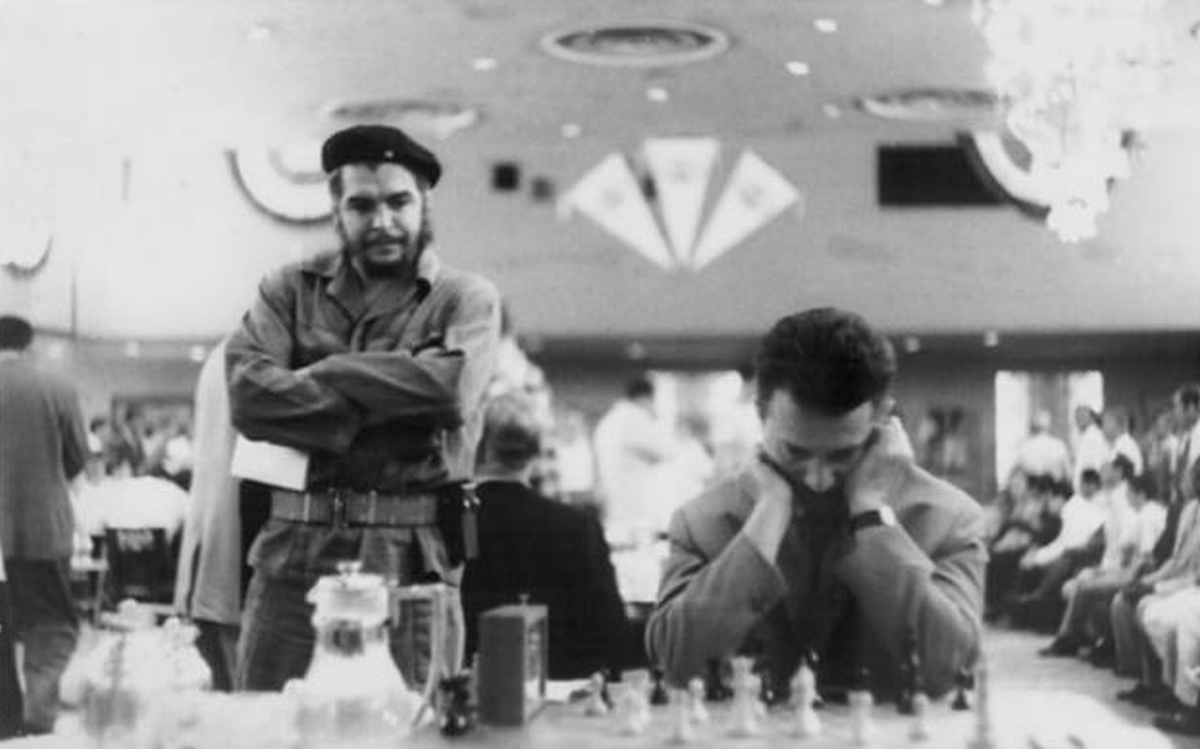
At the Olympiad in Havana in 1966, Gligorić’s games were regularly watched by Fidel Castro and Ernesto “Che” Guevara. He was a correspondent for the most famous chess match of all time, the duel between Robert Fischer and Boris Spassky in Reykjavik in 1972. The book he wrote about that match was translated into several languages and sold hundreds of thousands of copies.

The Match Against Tal
The most significant match of his entire career was at the Interzonal tournament in Portorož in 1958, where he finished second, behind the legendary Mikhail Tal. This particular game was the most written about. Svetozar was leading 3:2, and Tal later admitted that he and his team considered the match lost. However, Svetozar succumbed to the pressure from newspaper commentators who claimed he was always playing the same variations. As fifty good moves are sometimes not enough to win a game, but often one wrong move is enough to lose it, he changed his tactics in the sixth game to disprove the malicious journalists—and he lost. After this game, Svetozar stated that he had the impression that he subconsciously didn’t even want to qualify, aware that victory would bring him fame that could ruin his private life.
Journalism Career
Svetozar Gligorić is also known for his journalism career. He was a regular correspondent for Chess Review and Chess Life magazines and wrote a large number of books on chess. Initially, he worked as a journalist for Borba, knowing that it would allow him to travel and play chess. From Borba, he moved to NIN, where he spent eight years as a foreign policy commentator.
He retired in 1978. Although his entire working life was consumed by journalism and chess, his deep affinity for music remained in the background. When his wife died, he decided to acquire basic piano skills. Black and white chess pieces were replaced by black and white piano keys, so at the age of eighty-one, Svetozar Gligorić began learning the basics of piano, and at eighty-eight, he was playing and composing.
The legendary and inimitable Svetozar Gligorić passed away on August 14, 2012, in Belgrade. He spent his retirement days peacefully and happily. Chess pieces and moves were always a part of his life, and he believed that “it is every man’s duty to live as long as possible, not only for himself but also for those around him. Every death is a small tragedy. A human life should last 150 years for a person to use all their potential to live in happiness.”
FIND OUT MORE:
ROD BLAGOJEVICH: Biden’s Sanctions Against Milorad Dodik Should Be Reversed!
Source: 011Info Naslovna Fotografija: David Jarrett via chesshistory.com, Foto u Tekstu: Wikimedia Creative Commons