



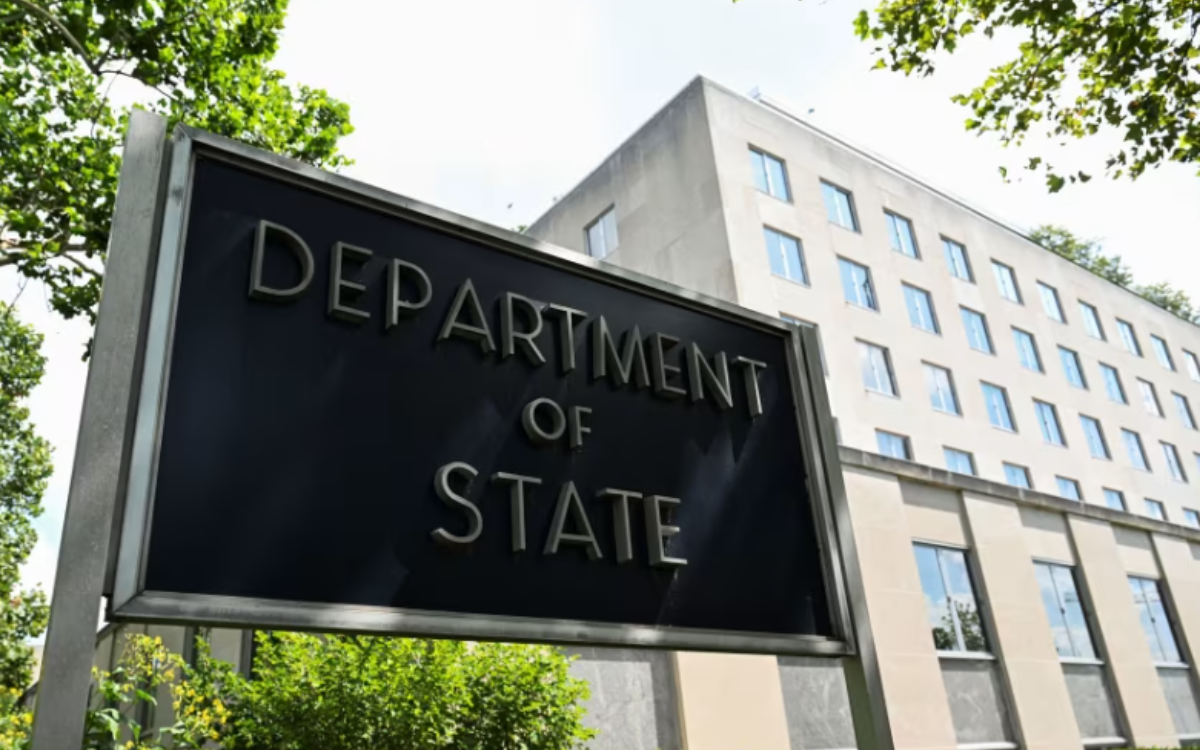
The State Department neither confirmed nor denied that it had received a letter requesting an extension of the license for the operation of the Petroleum Industry of Serbia (NIS), based on negotiations regarding the ownership of that company with a third party.
“Removing Russian control over NIS will increase Serbia’s energy security and encourage investment and progress across the region,” the State Department response stated.
Regarding the direct question concerning the claims by Serbian officials, primarily Serbian President Aleksandar Vučić and Energy Minister Dubravka Đedović, that a letter was sent to the American side stating that the majority owner of NIS, Gazprom Neft, is ready to hand over control and influence over the company, the State Department did not provide an answer.
“We remain committed to partnership with Serbia to diversify its energy sector, which will contribute to the economic strengthening of Serbia,” the State Department response stated.
It is not officially known who the third party mentioned by Serbian officials might be. Hungarian MOL, potential Arab owners, Croatian JANAF, and Azerbaijani SOCAR have been speculated in the Serbian public.
The United States sanctioned the Petroleum Industry of Serbia on January 10 due to its majority Russian ownership. US sanctions are aimed at preventing the financing of Russian aggression in Ukraine with money from Russian energy companies. The implementation of US sanctions against NIS was postponed eight times, and they came into effect on October 9.
“In accordance with the words of Secretary (Marco) Rubio, we are committed to mutually beneficial relations with Serbia that drive economic growth and benefit the people of both countries. We deeply appreciate President Vučić’s similar commitment,” the State Department stated in response to the journalist’s inquiry.
Another challenge to Serbia’s energy stability is the announced entry into force of US sanctions against Lukoil, a Russian oil company operating in Serbia, which should happen on November 21.
The Russian side reached an agreement with the Swiss-Cypriot company Guvnor at the end of October to buy Lukoil’s assets abroad. However, that agreement failed after the US Treasury Department declared Guvnor a Russian puppet – emphasizing that Washington opposes the transaction.
“President Trump has made it clear that the war must end immediately. As long as Putin continues with senseless killings, the Kremlin’s puppet, Ganvor, will never receive permission to operate and earn,” the US Treasury Department announced.
The administration of US President Donald Trump sanctioned major Russian oil companies Rosneft and Lukoil for the first time during his second term at the end of October. The American public then interpreted the sanctioning as a consequence of Russia’s unwillingness to agree to a ceasefire with Ukraine in the conflict that has been ongoing since February 2022, which the US President insists on.
Rosneft and Lukoil were sanctioned immediately after it was revealed that Russian and US Presidents Vladimir Putin and Donald Trump would not meet in Budapest, where, as announced, they were supposed to discuss ending Russia’s war in Ukraine.
MORE TOPICS:
STATE DEPARTMENT SAYS: “Removing Russian control over NIS increases Serbia’s energy security”
Source: N1, Photo: Annabelle Gordon / Reuters