




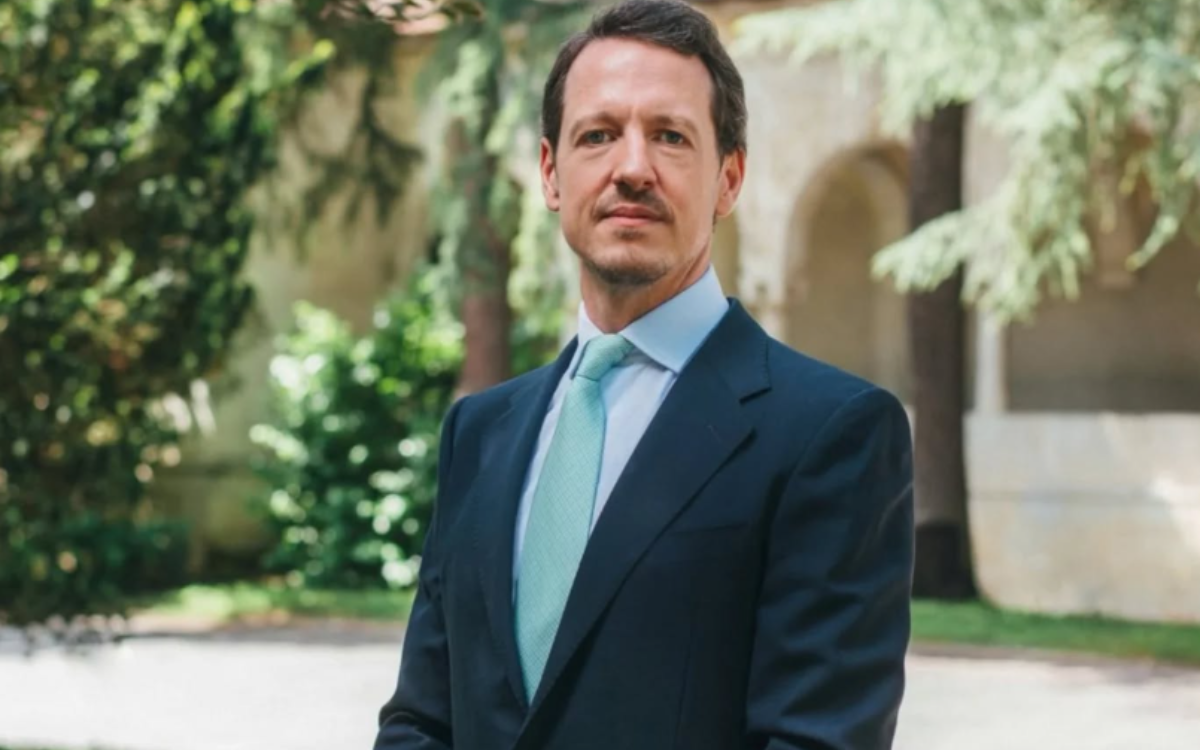
The head of the Yugoslav dynasty is beginning to yield a more prominent role to his son and heir, amid a political crisis in Serbia and increasingly loud “public” calls for the restoration of the Monarchy.
While the European Union continues efforts to bring Serbia – along with other countries of the Western Balkans – closer to membership, a deep political and institutional crisis does not subside in the country that was once the center of Yugoslavia. For more than a year, Serbia has been shaken by mass protests, primarily by young students, directed against corruption and the authoritarian turn of President Aleksandar Vučić. In this context, the Monarchy is discussed more and more frequently in Belgrade, and the royal family is increasingly gaining importance – both through frequent public appearances and through the increased attention of domestic and international media.
Serbia is in a state of political ferment, with more and more voices demanding a deep change of the system. In an atmosphere of uncertainty, a certain hope is recognized also by those who advocate for the restoration of the Monarchy, eight decades after Yugoslavia fell under the totalitarian rule of the communist regime of Josip Broz Tito. Paradoxically, in 2006, modern-day Serbia adopted a flag very similar to that of the former Kingdom, with a coat of arms dominated by a double-headed eagle and a royal crown. Additionally, the support of influential dignitaries of the Serbian Orthodox Church for the idea of the Monarchy is continuous.
Whether it is a matter of unattainable nostalgia or a historical opportunity that monarchists must not miss – the fact is that the royal family is making concrete moves. The current head of the dynasty, Prince Alexander Karađorđević, who recently turned 80, took a step that is interpreted as preparation for the transfer of responsibility, ceding an ever-greater public role to his heir, Prince Philip (43).
On the occasion of the assembly of the Kingdom of Serbia Association – an organization that, under the patronage of the Karađorđević family, advocates for the restoration of a constitutional parliamentary monarchy – Prince Alexander delivered a speech with a clear restoration message:
“I am deeply convinced that the future belongs to the young and that the idea of the restoration of the Monarchy will be closer to new generations, because they do not carry the burden of prejudices that burdened previous ones. (…) My son, Crown Prince Philip, when the time comes for it, will take over the care for the future of our House and continue my work. My wish is to help him as much as I can to prepare for this important task.”
As experts point out, Prince Alexander has never expressed himself in this manner until now. It is also noted that he is one of the close relatives of Queen Sofia, the mother of the Spanish King Felipe VI. At the same time, only two years ago was a deep rift within the Serbian royal family healed, which arose after Alexander’s first-born son, Prince Peter, renounced his dynastic rights – a decision that caused serious dissatisfaction from his father. After a long period of severed relations, Alexander accepted that his heir would become his second son, Philip, because the internal crisis in the dynasty seriously threatened to nullify the decades-long effort of the Karađorđevićs to present the Crown to the public as a factor of institutional stability after the return to Serbia in the nineties.
Alexander’s words, however, cannot be viewed in isolation from the news that both he and his wife, Princess Katherine, fell ill with cancer last year. During 2025, they spent most of their time in the United States of America, where they received treatment. Although the latest public appearances indicate a favorable course of recovery, everything together – in combination with the unstable political situation in the country – imposes the need for a clear succession strategy, such as the one now glimpsed.
Members of Parliament from the Movement for the Restoration of the Kingdom of Serbia requested the replacement of President Aleksandar Vučić and publicly advocated for the restoration of the Monarchy. In a statement, they noted that only the return of the Crown can ensure national unity and stop deep divisions and polarization in society, proposing the return of the Karađorđevićs to the Serbian throne.
THE GODCHILD OF QUEEN SOFIA
Prince Philip, the godchild of Queen Sofia, the late King Constantine, and Anne of Orléans, as well as other prominent members of European royal families, does not lack the ambition to seize his historical opportunity. In recent months, he has intensified activities in favor of the Crown and gained a certain popularity among various social and political circles in Serbia, including the Movement for the Restoration of the Kingdom of Serbia (POKS) – an alliance of conservative parties founded in 2017, which today has eight members in the National Assembly.
POKS demands the resignation of President Vučić with equal ferocity and advocates for the restoration of the Monarchy, while openly favoring Prince Philip as the future bearer of the Crown, while increasingly considering Prince Alexander politically “spent,” showing a clear preference for the younger generation.
However, exactly therein lies one of the greatest challenges for monarchist ambitions. It is not easy for Prince Philip to accept a completely apolitical and neutral role, which is traditionally associated with a parliamentary monarchy. On the contrary, today he is one of the loudest public figures in the defense of Serbian sovereignty over Kosovo. Several times he has rejected the French-German plan for the normalization of relations with that territory, which is supported by most EU states, assessing it as “insulting and unacceptable” for Serbia. After the second victory of Donald Trump in the elections in November 2024, he also used his family’s contacts with influential circles in the Republican Party, calling on the new American administration to withdraw the recognition of Kosovo as a state.
In 2017, Prince Philip married Danica Marinković. They have two children – Prince Stefan and Princess Marija.
MORE TOPICS:
Source: El Mundo; Photo: Printscreen Instagram