




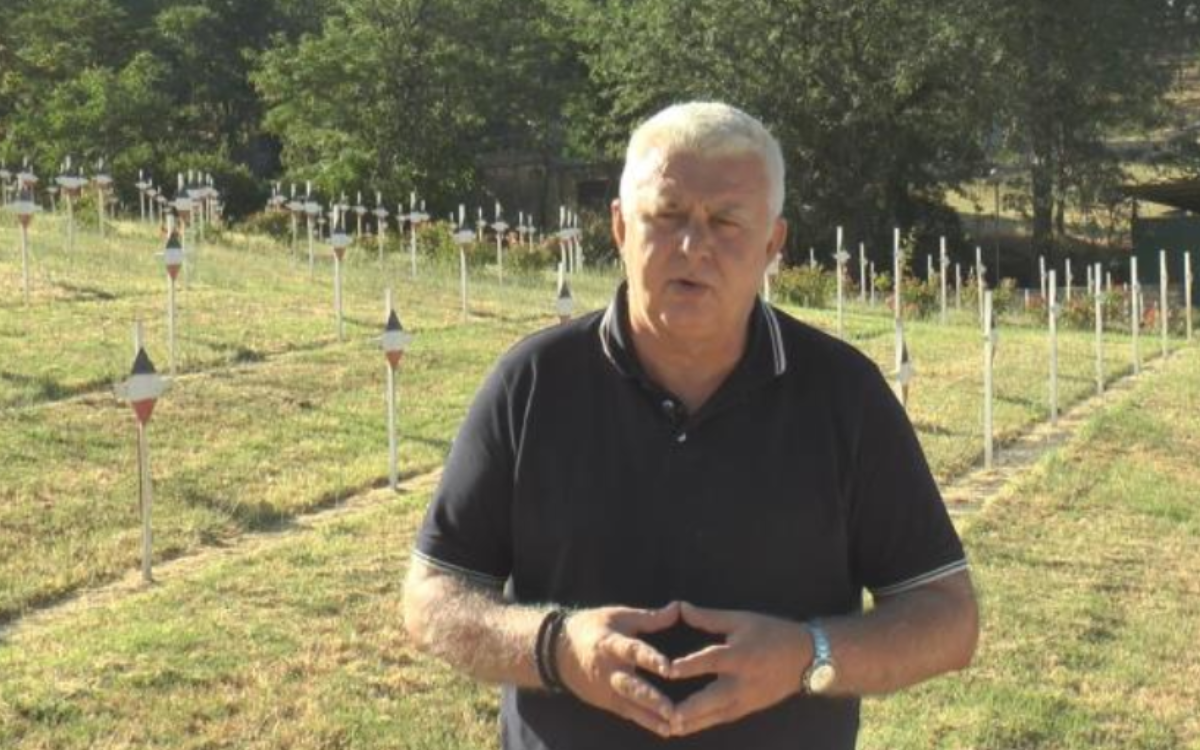
More than seventy regimental cemeteries are scattered in the area from Bitola to Kajmakčalan, where unknown Serbian heroes rest—soldiers who gave their lives for the homeland, whose names are in many cases forgotten, buried under the dust of history and the neglect of their descendants.
Today, only members of the Serbian-Macedonian Society, led by Zoran Žugić, a man who has been preserving the memory of the soldiers from the Thessaloniki front for decades, take care of these sacred places.
– We managed to find about 150 names from various sources, but the complete list is still being sought. I am convinced that it exists somewhere in state or private archives. My father, who took care of this cemetery until his death, told me he had seen it. I hope we will find it and that every number on the cross will finally get its name and surname, Žugić tells RINA, who modestly but persistently continues his father’s mission.
His wish is for the Serbian flag to fly again over every mound, instead of the flag of a country that no longer exists. “Some from the Institute for the Protection of Monuments believe that the flags under which they fought should remain, but I think these people deserve to rest under the Serbian banner,” he adds.
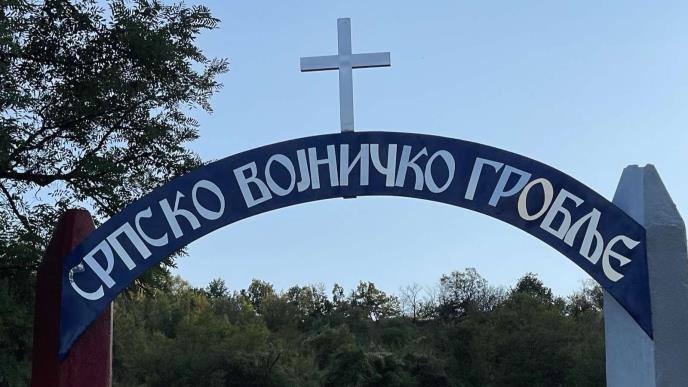
In recent years, thanks to the engagement of the Republic of Serbia, this sacred space is regaining its dignity. The cemetery, which was once overgrown and forgotten, is now maintained, with restored monuments and crosses.
– Everything has changed since Aleksandar Vučić became the head of Serbia. Numerous delegations, ministers, and state officials came here and helped us as much as they could. If I tell you that the crosses had fallen and were overgrown with thorns, it is clear to you what it was like. Thanks to the help of Serbia, we managed to restore a lot, but there is still work to be done. We need to fence the cemetery, arrange the crypt, and build a watering system,” Žugić points out.
He especially thanks two men from Čačak, Gvozden Nikolić and Slobodan Vasilijević, who helped restore the entrance gate. “After Gvozden’s report, Slobodan called and offered help. The gate is now made of stainless steel, and what should have always been written on it is written now – Serbian Military Cemetery. I am eternally grateful to them,” says the guardian of Serbian history and the graves of great heroes.
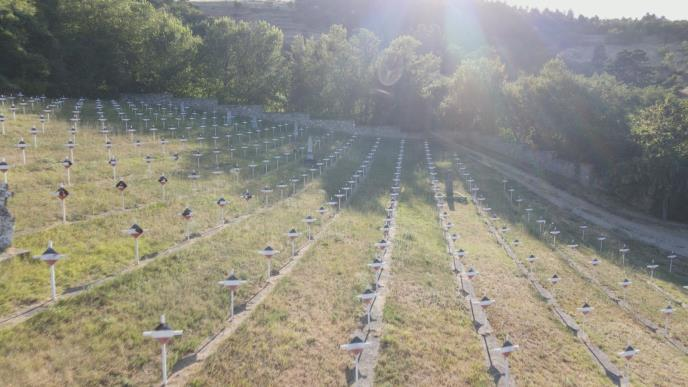
On the road from Bitola to Kajmakčalan, in the village of Skočivir, there is another military cemetery – another quiet, forgotten trace of the Serbian army from the First World War. Today, only enthusiasts of the Serbian-Macedonian Society take care of it too.
The road to the very top of Kajmakčalan, to the church of St. Elijah, is more difficult to pass today than after the Second World War. Serbia is holding talks with the Macedonian authorities to finally arrange the road, as currently the glorious mountain and place of eternal glory can only be reached via Greece, traveling for hours.
– I invite Serbian children to come, see, and feel this place. The most important lesson is taught here – how to love the homeland and what the price of freedom is,” says Zoran Žugić, the man who keeps the silence in which the glory of Serbian soldiers still echoes.
MORE TOPICS:
“A MAN WHO TOUCHED HUMAN HEARTS”: Đoković revealed what he would like to be written on his monument!
BOJOVIĆ RELEASED ON BAIL: The policeman arrested in Chicago is awaiting a decision on deportation!
Source: RINA, Photo: RINA