



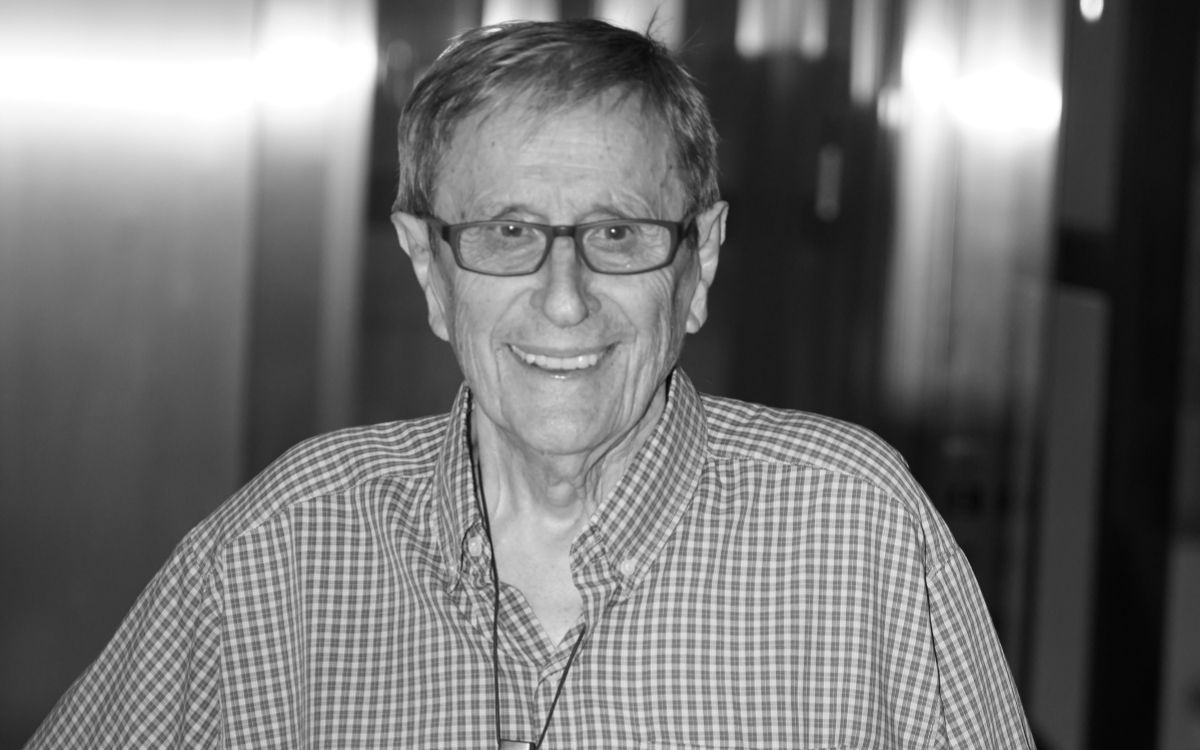
The director and screenwriter Zdravko Šotra, who signed over 120 television and film works of great viewership on both television and in cinemas, passed away last night at the age of 93.
The pre-war civilian and post-war revolutionary world, small-town people and broad-minded visionaries, the historical and the individual, the entertaining and the cultural – these are the elements that form the seductive world of Zdravko Šotra’s television series.
His pre-war ladies, arrogant national tribunes, masters of breakdowns, but also of the soul, have lived by a human standard for decades despite historical riddles, reminding us that life is a game, but also more than a game. That is why the stories and heroes from Šotra’s master workshop, which has been diligently working since the first days of television, still captivate the television viewer today.
Zdravko Šotra was born on February 14, 1933, in Stolac. He graduated in directing from the Academy for Theater, Film, Radio, and Television in Belgrade in 1954 in the class of professor Vjekoslav Afrić. He was employed at Television Belgrade from its founding in 1958 until 2001.
During the seventies, he directed the extremely popular show Obraz uz obraz (Cheek to Cheek) with Dragan Nikolić and Milena Dravić. He directed films that broke box office records such as Braća po materi (Maternal Brothers), Lajanje na zvezde (Barking at the Stars), Zona Zamfirova, Ivkova slava (Ivko’s Feast), as well as numerous television films and dramas: Više od igre (More Than a Game), Boj na Kosovu (The Battle of Kosovo), Šešir profesora Vujića (Professor Vujić’s Hat), and Santa Marija dela Salute, Ranjeni orao (Wounded Eagle)…
Šotra made a great contribution to Serbian cinematography, and it is almost impossible to single out any of his series or films, and what all of his series have in common is that they have been rebroadcast several times, and the audience has watched them again with enthusiasm every time.
The works Osvajanje slobode (The Conquest of Freedom), Šesta brzina (Sixth Gear), Idemo dalje (Let’s Go On), Igmanski marš (Igman March), Gospođa ministarka (The Cabinet Minister’s Wife), Braća po materi, Lajanje na zvezde, Zona Zamfirova, Pljačka Trećeg rajha (The Robbery of the Third Reich), Ivkova slava, Šešir profesora Koste Vujića, Santa Maria della Salute… entered the anthology of local cinematography.
He also proved himself as an author in the documentary genre with shows: Plutonovo carstvo u Homolju (Pluto’s Empire in Homolje), Svi zajedno (All Together), Povratak pesnika (The Poet’s Return), Gde cveta limun žut (Where the Yellow Lemon Blooms)…
Šotra’s series Gorski car (Mountain King), Maksim našeg doba (Maksim of Our Time), Rođaci (Relatives), Glumac je glumac (An Actor is an Actor), Više od igre, Priče iz radionice (Stories from the Workshop), Samci (Bachelors), Volim i ja nerandže, no trpim (I Love Oranges Too, But I Endure), Ranjeni orao, Greh njene majke (The Sin of Her Mother), Nepobedivo srce (Invincible Heart)…, are among our most watched programs.
The series Obraz uz obraz, a show program with Milena Dravić and Dragan Nikolić, broadcast in the period from 1972 to 1974, is still popular across Yugoslavia today.
During his career, Zdravko Šotra was awarded domestic and international recognitions – awards at the Pula Festival, several Golden and Silver Mimosas in Herceg Novi, the Golden Knight in Moscow, an Award at the Prague Festival, the October Award of the City of Belgrade, the Grand Prix in Portorož, the Golden Harp in Dublin, the Golden Rose of Montreux for the work Roman sa kontrabasom (Novel with a Double Bass) in 1972.
He achieved his last success in 2021 with the historical drama series, Aleksandar od Jugoslavije (Alexander of Yugoslavia), which he also signed as a screenwriter. He practically never had any downtime.
Šotra published the autobiography Držeći se za vazduh (Holding onto the Air) (2013), and in the book Mojih 500 glumaca (My 500 Actors) (2024), published by RTS Publishing and Službeni glasnik, he described the beginnings of his directing career, as well as how he became interested in acting.
“Actors, actors… Throughout my life, I socialized with actors, even outside of work, which is not common for a director. I simply feel that we are of the same kind… There is room for a joke between two takes, so the time spent remains a fond memory for everyone,” Šotra wrote in his voluminous book about the 500 actors with whom he successfully collaborated.
The time and place of the funeral will be announced later.
MORE TOPICS:
DUE TO OVERCROWDED PRISONS: Belgium considers sending prisoners to Serbia or Albania!
KOVAČEVIĆ COLUMN: How Halid was connecting Miljacka and Romanija while others were separating them
Source: RTS; Photo: ATA Images