




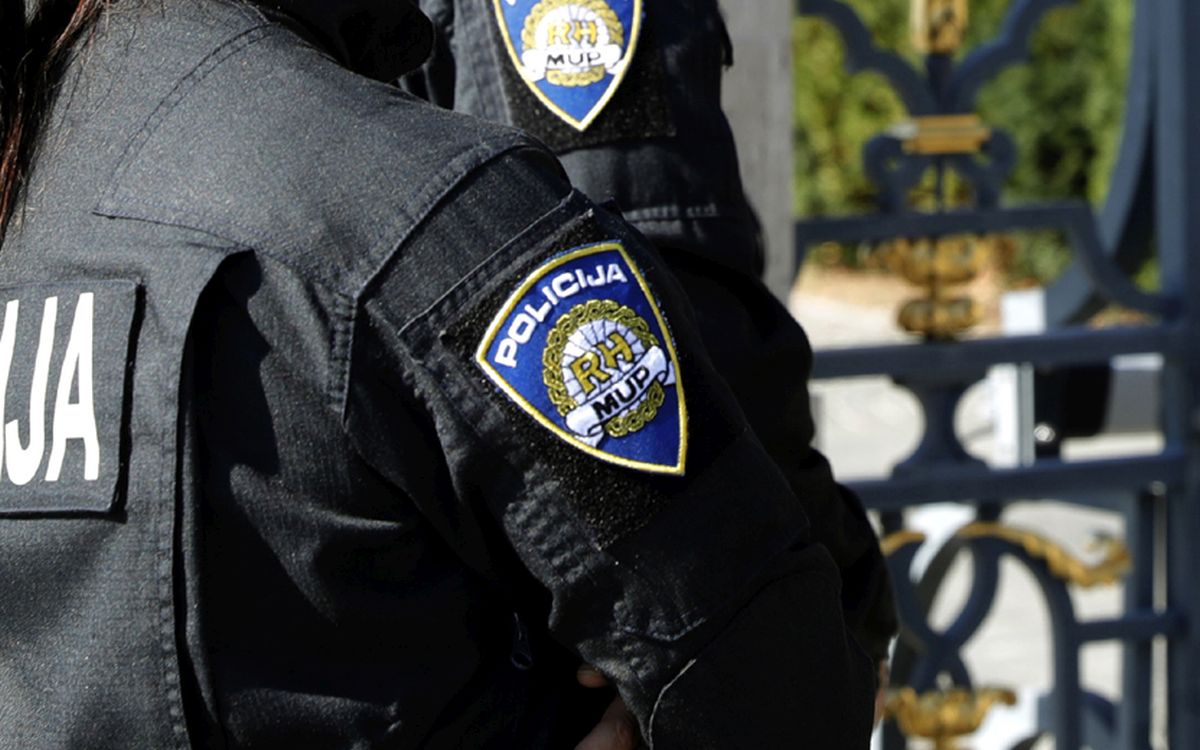
Croatian police have arrested a 61-year-old dual citizen of Croatia and Montenegro on suspicion that, as a member of a Serbian paramilitary formation, he committed a war crime against prisoners of war in February 1993 near Vodice, close to Šibenik, Croatian police and prosecutors announced yesterday on their official websites.
In a statement by the Šibenik-Knin Police Department, it is alleged that the man, as deputy commander of a military police platoon in the 2nd Infantry Brigade of the army of the self-proclaimed Republic of Serbian Krajina, after occupying part of the village of Dragišići on February 24, 1993, together with several other members, severely physically abused nine captured members of the 15th Home Guard Regiment of the Croatian Army, aged between 27 and 57, two of whom were killed and two taken in an unknown direction, where they have been missing ever since.
The County Prosecutor’s Office in Split stated that it had questioned the man and issued a decision to open an investigation against him. It is reasonably suspected that the arrested man physically abused the captured Croatian soldiers and, together with military policemen and Serbian soldiers, fired shots from a rifle at one of the victims, while another captured Croatian soldier died from severe bodily injuries. Two prisoners were handed over to another paramilitary unit, knowing they would be killed. It is also suspected that the accused allowed his subordinate military policemen and Serbian soldiers to beat the captured Croatian soldiers in the area, causing them numerous serious and life-threatening injuries. At the request of the prosecutor’s office, the investigating judge ordered pre-trial detention for the accused due to the risk of flight, influence on witnesses, and to ensure the unimpeded progress of the proceedings for the crime punishable by long-term imprisonment.
These statements were reported by many regional media outlets. Although the suspect’s name was not mentioned in official statements, some Croatian media claimed it was Zoran Korda, while others referred to him as Zoran D.
According to information from “Veritas,” the suspect’s name is Zoran Korda (born 1964) from the village of Zečevo, Kistanje municipality (until 1995, Knin municipality). Zoran fled the then Republic of Serbian Krajina in August 1995 and settled with his family in Podgorica. According to residents of Zečevo and nearby villages, Zoran’s parents returned from exile after Croatia’s “Operation Storm” and rebuilt their property, which Zoran had been visiting regularly for the past twenty years, helping to maintain and cultivate it—including an olive grove with several hundred trees. In the meantime, his parents passed away, but Zoran continued to visit and maintain the property. This year, a few days before his arrest, he came to his hometown with his son, daughter-in-law, and grandson to harvest olives. None of the few remaining residents of Zečevo saw when Zoran was arrested, and neither he nor his family members responded to phone calls from relatives in nearby villages, so they learned about the arrest from the media.
The news of Zoran’s arrest alarmed Serbs in the Kistanje area and beyond, especially since none of them believe Zoran committed the acts he is accused of. They link his arrest to frequent attacks on Serbs, such as the one when masked men in black shirts violently interrupted the event “Days of Serbian Culture” in Split on November 3.
READ MORE:
“Veritas” possesses court documents showing that the County State Prosecutor’s Office in Split charged Nebojša Popović (born 1961), Drinko Baljković (born 1951), and Janko Popović (born 1958) for the same crime in indictments issued in 2015 and 2016, with the proceedings conducted in absentia. In the meantime, the case against Nebojša Popović has been separated from the other two.
According to “Veritas” records, since the beginning of this year, six Serbs from Croatia and the former Republic of Serbian Krajina have been arrested for war crimes—three in Croatia and three outside Croatia.
In Croatia, in addition to Zoran Korda, the following have been arrested: Željko Babić (born 1955) from Mokro Polje near Knin, arrested on July 1, despite spending several months each year in his native village since 2005, and Dragutin Ćelap (born 1954) from Topusko, arrested on September 12 (for the second time), even though he returned from exile years ago and served for many years as an SDSS official.
Outside Croatia, under European arrest warrants issued by Croatian authorities, the following were arrested: Dušan Grković (born 1956) from Lovas, citizen of Serbia and Croatia, arrested on April 12 in Hungary at the Tompa–Kelebija border crossing and extradited to Croatia on April 23; Milorad Davidović (born 1969) from Grubišno Polje, citizen of Serbia and Sweden, arrested on September 10 at an airport in Sweden, where he had lived with his family since 2009, and extradited to Croatia on October 26; and Živko Zagorac (born 1946) from Turčević Polje, citizen of Serbia and Canada, arrested on October 16 at an airport in Poland while returning from Serbia to Canada. He is currently in extradition custody awaiting a decision on extradition.
According to “Veritas” records, based on international warrants issued by Croatian judicial authorities, at least 202 Serbs have been arrested worldwide so far, of whom 84 have been extradited to Croatia. Currently, 28 people of Serbian nationality are in Croatian prisons for war crimes, 15 of whom have been convicted, while the others are under investigation, indictment, or awaiting final verdicts.
MORE TOPICS:
Source: Veritas, Foto: Printscreen Facebook