




When Ismail Serageldin, then Vice President of the World Bank, uttered the prophetic words back in 1995: “If the wars of this century were fought over oil, the wars of the next century will be fought over water,” few could have imagined that this struggle in 2026 would be fought at the gates of small towns such as Šipovo and Mrkonjić Grad.
As the world rapidly slides toward what the United Nations in its latest UNU-INWEH report call “global water bankruptcy,” Bosnia and Herzegovina finds itself in a paradoxical situation. On the one hand, it is statistically a “Kuwait of water,” while on the other hand this strategic resource is being systematically destroyed through concessions for small hydropower plants (SHPs).
Today, the world consumes water faster than nature can replenish it, and humanity has officially entered a phase of “global water bankruptcy.” According to a report by the UNU-INWEH institute published on January 20, 2026, authored by expert Kaveh Madani, as much as 75% of the world’s population lives in water-insecure areas.
This dramatic loss of natural water capital directly affects the Balkans. A study by the organization Fluvius Vienna documents the disappearance of nearly 2,450 kilometers of pristine river courses since 2012. Bosnia and Herzegovina occupies an inglorious position: the share of its most ecologically valuable rivers has been reduced from 1,170 km to just 904 km, representing a decline of 23% over thirteen years.
In sharp contrast to global drying, BiH possesses a potential that makes it one of the key points of the future. According to World Bank data, BiH ranks first in the Balkans region and seventh in Europe in terms of renewable drinking water per capita, with around 9,500 cubic meters of water per inhabitant—far above the European average, ahead of Germany, Italy, and France.
Despite these advantages, BiH has lost 266 kilometers of pristine rivers since 2012. The greatest test of Serageldin’s vision today is the Pliva River.
The mountain massifs of the Dinarides function as enormous natural sponges that store top-quality water in karst underground lakes. Springs such as the Pliva and the Buna are among the most abundant in Europe, capable of forming powerful rivers right at the spot where water bursts from rock.
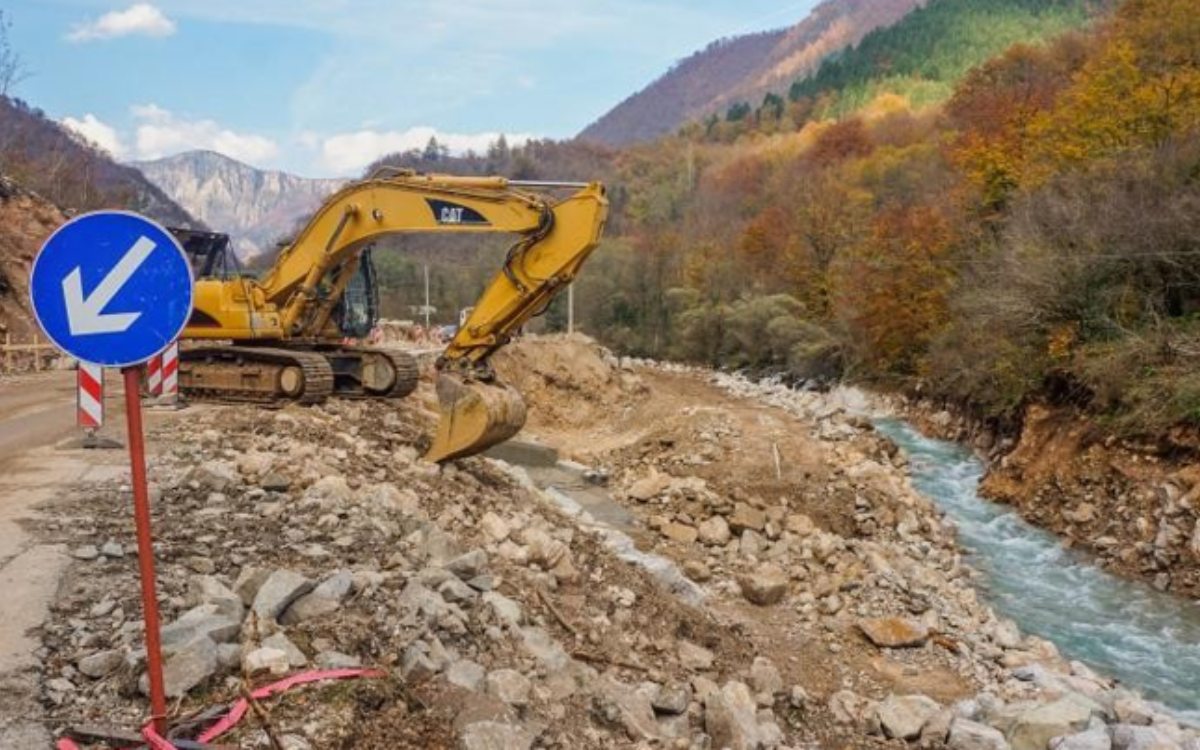
Despite clear scientific warnings and rulings of the District Court in Banja Luka, which have repeatedly annulled permits, the Ministry for Spatial Planning of Republika Srpska at the end of December 2025 issued an environmental permit for the third time to the company “Prirodna energija” d.o.o. for a project on the Pliva. Such practice ignores the fact that the Pliva springs already generate stable income through tourism and sport fishing.
An additional absurdity is the fact that the RS Government altered the boundaries of the planned protected area of the Pliva and Janja spring zones, excluding the part of the riverbed needed by the investor. Activists emphasize that the fight for the Pliva, as well as the fight against radioactive waste at Trgovska Gora along the Una River, concerns not only local communities but represents issues of national security.
Although theories are sometimes mentioned in public about the seizure of water as a resource of the future by global corporations, according to the portals Gerila and Raskrinkavanje.ba, the real initiators of small hydropower plants are local concessionaires who exploit administrative vacuums for short-term profit.
Electricity production from all planned SHPs in the region would cover only 1–2% of total needs, while the damage to drinking water resources would be incalculable. As concluded by the Center for the Environment, preserving rivers in an era of climate crisis must be an imperative.
The struggle that began with pickaxes in Rakita and years-long legal battles on the Kasindolska River shows that society recognizes the danger that institutions ignore. In a world where large river systems like the Colorado are already “bankrupt,” every preserved river in BiH becomes a global public good that must be defended—because alternatives can be found for electricity, but for drinking water there is no alternative.
MORE TOPICS:
PACT AGAINST SERBIA? Croatia, Albania and so-called Kosovo held a meeting on “defense cooperation”!
Source: Gerila.info/ Raskrinkavanje.ba/ Centar za životnu sredinu Banja Luka, Foto: voda.ekoakcija.org