




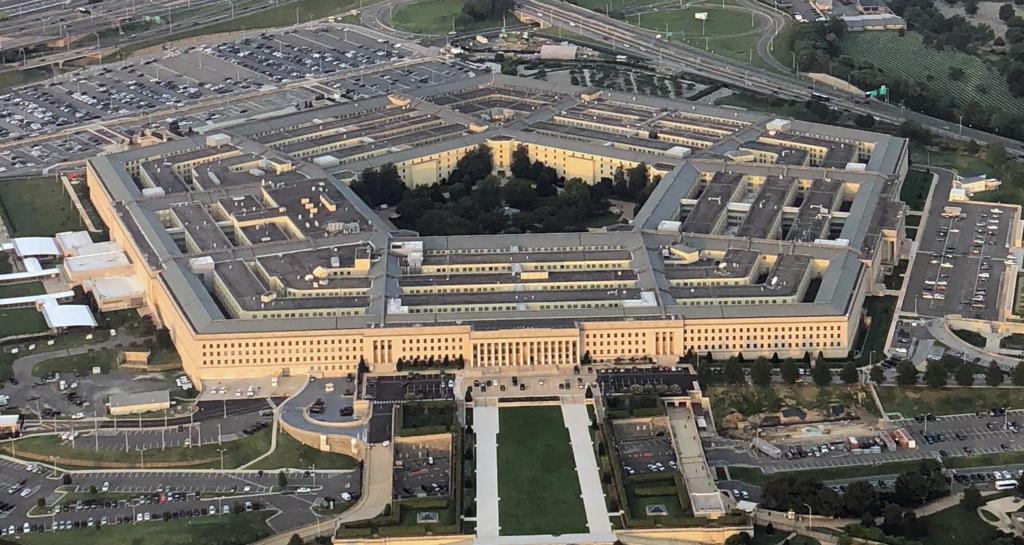
The Pentagon – the U.S. Department of Defense – told Congress that the first week of war in Iran cost the United States $11.3 billion, according to a source familiar with the matter.
The Pentagon provided this estimate to Congress during a briefing earlier this week.
The military reported spending $5 billion on ammunition alone during the first two days of the war, which began on February 28.
The U.S. government had previously indicated it would request additional war funding from Congress, but that idea appears to be on hold for now.
Senator Roger Wicker, a Republican and chairman of the Senate Armed Services Committee, said Wednesday he does not expect an additional funding request this month.
Iran fired on commercial vessels and targeted Dubai International Airport on Wednesday, escalating its campaign to choke the oil-rich Persian Gulf region, as global concern grows and U.S. and Israeli air attacks hit the Islamic Republic.
Iran’s response to the sudden Israeli and U.S. bombings, which began 12 days ago, has disrupted trade routes, blocked fuel and fertilizer supplies from the Gulf, and endangered air traffic through one of the world’s busiest regions. Both sides have entrenched themselves, hoping to outlast the other.
Meanwhile, Israeli intelligence reported that Iran’s new Supreme Leader, Ayatollah Mojtaba Hamnei, was injured at the start of the war — on the same day his father and predecessor, Ayatollah Ali Hamnei, was killed in an Israeli airstrike. Details of the injuries were not provided.
The 56-year-old Mojtaba Hamnei, whose wife was also killed in the Israeli attack, has not been seen since becoming Supreme Leader on Monday. Yusef Pezeshkian, son of Iranian President Masoud Pezeshkian, posted on social media that he heard Mojtaba was injured but that friends confirmed “he is healthy and has no problems.”
Late Wednesday in Tehran, witnesses reported hearing airstrikes, explosions, and heavy anti-aircraft fire. Drone buzzing overhead was also reported.
The conflict’s effects have spread across the Middle East as Israel struck targets linked to Iran-backed Hezbollah militants in Lebanon. The UN refugee agency reported at least 759,000 people internally displaced in Lebanon, with over 92,000 crossing into neighboring Syria.
Two Iranian drones struck near Dubai Airport, home to Emirates Airlines and one of the world’s busiest international carriers. Four people were injured, but flights continued.
In Salalah, Oman, firefighters battled a blaze in fuel tanks on Wednesday after days of Iranian attacks, according to Omani news agencies.
The UN Security Council voted Wednesday to adopt a resolution demanding a halt to “heinous attacks” by Iran on its Gulf neighbors.
“The international community is determined to reject these Iranian attacks on sovereign nations, which threaten stability, especially in a region of strategic importance for the global economy, energy, security, and trade,” said Bahrain’s UN ambassador Jamal Al-Ruwaii.
The 13-0 vote in the UN’s most powerful body reflects Iran’s isolated stance after aggressively responding to Israeli and U.S. attacks. China and Russia, two Iranian allies, abstained.
Their UN ambassadors called the resolution “extremely unbalanced” for failing to mention U.S. and Israeli attacks on Tehran that triggered the war.
Russian UN Ambassador Vassily Nebenzia said it could give the impression that Iran launched an unprovoked attack on Arab states “of its own will and out of malice.” Iran’s UN Ambassador Amir Saeid Iravani said the resolution “deliberately ignores the root causes of the current crisis.”
Iran has effectively blocked commercial shipping through the narrow Strait of Hormuz, through which one-fifth of the world’s oil passes. It has also targeted oil fields and refineries in Gulf Arab countries to create enough global economic pressure to force the U.S. and Israel to stop attacks on Iran.
At least 12 attacks on ships around the strait have been confirmed since the fighting began, with at least seven sailors killed.
The United States has pledged to keep the strait open and is leading intensive air attacks on the Iranian Navy and the port city of Bandar Abbas. The U.S. military reported Tuesday that it destroyed 16 Iranian mine-laying vessels near the strait.
Some tankers believed to be linked to Iran continue to transit the strait.
The shipping tracker Kpler reported that Iran resumed crude oil exports via its Jask terminal in the Gulf of Oman.
Oil prices remain significantly below Monday’s peaks, but Brent crude, the international benchmark, had risen about 20% from the start of the war through Wednesday, affecting consumers worldwide.
The International Energy Agency (IEA) on Wednesday agreed to release the largest amount of emergency oil reserves in its history in an attempt to ease the war’s impact on energy markets.
The Paris-based agency said it would release 400 million barrels from member countries’ emergency reserves — more than double the amount released four years ago in response to Russia’s invasion of Ukraine.
This could replace supplies currently off the market for roughly three weeks, said Bruce Bullock, director of the Maguire Energy Institute at Southern Methodist University.
During a visit to Ohio on Wednesday, U.S. President Donald Trump said he would use U.S. strategic oil reserves to try to curb rising gas prices, without specifying how many barrels would be released.
Simultaneous explosions shook southern suburbs of Beirut Wednesday evening, causing large fires and smoke clouds.
The Israeli military reported responding to dozens of Hezbollah rockets fired simultaneously across northern Israel.
At least 634 people have died in Lebanon since the latest clashes began, according to the Lebanese Ministry of Health. Iranian authorities report over 1,300 dead, Israel has reported 12 fatalities, the U.S. has lost seven soldiers, and eight others were seriously injured.
MORE TOPICS:
Source: Nova.rs; Foto: Pexels