




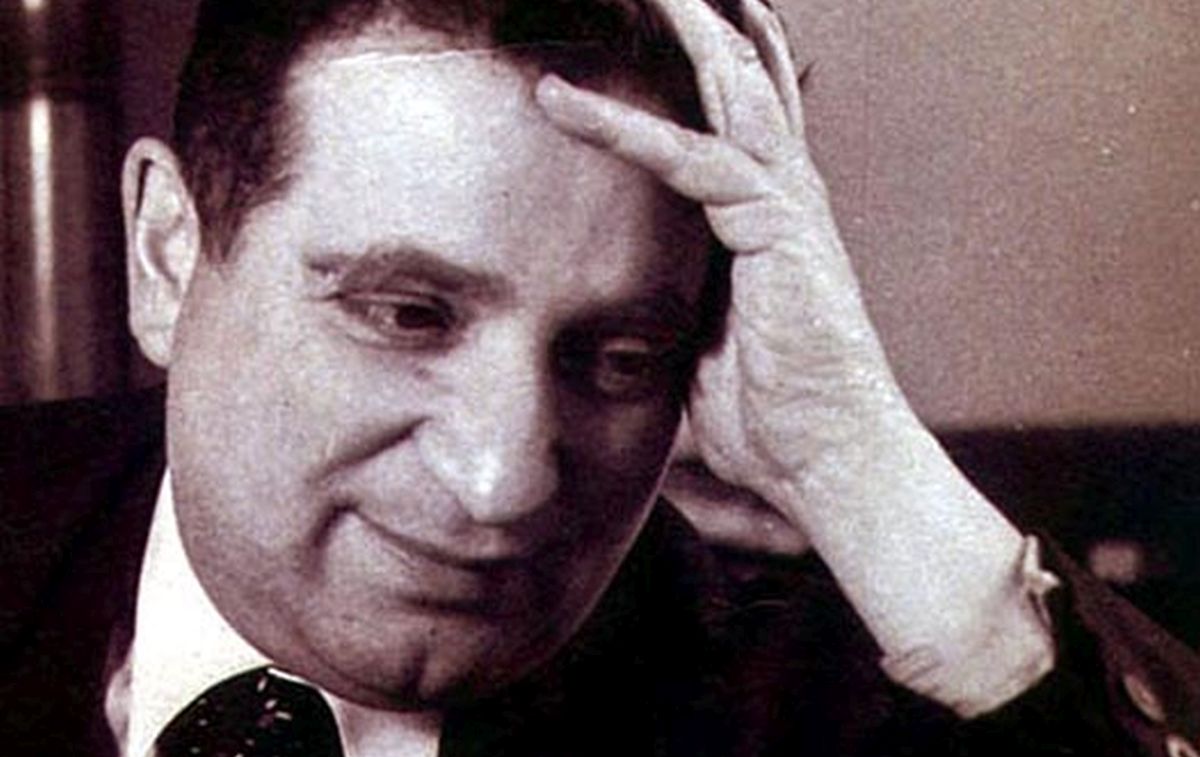
Stanislav Vinaver left a great mark on Serbian culture, primarily as the founder of expressionism and a great fighter for the abolition of dogmas that prevailed in the era of social-realist unanimity. He had a rich journalistic career, translated some of the most popular books, was a great patriot and a favorite member of Belgrade intellectual circles.
He described himself as a journalist who deals with literature. He studied mathematics, physics and music at the Sorbonne. He is the founder of expressionism in Serbia, which developed in the twenties of the last century in parallel with other countries in Europe.
He translated from French, English, Russian, Czech, Polish and German, and thanks to him, Lewis Carroll’s “Alice in Wonderland” and Mark Twain’s “The Adventures of Tom Sawyer” could be read in Serbian for the first time. These are just some of the achievements of the famous Stanislav Vinaver, who left a great mark.
He was born in Šabac on March 1, 1891, in the family of a wealthy Jewish doctor, Josif Vinaver, who came to this town in Mačva from Poland and brought an X-ray machine, making it the first X-ray center in the Balkans.
Stanislav Vinaver finished elementary school in Šabac, attended high school in Šabac and Belgrade, and then his parents sent him to the famous Sorbonne in Paris where he studied mathematics, physics and music.
He showed the first signs of his great patriotism, for which many will remember him as a Serbian patriot who did not have “a drop of Serbian blood,” when he returned from France in 1912 to participate in the Balkan Wars. During that period, he published three books, including the collection of symbolist poetry “Mjeća,” dedicated to his early deceased sister.
One of the 1300 corporals
In the Balkan wars and the First World War, Vinaver participated as a volunteer, one of the 1300 corporals. He was a lieutenant in the glorious Student Battalion, he went through the Golgotha of withdrawal across Albania together with his mother Ruža, while his father died of malaria in 1915, and on Corfu he worked as the editor of “Serbian Newspapers” and worked as an official of the State Press Bureau.
Then he went to Russia, where he collected South Slavic volunteers for the Thessaloniki front and there he was caught by the Bolshevik revolution. As a witness to these events, he will publish his memories in feuilletons, essays, as well as the book “Russian Parades.” He left Moscow in an incredible way by walking with a group of Yugoslavs to Istanbul, from where they transferred to Belgrade.
His son Vuk also spoke about his patriotism, revealing that Stanislav always finished lunch with the exclamation “Long live great Serbia.”

Creator of expressionism and “lucid” translator
The war tragedy gave rise to a large number of young writers who were anti-war and wanted to destroy some established principles and dogmas – the avant-garde was born!
In such a climate, Stanislav Vinaver published “Manifesto of Expressionism” in the journal “Progress” in 1921, in which he declares: “We are all expressionists!” and in this way that movement is founded. He most strongly advocated for a break with traditional artistic expression and challenged the then “patriotic and decasyllabic canons” that had been set by the hitherto undisputed literary critics Jovan Skerlić and Bogdan Popović.
In the same year, together with Todor Manojlović, he founded the famous library “Albatross,” in which, in addition to Crnjanski’s “Diary of Čarnojević” and Rastko’s “Burlesque of Mr. Perun, god of thunder,” Vinaver’s books also appeared – “Thunderbolt of the Universe” and the translation of Poe’s “Stories of Mystery and Imagination.”
He was considered the founder of modern and “lucid translator,” who as early as 1911 wrote “Mjeća” which began the transcendence of Serbian modernism. Parody songs like “Evdoksija” are subversive in nature and are essentially the beginning of the Serbian avant-garde.
Vinaver’s most famous works are: “Stories that lost their balance,” “Thoughts,” “Town of evil magicians,” “Thunderbolt of the universe,” “Guardians of the world,” “Icarus’ flight,” “War comrades,” “European night,” “Our daily bread language” and as the crown of his thinking about the Serbian language – “Enthusiasms and defiants of Laza Kostić.”

Journalist who reported from a meeting of Freemasons
Vinaver became a regular contributor to Vreme, whose owner was doctor of literature Kosta Luković. As a journalist, Vinaver was concise, short and clear. His contemporaries said that he knew how to summarize what was most important in the news. He was skilled in assessments and confident in estimates. He was more informed about everything than others and brought news that others could not reach.
He put his knowledge of foreign languages and daily reading of domestic and foreign press at his disposal, so thanks to that, this paper exuded the necessary world spirit and its piquant details, enriched by Vinaver’s style.
In 1926, from Belgrade’s Hotel Palas, as an accredited journalist for Vreme, he reported from the World Congress of Freemasons. The ritual session, which was open to the public, was opened by the brewery magnate Đorđe Vajfert.
World War II
According to the testimony of his son, Stanislav Vinaver welcomed World War II as a retired official of the Central Press Bureau, but that did not stop him from going to battle to defend his country and “die as an officer,” as he told a family friend who tried to dissuade him from that endeavor.
However, he was not allowed to die on the front, but was taken as a prisoner to German camps together with thousands of other officers, mostly Serbs. He testified about this in the book “Years of Humiliation and Struggle.” His mother Ruža, a famous piano professor, was killed by the Gestapo in the terrible year of 1942 for Belgrade Jews.
Fighter against social-realist unanimity
When he returned from the camp, Vinaver expressed his patriotism where it was most needed – in culture. A Parisian student of philosopher Henri Bergson, but also of the famous pianist Wanda Landowska, a musician, mathematician and physicist, Vinaver broadened the horizons of our culture in the era of social-realist unanimity.
He was a regular guest of cafes in the “Moscow” and “Majestic” hotels, where the greatest Serbian intellectuals, writers, journalists gathered at that time, and according to the story of his son Konstantin in the documentary film that RTS made about Stanislav Vinaver, he was a favorite guest whom everyone listened to when he spoke.
He spent the last ten years of his life in Belgrade working as a writer, satirist and translator from French, English, Russian, Czech, Polish and German. He died in Niška Banja on August 1, 1955, at the age of 64.
MORE TOPICS:
NOLE’S PHOTO IN THE RACE FOR A PRESTIGIOUS AWARD: Wimbledon moment captivates the world!
Source: Istorijski Zabavnik, Photo: Wikimedia Creative Commons