




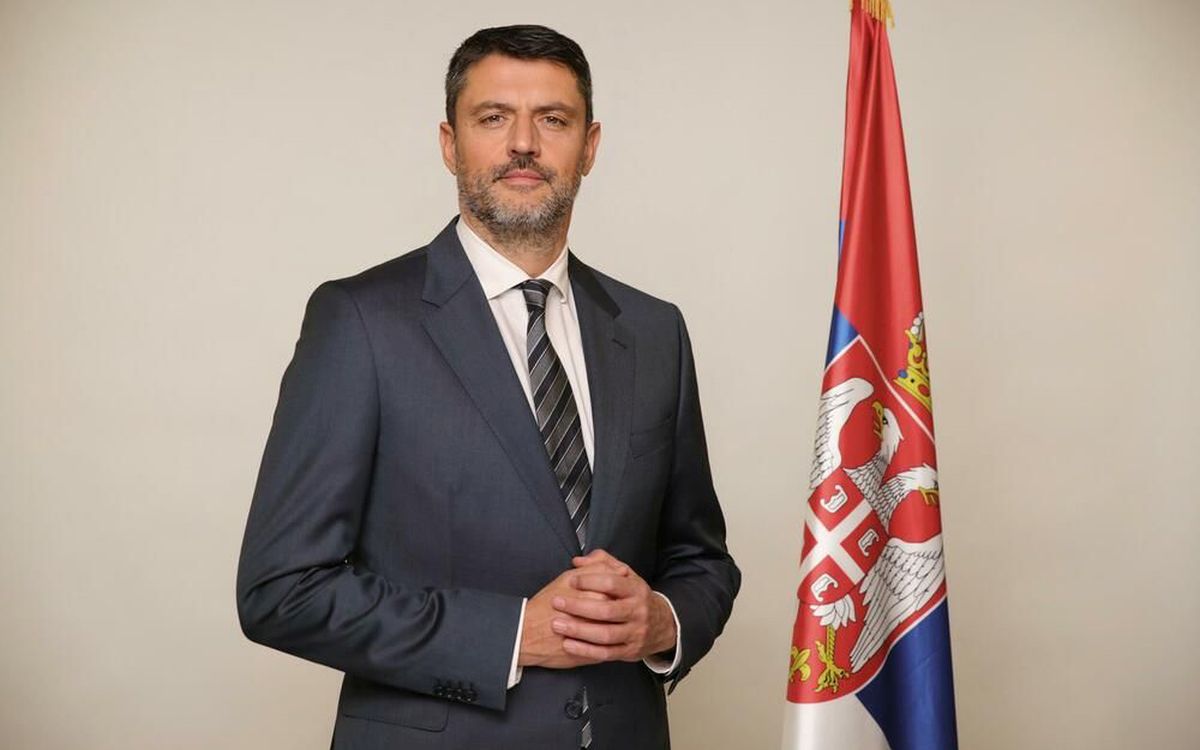
In his Op-Ed featured in The Pavlovic Today, Vladimir Božović, Serbia’s Consul General in New York City, highlights the critical role of diplomacy in strengthening bilateral relations between Serbia and the United States:
My appointment as the Consul General of the Republic of Serbia in New York is a profound honor and a significant responsibility. It presents a vital opportunity to deepen Serbia-U.S. relations and strengthen ties between the Serbian community in the U.S. and our homeland. With decades of experience in politics and diplomacy, I am ready to represent Serbia in this global hub and to advance the bond between our diaspora and the nation, ensuring both bilateral relations and cultural connections continue to flourish.
This wasn’t my first time in New York. My initial visit was connected to Dr. Dušan Kosović, a renowned psychoanalyst and neuropsychiatrist who earned a place in the prestigious Who’s Who in America.
Dr. Kosović, after completing his medical studies in Yugoslavia, recognized that his professional growth was limited in his homeland and moved to the U.S. in 1965. He went on to publish several distinguished works, including Problems of Adaptation of Yugoslavs to American Culture. Despite the challenges others faced, Dr. Kosović thrived, becoming a member of the American academies for psychoanalysis, clinical psychiatry, and the New York Academy of Sciences. His success and character left a profound impact on me, and I was fortunate to be influenced by him during my formative years. This connection gave me firsthand insight into what it means for Serbians to succeed in the U.S. and the vital role that human capital plays in advancing Serbian-American relations.
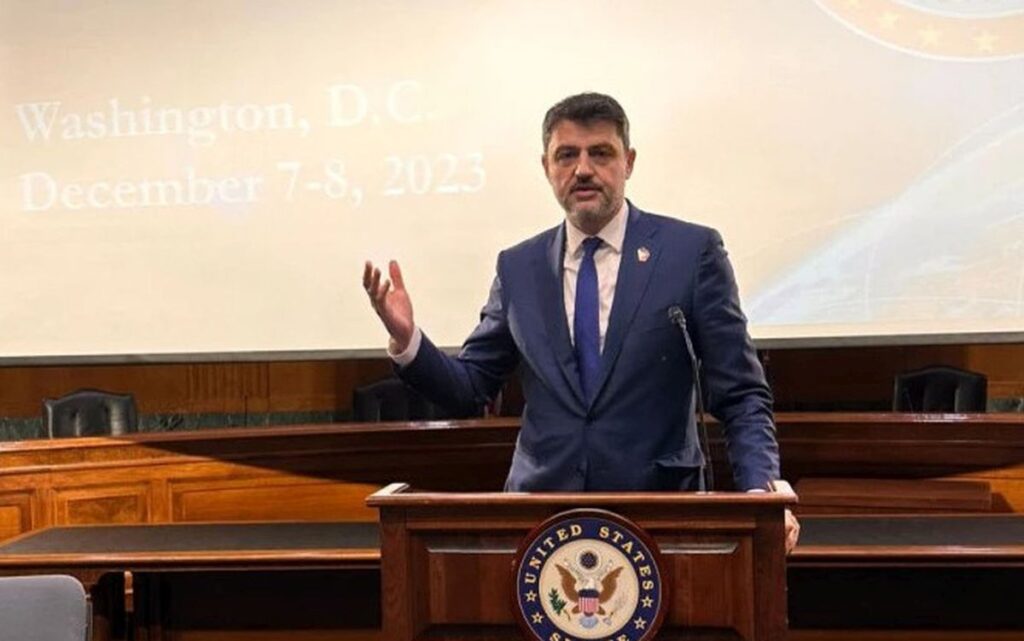
I view the role of Serbia’s Consul General in New York as more than a position — it’s a mission shaped by the deep history of U.S.-Serbia relations and the invaluable contributions of the Serbian community to America.
The first wave of Serbian immigration to America, involving approximately 150,000 people, occurred before World War I. Initially, many settled in California, with Serbian pioneers establishing communities in Los Angeles and San Francisco. However, as industrialization surged in the early 20th century, American Serbs began migrating eastward, particularly to states like Pennsylvania and Illinois.
In 1899, New York’s “Society of United Serbs” hosted an annual event featuring the “New York Serbian Singing Society” and a “guslar” performing Serbian heroic songs. By 1905, newspapers reported on prominent Serbian millionaires such as Toma Srzentić, a financier originally from the Bay of Kotor, and Mita Lujanović from Oršava, who achieved success after immigrating to New York.
Following World War II, a third wave of Serbian immigration saw around 250,000 individuals—including former prisoners of war, refugees, and political emigrants—arrive in America, with New York serving as a major port of entry.
During the 1990s, after the dissolution of socialist Yugoslavia, professionals, refugees, and young intellectuals from Serbia continued to enrich the American Serbian community. Over two centuries, Serbs have woven themselves into U.S. history through figures like Nikola Tesla, Mihailo Pupin, Karl Malden, and Marina Abramović.
Today, the Serbian community in the U.S. holds impressive economic, cultural, and intellectual potential. As Serbia continues to develop, many are returning with fresh ideas and experiences, contributing to the country’s growth. Thousands of Serbian students are also pursuing higher education in American universities, further strengthening the bond between our nations. This is why I believe there will be no room for the regressive policies that once divided Serbia and the U.S.
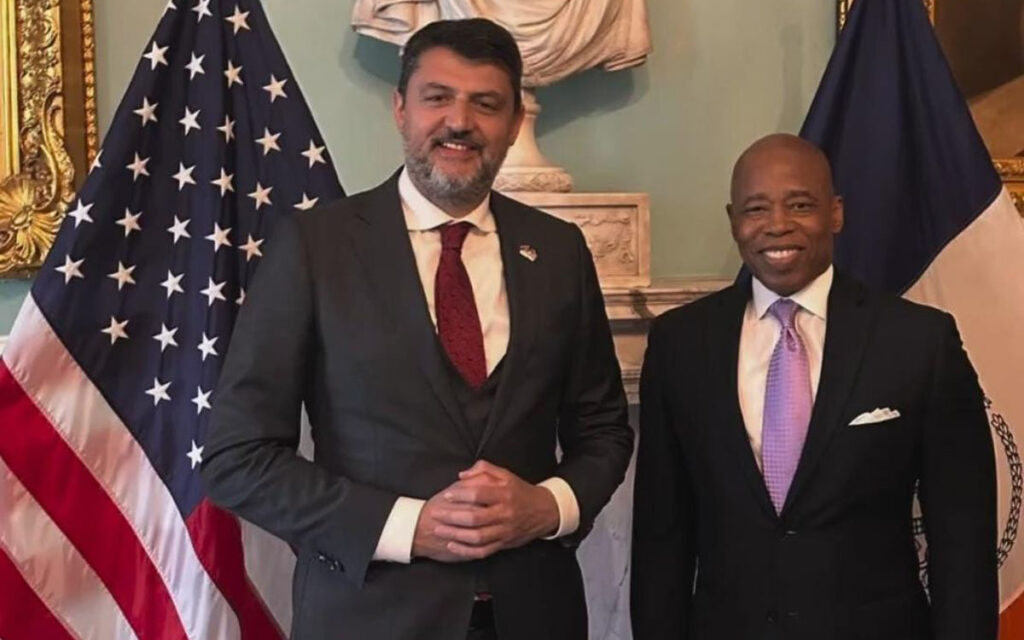
Serbia’s forward momentum, epitomized by Steve Wozniak’s interest in obtaining Serbian citizenship, underscores this belief. Wozniak’s recognition of Serbia’s promise, supported by President Vučić, allowed me the honor of presenting Serbian passports to both him and his wife.
Though the path forward is not without challenges, I am confident that our relations with the U.S. will continue to strengthen. As significant as the U.S. is for Serbia’s interests, there is no more natural partner for the U.S. in the Balkans than the Republic of Serbia, which remains the center of the region geographically, economically, diplomatically, and politically.
In this context, the Serbian community in the U.S. plays an indispensable and irreplaceable role, acting as a bridge that strengthens ties between our two nations.
READ MORE:
FAMOUS SERBIAN SUPPORTS TRUMP: Racing Star Danica Patrick to vote for the first time ever! (VIDEO)
Source: thepavlovictoday.com
Photo: Kurir