




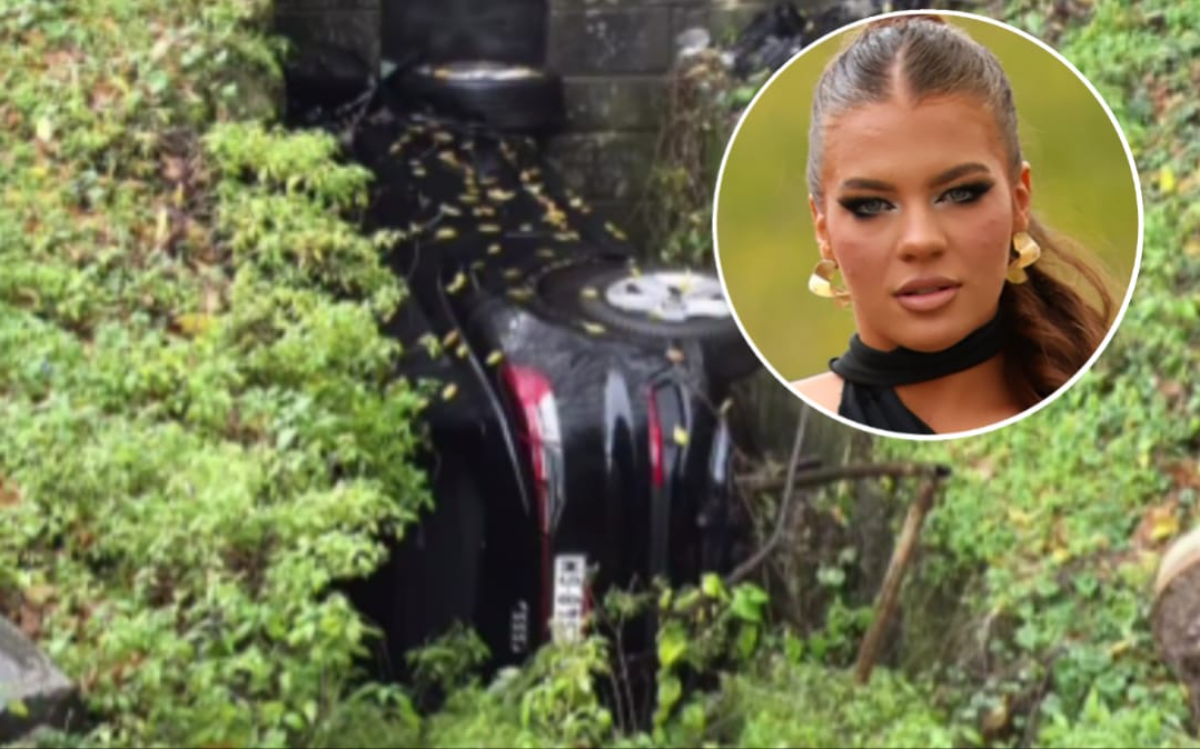
New details have emerged in the investigation of the tragic traffic accident in which Ana Radović (20) and Aleksandar Masalušić (37) lost their lives.
Initial media reports claimed that the “Audi SQ” driven by Masalušić at the time of the crash on the Čačak-Požega highway on November 23 was equipped with summer tires. Speculation arose that the summer tires had caused the accident on a slippery road, affected by days of rainfall in that part of Serbia.
However, a forensic examination of the vehicle confirmed that the “Audi SQ” actually had winter tires at the time of the accident.
“Upon inspection of the vehicle by a permanent court-appointed traffic expert, it was established that the vehicle was fitted with winter tires of the legally required tread depth,” the response from the Public Prosecutor’s Office in Čačak stated for Blic.
This examination ended the false speculation that inadequate winter equipment was responsible for the accident.
Excessive speed on a slippery highway curve suspected
Unofficial sources indicate that the accident is suspected to have occurred due to the excessive speed at which Masalušić was driving on the slippery highway, which featured several so-called “elbow curves.”
Reports suggest that forensic experts are still determining the exact speed at which the vehicle was traveling over the limit. Sources indicate that reconstructing the accident and analyzing the vehicle’s speed will take significantly more time.
For context, Ana Radović left her family home in Zlatibor on November 23, heading to Belgrade to pay for her upcoming law school exams. According to reports, Aleksandar Masalušić was driving her from Zlatibor. Radović last spoke with her brother around 6:45 p.m. that day and did not answer her parents’ calls for the next 14 hours.
According to Ana’s father, Miloš Radović, her mother reported her missing on November 24. Police, divers, and rescuers searched Lake Međuvršje and the West Morava River on November 25. However, the bodies of Ana and Aleksandar were only found on November 26.
Firefighters struggled to remove the crushed car with the bodies inside
When the crash site was finally located after three days, the Audi was so tightly wedged in a concrete culvert that extracting the crushed vehicle was extremely difficult.
The car driven by Aleksandar M. had to be secured in the middle, and after several attempts, firefighters finally managed to lift it using jacks. There was not even space for them to descend to reach it initially.
MORE TOPICS:
Source: Mondo,FOto: Printscreen Instagram; nestalisrbija.rs