




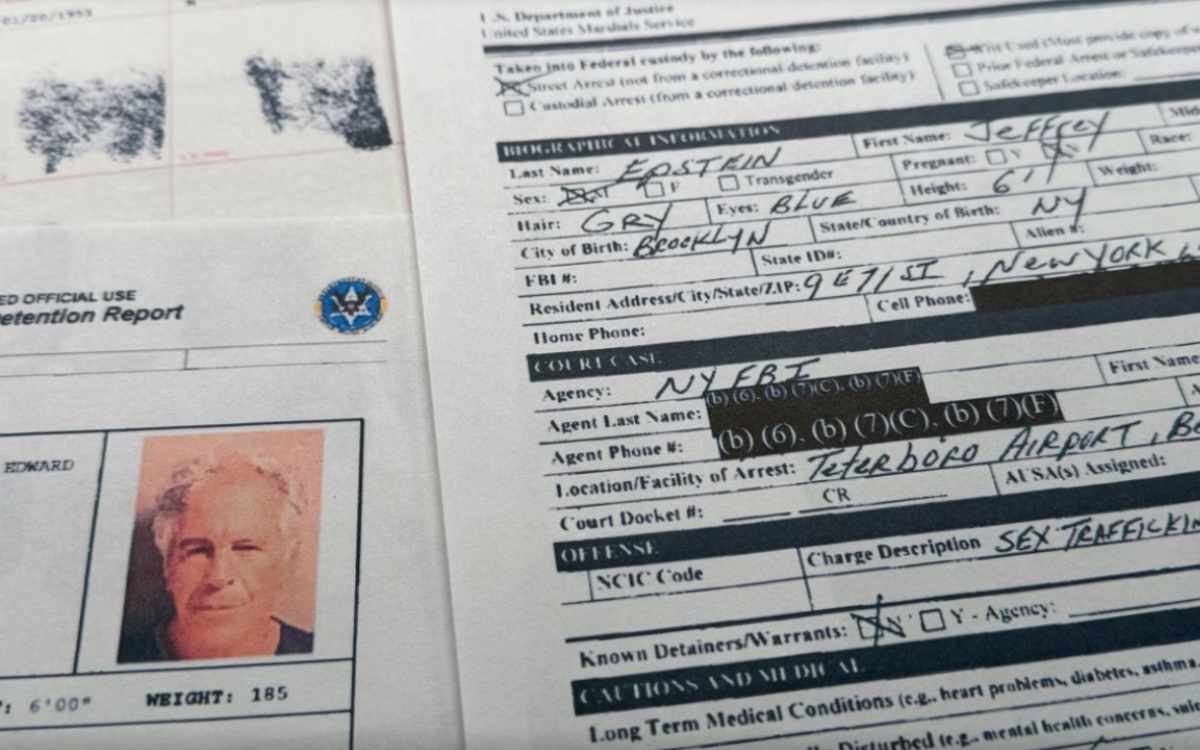
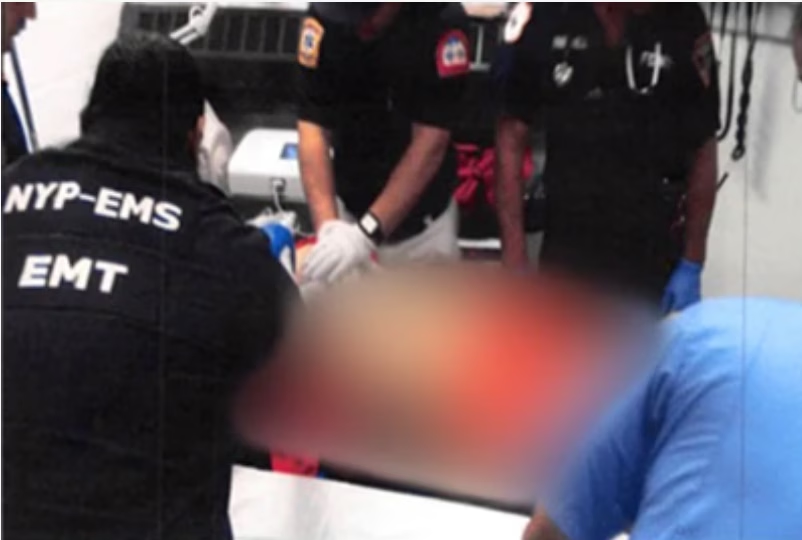
The U.S. government has released previously unseen photographs showing the body of Jeffrey Epstein on a stretcher, as paramedics administer first aid immediately after he was found dead in his prison cell.
The set consists of around twenty photographs, many of which are too explicit for publication. They are part of an FBI report on Epstein’s death in custody, which was recently declassified, along with autopsy documents and internal prison records.
The documents are among millions of files that the U.S. Department of Justice made publicly available on Friday as part of the latest release of the Epstein files.
Epstein was found dead in his cell at the Metropolitan Correctional Center in New York on August 10, 2019, where he was being held ahead of trial on charges of sex trafficking and conspiracy.
Photographs and autopsy
The latest FBI report, titled “Investigation into the Death of Jeffrey Epstein,” spans 23 pages, each marked as declassified. Versions of the documents reviewed by BBC Verify contain close-up photographs of Epstein’s neck, showing visible signs of injury.
The photographs are time-stamped August 10, 2019, at 6:49 a.m., about 16 minutes after his lifeless body was found in the cell. Epstein was transported to a nearby hospital at 6:39 a.m., where he was pronounced dead, indicating that the images were most likely taken at the hospital. Three of the photographs explicitly state this.
The documents also include details from the autopsy, including scans of two fractures of the thyroid cartilage in the neck, as well as a psychologist’s report on Epstein’s mental state in the days leading up to his death.
Epstein’s name appears on all photographs, but in some cases it is misspelled as “Jeffery” instead of “Jeffrey.” BBC Verify conducted a reverse image search and found no evidence that these photographs had previously been made public.
Final days in custody
The FBI report also contains six pages of a detailed timeline of Epstein’s time in custody, from his arrest on July 6, 2019, until his death just over a month later.
The documents confirm that Epstein was placed under enhanced supervision due to the risk of suicide following an incident on July 23, when he claimed that his cellmate, a former police officer charged with murder, had attempted to kill him. The following day, Epstein told a psychologist that he had no intention of taking his own life and that doing so would be “crazy.”
Two days later, he stated that he was “fully committed to fighting his case” and wanted to return to his life.
Internal Department of Justice documents show that prison management recommended that Epstein not be left alone in a cell, with regular checks every 30 minutes and unannounced rounds. Nevertheless, his cellmate was released the day before his death.
Prison records also show that guards failed to conduct mandatory checks at 3:00 a.m. and 5:00 a.m. on the night of August 9, while security cameras in that part of the prison were not functioning.
Epstein’s body was discovered during the morning headcount.

Two versions of the report and open questions
Alongside the unredacted version, a shortened, redacted version of the FBI report was also released, consisting of 17 pages. It does not include the psychologist’s report, the custody timeline, or the unprocessed photographs.
It is unclear why both versions of the same report were released to the public.
The U.S. Department of Justice said it is aware of questions regarding the documents, while the FBI declined to comment on their release.
MORE TOPICS:
PACT AGAINST SERBIA? Croatia, Albania and so-called Kosovo held a meeting on “defense cooperation”!
Source: Nova.rs, Foto: Jon Elswick / AP