




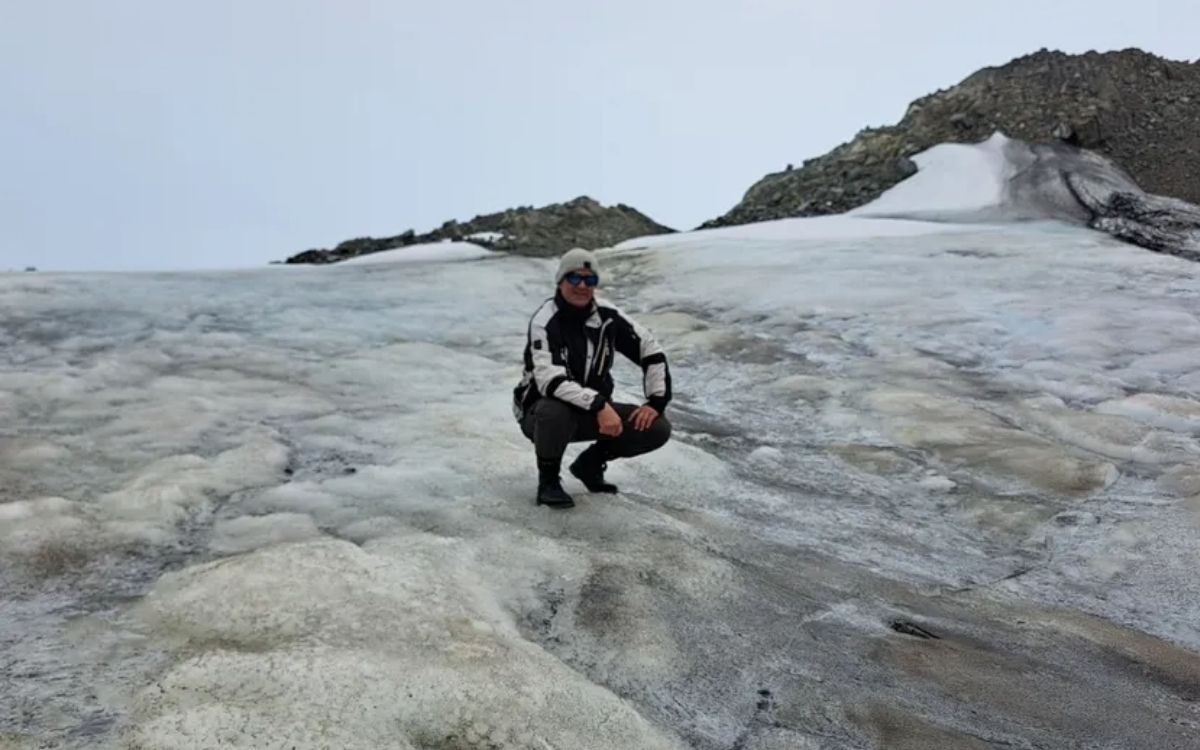
Montenegrin scientists, along with colleagues from other countries, have been staying on a scientific research vessel for over a month, and their focus is directed toward marine research. The Montenegrin expedition consists of scientists from the Institute of Marine Biology of the University of Montenegro, Dr. Vesna Mačić and Dr. Aleksandar Joksimović. The first encounter with Antarctica, as scientific advisor Dr. Aleksandar Joksimović says, left a strong impression on him. Nature, vast expanses of ice, and the silence that dominates this continent without a permanent population evoke both awe and admiration simultaneously.
-What first fascinated me, the first contact with Antarctica, is that here there is truly untouched nature, primordially untouched nature. You look at glaciers who knows how many hundreds of thousands of years old, I had the opportunity to drink water from those glaciers, which I consider to be a real elixir. Of course, there is also the contact with wild animals – penguins, seals, and cormorants – who are absolutely not afraid of humans. The greatest privilege for me is that for more than a month I haven’t seen cars, crowds, smelled smog, or everything else that makes up the everyday life on the rest of planet Earth, Aleksandar says for RINA.
Even though it is currently summer in the southern hemisphere, weather conditions are still extremely demanding and represent a daily challenge for work.
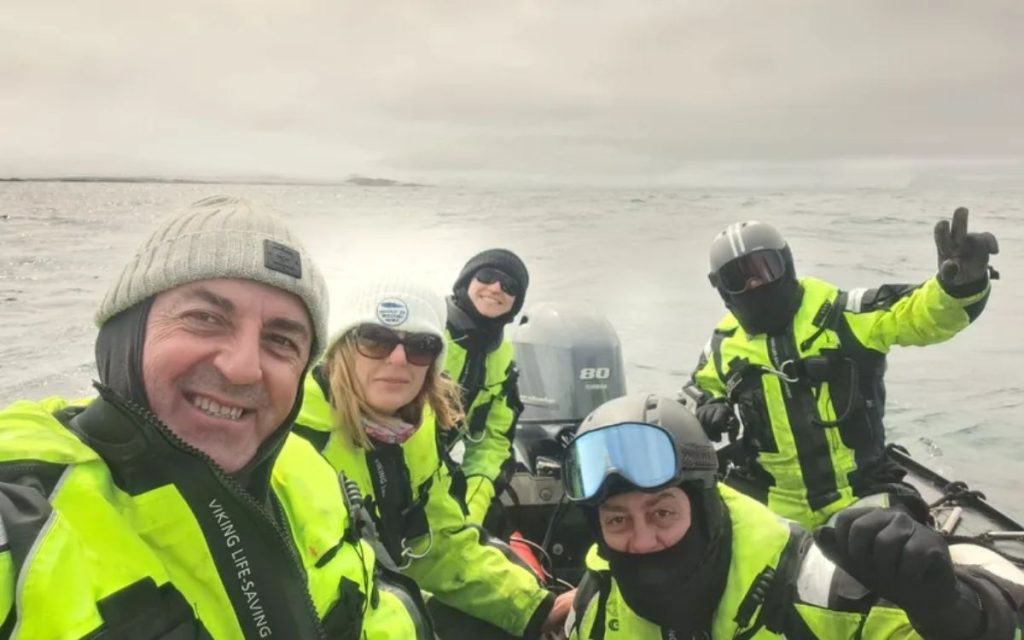
-In this period of the year, it is not excessively cold, considering it is summer, so the air temperature sometimes goes even above zero. However, when there is wind, the subjective feeling of cold significantly drops and can be minus 10 to minus 15 degrees. The problem is also that the temperature of the sea, that is the ocean, is always around one to one and a half degrees, which is why we are constantly in special suits. These are special suits and the procedures for descending into a boat and going to shore are very demanding, adds this Montenegrin scientist.
Unlike the rest of the team staying at the research station, Dr. Joksimović and Dr. Mačić spend most of their time on the ship, where sea sampling is performed daily and planned research activities related to microplastics are conducted.
-We take sediment and water samples. When those samples are delivered by ship to our laboratories, colleagues and our experts who deal with narrowly specialized fields will perform further analyses. Then we will have the first results on the state of pollution here in Antarctica and in these waters, perhaps even in comparison with the rest of the planet, emphasizes Joksimović.
The Montenegrin scientists spent the holidays far from their families, but they marked them in the company of colleagues from Bulgaria, Romania, and other countries.
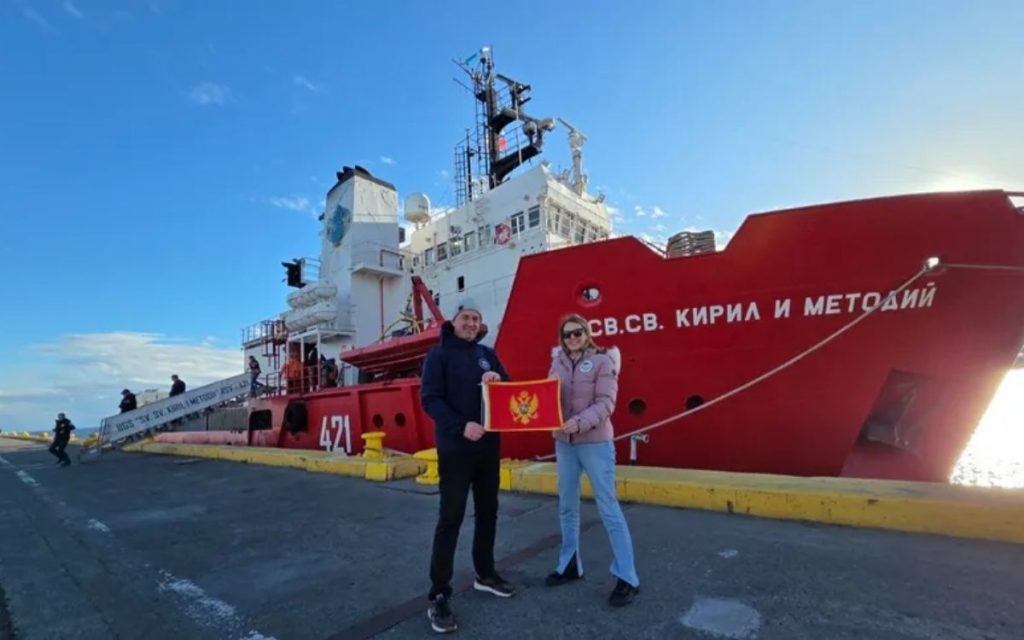
-This is a military ship of the Bulgarian Navy with a crew of 33 members. Even though we are guests, we don’t feel that way at all. We have become such friends and we are similar to each other. As Bulgarians celebrate Christmas, Epiphany, and other religious holidays according to a different calendar, we celebrated them practically twice. They even swam for the Holy Cross here at the beginning of January. The atmosphere is phenomenal, we hang out every evening, talk and joke, says Aleksandar.
Even though the experience is priceless, being separated from family is not easy.
-It is unusual to be away from home during the holidays, but there is limited satellite internet, so I am in constant communication with my family. That is very important. Still, this task and this mission represent a special pleasure, honor, and privilege to be here as scientists, he said.

He points out that as humans we must not allow Antarctica to also become a place where man will leave his negative mark.
Antarctica, as an uninhabited continent, is exclusively intended for scientific research, and during the summer season, about 4,000 scientists stay there within approximately 80 research stations.
The research mission lasts until February 20th, after which the return of the Montenegrin scientists is expected.
MORE TOPICS:
Source: RINA; Photo: RINA