




With the Turkish edicts of 1830 and 1833, Serbia gained autonomy and the right to build cultural, educational, and health institutions.
Thanks to the fact that Kragujevac was the capital of renewed Serbia at that time, where Prince Miloš Obrenović built his court with administrative and governing apparatus, the following were established in it: The Prince’s Serbian Printing House, Serbian News under the editorship of Dimitrije Davidović, the Gymnasium (1833), the Prince’s Serbian Theater (1835), the Prince’s Serbian Band, founded by Jozef Šlezinger, the Lyceum of the Principality of Serbia (1838), a museum, a library, the first gallery, the Kragujevac Court (1820), a hospital, the first pharmacy. This led to the arrival of learned Serbs from Vojvodina, who would begin pioneering work in the cultural and educational field in Kragujevac.

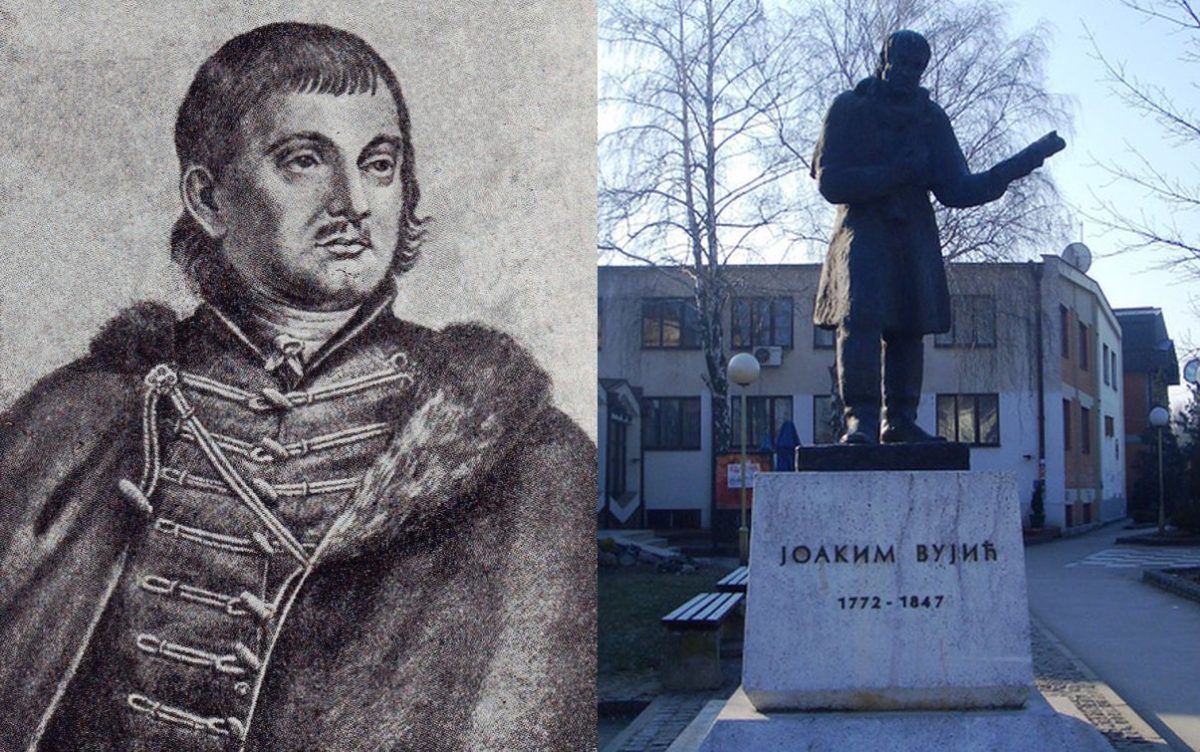
The first theater performances in Kragujevac are mentioned in 1825. They were prepared and performed by teacher Đorđe Evgenijević with his students. At the invitation of Prince Miloš, Joakim Vujić arrived in Kragujevac in the autumn of 1834, as a person of great theatrical experience and a connoisseur of a vast theatrical repertoire. He was appointed director of the theater with the task of organizing the work of the theater.
The Prince’s Serbian Theater was housed in the adapted premises of the printing house and had a stage, boxes, and a parterre. The theater’s repertoire mainly consisted of works by Joakim Vujić, and the acting ensemble, apart from Vujić, who was the main actor and director, consisted of young clerks and Gymnasium students. The first performances were held during the session of the Sretenje Assembly, from February 2nd to 4th, 1835, when Vujić’s plays were shown with music composed by Jožef Šlezinger.

During the First World War, on improvised stages in refugee military camps in which actors from Kragujevac also participated, as well as in the city, by organizing performances with patriotic texts, the morale of soldiers and the people was raised.
At the initiative of Branislav Nušić and theater art enthusiasts, the National Theater was founded in Kragujevac in 1935 – the first professional theater after a hundred-year break. Due to material difficulties, the theater operated for only one season when, by the decision of the Banovina Administration in Novi Sad, it grew into the Theater of the Danube Banovina. This theater officially covered the territory of Kragujevac until the beginning of the Second World War.

During the time of intensive development of self-government, the Kragujevac Theater, which since 1965 has been named the “Joakim Vujić” Theater, and since 1970 the Theater, achieves top achievements in terms of repertoire and stage realization of works. A fire at the beginning of 1969 temporarily disabled work in the theater itself, but performances intensified on permanent stages in other places, tours and exchanges with theaters in the country and abroad.
On Theater Day, every February 15th, the oldest Serbian theater presents the “Joakim Vujić” statue to eminent Serbian writers, actors, directors, set designers and composers (awarded for an exceptional contribution to the development of theater art in Serbia) and a ring with the image of Joakim Vujić (awarded for an exceptional contribution to the development of the Theater and the affirmation of its reputation in the country and abroad).
MORE TOPICS:
SERB (88) KILLS HIS WIFE IN FLORIDA: Suspect tried to disguise death as suicide! (VIDEO)
Izvor: Alo.rs, Foto: Wikimedia Creative Commons