




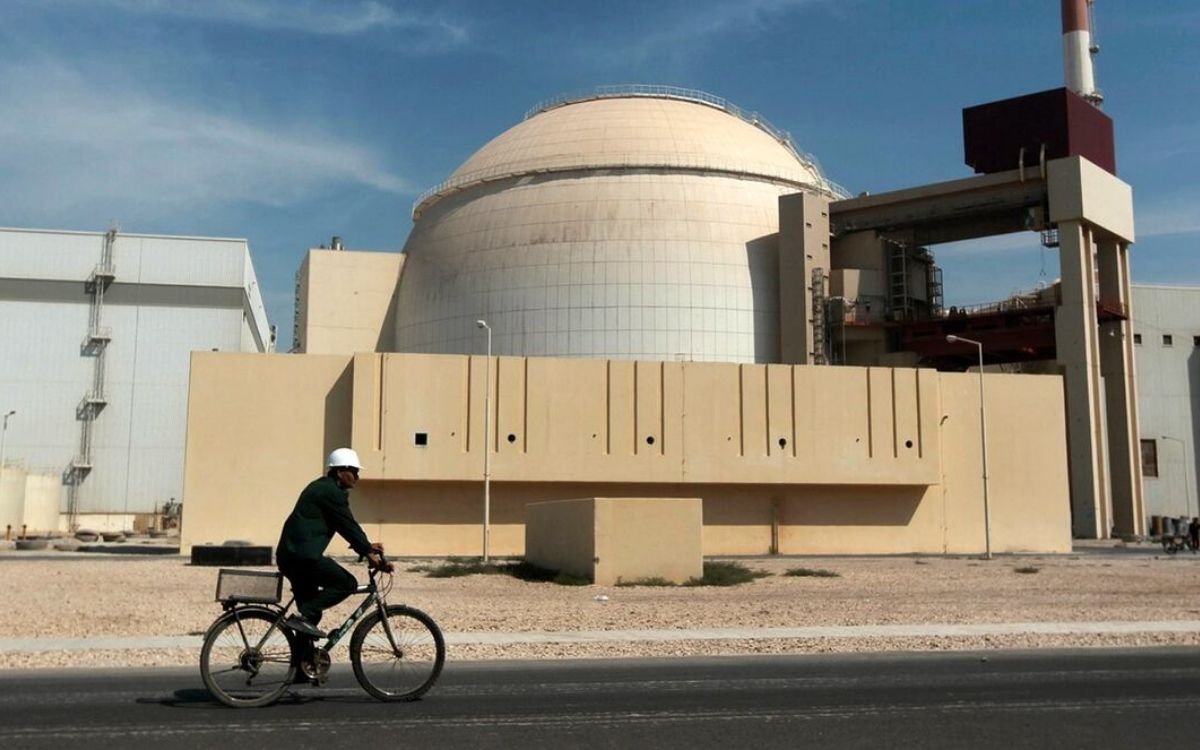
The Director of the International Atomic Energy Agency (IAEA), Rafael Grossi, warned today that a mass evacuation could be necessary in the Middle East if attacks on civilian nuclear power plants occur, leading to the release of radioactive substances.
Opening the quarterly meeting of the IAEA Board in Vienna, Grossi admitted to having a “strong sense of frustration” because recent negotiations between the USA and Iran did not lead to an agreement on the Iranian nuclear program, the British Guardian reported.
Grossi attended the talks between Iran and the USA, providing technical assistance.
At the meeting of the IAEA Board, the director of the UN agency said that diplomacy is difficult but not impossible, that the use of force has always been present in international relations but that, although it is a reality, it is the least desirable option.
“I remain convinced that the solution to this long-standing misunderstanding lies on the negotiating table,” Grossi pointed out and repeated that diplomacy is difficult but never impossible.
According to him, diplomacy regarding nuclear issues is even more difficult.
“It is not a question of whether we will gather again at the negotiating table, but when we will gather again. We simply have to do it as soon as possible,” Grossi said, the Guardian reported.
Speaking about the impact of the current fighting across the Middle East, Grossi warned that the possibility of a radiation release with serious consequences, including the need for the evacuation of large areas, cannot be ruled out.
“Allow me to emphasize that the situation today is very worrying. Iran and many other countries in the region that are exposed to military attacks have operational nuclear power plants and nuclear research reactors, as well as associated fuel storage facilities, which increases the threat to nuclear safety,” Grossi said.
He said that the United Arab Emirates has four operational nuclear reactors, and Jordan and Syria have operational nuclear research reactors.
“Bahrain, Iraq, Kuwait, Oman, Qatar, and Saudi Arabia have also been attacked. All these countries use nuclear energy in some way. Therefore, we call for maximum restraint in all military operations,” Grossi said.
Grossi also said that efforts to contact the Iranian nuclear authorities are continuing, but that for now, there is no response.
MORE TOPICS:
NEW INCIDENT IN NOVI SAD: Parts of the canopy of the Serbian National Theatre collapsed!
Source: Nova.rs; Photo: Majid Asgaripour / Mehr News Agency