


Finland has once again taken first place on the list of the happiest countries in the world, according to the World Happiness Report for 2025. This Nordic country has held the top position for the eighth consecutive year thanks to the high ratings its citizens give to the quality of their lives. With an average score of 7.736 out of 10, Finland has once again ranked ahead of Denmark, Iceland, Sweden, and the Netherlands, which occupy the remaining top spots. A stable economic system, strong social ties, and a high level of trust among citizens are key factors contributing to Finnish happiness. This globally conducted study pointed to a strong connection between trust in other people and the feeling of happiness.
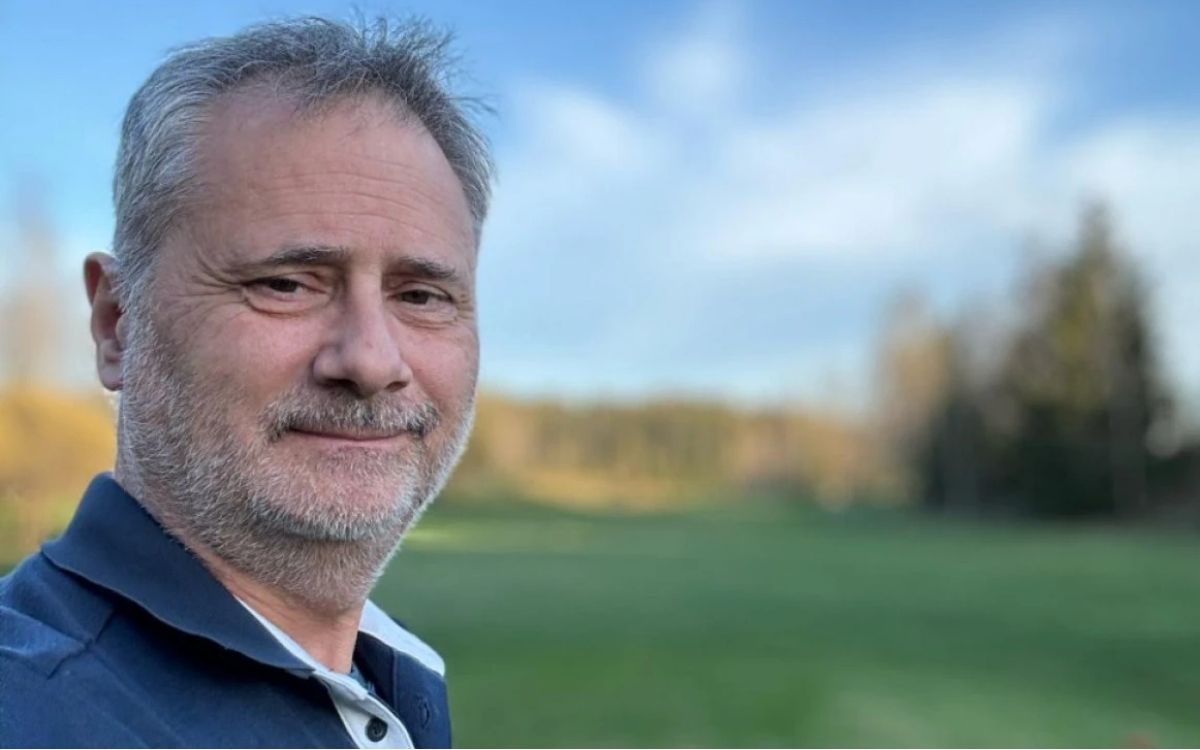
In an interview for NIN, Dr. Dimitrije Jakovljević, a specialist in geriatrics who has lived and worked in Finland for nearly three decades, speaks about what life looks like in a country often cited as an example of social welfare and systemic care for citizens. In addition to his regular work, Dr. Jakovljević represents Finland on the Executive Board of a European project aimed at advancing geriatrics in Europe, which brings together 43 countries within the framework of the European Cooperation in Science and Technology organization.
In recent years, Dr. Jakovljević has worked as a private consultant and has mainly focused on improving healthcare for the elderly. His experience sheds light not only on the Finnish healthcare system but also on the broader social values that shape everyday life in the happiest country in the world.
Finland has already been declared the happiest country in the world for the eighth consecutive year according to the World Happiness Report, published by the Wellbeing Research Centre at the University of Oxford, in cooperation with the United Nations Sustainable Development Solutions Network (SDSN) and the research company Gallup.
How do you, from personal experience, explain this enduring happiness of Finnish citizens?
I think that “Finnish happiness” is not reflected in a constant feeling of joy or euphoria, but in a deep sense of security, trust, and balance in everyday life. This is reflected in simplicity expressed through a culture of modesty and gratitude. This means that people do not complain about what they lack, but are satisfied with what they have. People do not strive for excessive luxury, but value simple things – nature, silence, and a balance between work obligations and private life.
Trust in people, but also in the institutions of the system, brings a certain inner peace, which I believe is crucial for reducing daily stress and creating a feeling that you are part of a society that will not let you down when you need healthcare, education, or social security.
I would say that happiness in Finland is not something that is sought – it is a state that arises from the way society functions. But I think this is not only a Finnish specificity, but part of a broader, global sense of social “well-being” that characterizes the Scandinavian countries.
What are the key social values in Finnish society and how much do they differ from the values you recognize in our region?
People truly believe that the police, healthcare, education, and social system function without corruption, without “connections,” without privileged individuals. That certainly sounds idealistic, but survey results were recently published showing that citizens have a high level of trust in the police and the judicial system. In 30 years of living in Finland, I have never been in a situation where someone asked me for a bribe or a “favor for a favor.” Job competitions for positions funded from public funds (such as police, education, healthcare) are transparent, and the results with explanations are available to everyone. In the event of an appeal, if an error is established – the competition is repeated, and if the omission was intentional – sanctions follow.
It is interesting that citizens follow politics, but do not place much trust in political parties. I think that is why people are not generally burdened by belonging to a particular political option, because it has no significance in their everyday lives – unless they have decided that participation in politics will be their career choice.
Social equality is a deeply rooted value. There is no great difference between “important” and “ordinary” people. Titles and status have no particular significance in everyday life. Politicians ride bicycles, stand in lines, their children attend public schools. Tarja Halonen, when asked about personal security during her presidential term, said: “That for her as president of the state there was no greater happiness than being able, in her free time, to freely walk around the city, go to the market or the theater, without her presence disturbing the freedom of other citizens.” Living freely is a Scandinavian achievement, although unfortunately sometimes tragically violated – as in the cases of Olof Palme and Anna Lindh.
From an early age, independence is encouraged, but also responsibility. Children go to school on their own, older people live independently in their homes for as long as possible. Family is important, especially in raising children, but there are many people – especially in cities – who have decided to live alone. Respect for personal space and unobtrusiveness are the norm. Behavioral culture implies that silence is not an inconvenience, but a sign of comfort. This does not mean that people are cold – their closeness can be quiet and unobtrusive.
People value simple things: the forest, the lake, silence. Spending time in nature is part of identity. Awareness of environmental protection is always in focus. The Finnish concept of julkinen oikeus denotes the universal right of everyone to move freely in nature – for example, it is allowed to pick mushrooms, berries, and medicinal herbs in forests without asking the landowner’s permission. The shores of lakes and seas belong to everyone. The law gives you the freedom to enjoy nature, but on the condition of responsible behavior. It is strictly forbidden to hunt or fish without a permit, damage or cut trees, light fires, or leave waste. Thus, with freedom comes the obligation to respect nature and the peace of others.
What does your everyday life in Helsinki look like? What are the small rituals and routines that make a difference? What surprised you the most when you first came to Finland – in cultural, professional, or everyday terms?
Finland has once again taken first place on the list of the happiest countries in the world, according to the World Happiness Report for 2025. This Nordic country has held the top position for the eighth consecutive year thanks to the high ratings its citizens give to the quality of their lives. With an average score of 7.736 out of 10, Finland has once again ranked ahead of Denmark, Iceland, Sweden, and the Netherlands, which occupy the remaining top spots. A stable economic system, strong social ties, and a high level of trust among citizens are key factors contributing to Finnish happiness. This globally conducted study pointed to a strong connection between trust in other people and the feeling of happiness.
READ MORE:
The happiest country in the world has held the record for eight consecutive years
In an interview for NIN, Dr. Dimitrije Jakovljević, a specialist in geriatrics who has lived and worked in Finland for nearly three decades, speaks about what life looks like in a country often cited as an example of social welfare and systemic care for citizens. In addition to his regular work, Dr. Jakovljević represents Finland on the Executive Board of a European project aimed at advancing geriatrics in Europe, which brings together 43 countries within the framework of the European Cooperation in Science and Technology organization.
In recent years, Dr. Jakovljević has worked as a private consultant and has mainly focused on improving healthcare for the elderly. His experience sheds light not only on the Finnish healthcare system but also on the broader social values that shape everyday life in the happiest country in the world.
Finland has already been declared the happiest country in the world for the eighth consecutive year according to the World Happiness Report, published by the Wellbeing Research Centre at the University of Oxford, in cooperation with the United Nations Sustainable Development Solutions Network (SDSN) and the research company Gallup.
How do you, from personal experience, explain this enduring happiness of Finnish citizens?
I think that “Finnish happiness” is not reflected in a constant feeling of joy or euphoria, but in a deep sense of security, trust, and balance in everyday life. This is reflected in simplicity expressed through a culture of modesty and gratitude. This means that people do not complain about what they lack, but are satisfied with what they have. People do not strive for excessive luxury, but value simple things – nature, silence, and a balance between work obligations and private life.
Trust in people, but also in the institutions of the system, brings a certain inner peace, which I believe is crucial for reducing daily stress and creating a feeling that you are part of a society that will not let you down when you need healthcare, education, or social security.
I would say that happiness in Finland is not something that is sought – it is a state that arises from the way society functions. But I think this is not only a Finnish specificity, but part of a broader, global sense of social “well-being” that characterizes the Scandinavian countries.
What are the key social values in Finnish society and how much do they differ from the values you recognize in our region?
People truly believe that the police, healthcare, education, and social system function without corruption, without “connections,” without privileged individuals. That certainly sounds idealistic, but survey results were recently published showing that citizens have a high level of trust in the police and the judicial system. In 30 years of living in Finland, I have never been in a situation where someone asked me for a bribe or a “favor for a favor.” Job competitions for positions funded from public funds (such as police, education, healthcare) are transparent, and the results with explanations are available to everyone. In the event of an appeal, if an error is established – the competition is repeated, and if the omission was intentional – sanctions follow.
It is interesting that citizens follow politics, but do not place much trust in political parties. I think that is why people are not generally burdened by belonging to a particular political option, because it has no significance in their everyday lives – unless they have decided that participation in politics will be their career choice.
Social equality is a deeply rooted value. There is no great difference between “important” and “ordinary” people. Titles and status have no particular significance in everyday life. Politicians ride bicycles, stand in lines, their children attend public schools. Tarja Halonen, when asked about personal security during her presidential term, said: “That for her as president of the state there was no greater happiness than being able, in her free time, to freely walk around the city, go to the market or the theater, without her presence disturbing the freedom of other citizens.” Living freely is a Scandinavian achievement, although unfortunately sometimes tragically violated – as in the cases of Olof Palme and Anna Lindh.
From an early age, independence is encouraged, but also responsibility. Children go to school on their own, older people live independently in their homes for as long as possible. Family is important, especially in raising children, but there are many people – especially in cities – who have decided to live alone. Respect for personal space and unobtrusiveness are the norm. Behavioral culture implies that silence is not an inconvenience, but a sign of comfort. This does not mean that people are cold – their closeness can be quiet and unobtrusive.
People value simple things: the forest, the lake, silence. Spending time in nature is part of identity. Awareness of environmental protection is always in focus. The Finnish concept of julkinen oikeus denotes the universal right of everyone to move freely in nature – for example, it is allowed to pick mushrooms, berries, and medicinal herbs in forests without asking the landowner’s permission. The shores of lakes and seas belong to everyone. The law gives you the freedom to enjoy nature, but on the condition of responsible behavior. It is strictly forbidden to hunt or fish without a permit, damage or cut trees, light fires, or leave waste. Thus, with freedom comes the obligation to respect nature and the peace of others.
What does your everyday life in Helsinki look like? What are the small rituals and routines that make a difference? What surprised you the most when you first came to Finland – in cultural, professional, or everyday terms?
The profession I practice is focused on constant contact with people. During thirty years of life in Finland, I had the privilege of working in various sectors of healthcare – from a general practitioner in primary healthcare, through clinical medicine, to research work at the National Institute for Health.
Constant changes of workplace require constant proving of oneself, and as a foreigner I had the feeling that I had to make an extra effort to show my value. That motivated me toward continuous professional development. Medicine is a dynamic science, with new findings and technologies emerging every day. As a physician, I feel responsible to offer my patient a solution based on the latest knowledge and to earn their full trust.
Science and education are highly valued in Finnish society. A doctor, teacher, judge, engineer, or architect are respected professions, but crafts are equally valued – because everyone is a “professor” in their own work. Parents do not discourage children from practical occupations; on the contrary, they encourage them. Creativity cannot replace quality education. Knowledge and skills must be certified – as in the case of electricians, plumbers, or construction workers.
In practice, such a system prevents “jack-of-all-trades” behavior and introduces order and professionalism. Working “off the books,” or what is sometimes called the “gray economy,” is not allowed – because it means avoiding tax payments, and thus a lack of funds in the budget for the healthcare, social, and education systems. Simply put – it is not allowed to “steal” from the community.
I remember how twenty years ago, when I defended my doctoral dissertation, the news was published in all major media – radio stations and newspapers – emphasizing how much my research contributed to Finnish healthcare and society as a whole. That deeply moved me and showed that knowledge, effort, and contribution to the community have a special place in this country’s value system.
To what extent are people in Finland connected to one another? Does a sense of community or individualism dominate – and how is that balance maintained?
As I mentioned earlier, Finnish behavioral culture highly values autonomy and independence. People do not expect to socialize constantly, nor to be involved in everyone else’s affairs. They do not interfere in other people’s lives, which is evident in traffic, public spaces, and even communication. When community is needed – it exists and functions. People trust each other, help without fanfare, but are also considerate: “I won’t bother you, but if you need me – I’m here.” Local organization of residents or neighborhood inhabitants – so-called talkoot (voluntary communal work) – is reflected in care for the environment. There is shared care for children and the elderly through a volunteer system, which confirms that Finland is not individualistic in a negative sense. Balance is also achieved through institutions that take on part of the shared responsibility, so family or relatives are not overburdened. This gives more space to the individual, but also security that no one is forgotten. Public services and digital connectivity enable independence without isolation. The challenge, of course, is elderly citizens, but support groups exist. Care for elderly Finns falls within the domain of social protection, is organized through the local community system, and is included in mandatory forms of protection guaranteed by law. Immediate family members may participate in the care of the elderly and sick, but this is not an obligation; it is based on agreement with possibilities and needs. The social and health insurance system covers costs on the principle of solidarity, with funds collected through taxes, for all legally mandated services.
To what extent is the elderly population in Finland included in social life and decision-making related to their care and support?
Population aging is certainly a major challenge for the healthcare system of every country. In Finland, the elderly population is not just a user of the system – it is also its active participant. Including older people in social life and decision-making related to their care and support is considered a key part of a functional and fair social policy.
In practice, the healthcare system of the entire country is divided into independent regions for the provision of social and healthcare services (there are 21), which have a legal obligation, among other things, to establish advisory groups of older persons. These groups actively participate in planning and improving services such as home care, healthcare, housing, digital access, and social rights. Their opinions must be heard and seriously considered when decisions are made. There are also various associations of senior citizens, as well as a very active civil society.
Through active political participation, those over 65 are among the most active voters in the country. For example, in the local elections of 2025, older voters had a decisive influence on topics such as availability of care, quality of home assistance, and housing policy. According to some media reports, geriatric issues were at the center of the campaign. At the same time, the idea was raised to include young people over 16 in the electoral process, in order to better balance the intergenerational gap and encourage young people’s interest in political participation.
To what extent does the healthcare system contribute to the feeling of security and overall well-being in the country? Is healthcare an important component of “Finnish happiness”?
Healthcare is one of the most important goals of Finnish society. More than half a century has passed since the Finnish healthcare system began reforms aimed at providing comprehensive healthcare for all citizens. These reforms were inspired by the vision of the World Health Organization from the 1970s – “Health for all by the year 2000.”
Through various scientific research projects, which became the foundations of the development of the Finnish healthcare system, a new generation of healthcare professionals emerged. Their goal was to create a welfare society in which the prevention of disease and disability becomes a measure of the quality of a nation’s health.
The “North Karelia” project became a symbol of success worldwide – it showed what comprehensive healthcare can achieve when it focuses on the prevention of cardiovascular diseases. At that time, young people in Finland were dying in large numbers from heart diseases that proved to be preventable. Within the first twenty years, impressive results were achieved. The success of such projects would not have been possible without the support of the entire society.
The most important laws that changed Finland’s healthcare landscape were created within the National Institute for Health – an institution that enjoys unquestionable trust not only among healthcare professionals but also among the entire population.
As an example, I can illustrate how recent research results on population nutrition gained an important place in almost all media. This research provided several key guidelines that combine public health goals and environmental sustainability. Interestingly, it recommends red meat intake not exceeding 350 g per week, while ultra-processed meat should be avoided as much as possible. This means that consumption of processed meat is associated with an increased risk of colorectal cancer. Such conclusions caused dissatisfaction, especially from the meat industry, but the results are what they are – experts interpreted them, and it is up to the individual to accept them or not.
Another example in which Finland is a global leader is smoking control. When I came to Finland in the mid-1990s, smoking was still allowed in restaurants and bars. At that time, about 30% of the population were smokers. Today, after 25 years, the percentage of smokers has fallen below 10%. Similar progress has been made with other risk factors affecting the nation’s health.
Such results would not have been possible without a widely accepted belief that investing in prevention pays off many times over. Awareness of the importance of prevention has a firm foundation in Finnish society. It is a common goal that transcends political divisions and connects citizens in the effort to preserve health as a personal and collective benefit.
How much does Finland invest in prevention, mental health, and preserving dignity in old age?
“Happiness in paradise” is partly undermined by statistics on the number of alcoholics and suicides, which some foreign media sometimes maliciously exploit, presenting them as the dark side of “Finnish happiness.”
But let us take things in order. Since 2007, total alcohol consumption in Finland has been steadily declining, thanks to strict laws, high taxation, and public health campaigns. Although Finland has a lower average alcohol consumption per capita compared to Balkan countries, the prevalence of alcohol dependence is higher. This may indicate different consumption patterns: in Finland, a smaller number of people consume larger quantities, while in the Balkans consumption is more widespread but in smaller amounts per person.
Daily alcohol consumption in the Balkans is part of social tradition, while in Nordic countries such practice is more often associated with addiction problems.
Finland once had one of the highest suicide rates in the world. However, thanks to comprehensive prevention strategies, especially improvements in mental health, that rate has now been halved. Unfortunately, it still remains above the European Union average.
National strategies for improving mental health are aimed at further enhancing the nation’s psychosocial well-being. The goal is to reduce stigma, strengthen access to psychological support, and create conditions in which every person in a crisis situation will have access to help. Because every saved life has immeasurable value for society as a whole.
Do you believe that part of the Finnish model – in values, organization, or everyday life – could be “transplanted” here, and what would be the first step?
It is certain that some ideas from the Finnish way of organization, primarily the functioning of institutions, could be useful in Serbia as well – especially in strengthening trust in institutions. Unfortunately, that trust has been shaken here by decades of distrust, lack of transparency, and the feeling that justice and equality are not guaranteed for everyone.
I am not sure that the “Finnish graft” would easily take root. Creating and building trust can take years, often decades. In some areas, faster improvement could be expected – where there is readiness and political will – while for others, an entire generation of maturation might be needed. Even the best systems are dysfunctional if the conditions for them do not exist. Thus, for example, directly copying or “transplanting” the Finnish healthcare or education system in practice would be unsustainable without accompanying changes.
But for consolation – I think there is also a “shortcut” to make up for what has been lost. Our people in the diaspora around the world are our greatest treasure and potential. The education, reputation, and life experience they have gained can be a “bridge of understanding” between challenges that have long existed in our society and sustainable solutions that already exist. I do not emphasize this only because I myself am part of that diaspora, but because I sincerely believe that most people living outside Serbia want to be useful to their homeland. I belong to a generation in decline, but I think that our experience and knowledge can be useful not only to my country, but also to other countries that were once part of the same community.
Since ancient times, the diaspora has been critical of authorities – but with only one goal, and that is progress. I have the feeling that we have never needed new Dositejs and enlighteners more. The knowledge and education that the current young generation of the diaspora is acquiring should be precisely that driver of progress – because our diaspora is not burdened by the past, but oriented toward the future.
Reconciliation in the spirit of “Scandinavian peace,” preservation of nature as a prerequisite for a healthy life, as well as general trust among people – these are just some of the “grafts” that we could transfer to Serbia and its surroundings. In that way, we could redefine the concept of happiness – through tolerance, empathy, and understanding of diversity that should not divide us, but connect us.
I am aware that all this may sound utopian. But the later we accept the goodwill of the diaspora, the more time we will need to find our own happiness. Because, in the end, everyone is – as the saying goes – the blacksmith of their own happiness.
FIND OUT MORE ABOUT MADURO’S ARREST:
Source: NIN; Foto: NIN