




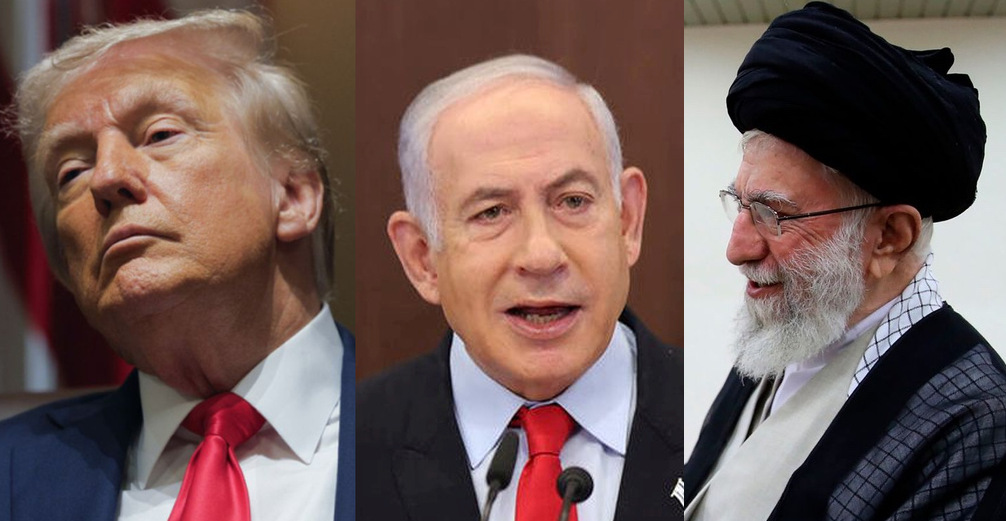
In the hours after Iran launched a missile attack on a US base in Qatar, President Donald Trump and a group of his top diplomatic and security officials worked furiously behind the scenes to try to broker a peace deal to end the conflict between Iran and Israel, CNN writes.
While Trump communicated directly with Israeli Prime Minister Benjamin Netanyahu, Vice President JD Vance, Secretary of State and National Security Adviser Marco Rubio, and Middle East Envoy Steve Witkoff worked with the Iranians – through direct and indirect channels, a senior White House official said.
The government of Qatar played a key role as an intermediary, and Trump at one point spoke directly to its leader, Emir Tamim bin Hamad bin Khalifa Al Thani.
Trump Announced a Ceasefire, But What Preceded It…
Approximately 48 hours after the US attacked Iranian nuclear sites – and just hours after Iran retaliated with a strike on a US base – Trump announced on his Truth Social platform that a deal had been struck, heralding a “complete and total CEASEFIRE” between the warring nations that would lead to “an Official END to THE 12 DAY WAR.”
But on Monday night in the US – early Tuesday morning in the Middle East – it remained unclear whether the fragile equilibrium would hold.
Israel agreed to the ceasefire deal on the condition that Iran stop its attacks, a White House official said. Iran agreed to those terms, they added.
Trump told the Qatari Emir that the US was able to get Israel to agree to a ceasefire with Iran, two sources familiar with the matter said. He also thanked him for his help in mediating, a White House official said, and asked the Emir to help persuade the Iranians to accept the deal. Vance coordinated with the office of Qatari Prime Minister Sheikh Mohammed bin Abdulrahman bin Jassim Al-Thani on details, one source said. After speaking with Al-Thani, the Iranians agreed to the ceasefire proposal, the source and a diplomat familiar with the negotiations said. One American official said that a series of calls with the Qatari Emir was pivotal on the Iranian side.
As a promising sign, Iranian Foreign Minister Abbas Araghchi thanked his country’s armed forces and said military operations against Israel “continued until the very last minute,” hinting that hostilities may have ended.
“The military operations of our powerful Armed Forces to punish Israel for its aggression continued until the very last minute, at 4 a.m.,” Araghchi said in a post on X.
Earlier, Araghchi had said Iran would halt its military response if Israel stopped its strikes on Iran by that time.
Israel has yet to publicly comment on whether it has agreed to the ceasefire.
Iranians Announced Attack on US Bases and “Saved Face” Along the Way
The White House claims that the agreement was only possible due to U.S. strikes on three Iranian nuclear facilities on Saturday.
Earlier on Monday, Doha informed the U.S. about the incoming Iranian strikes aimed at a U.S. military base in Qatar, which were successfully intercepted with no reports of injuries or deaths. Iranian officials had given Qatar advance notice of the retaliatory attack, according to two sources familiar with the matter.
Diplomatic sources told CNN they were hopeful that Iran’s retaliatory strikes would serve as an off-ramp for Tehran to return to negotiations. The ceasefire will likely create further space for continued discussions between the U.S. and Iran.
Following Israel’s launch of a military operation against Iran, there was an intensive diplomatic effort by U.S. officials and intermediaries to get Tehran back to the table to negotiate a new nuclear deal.
Throughout last week, messages were exchanged between the two sides, via numerous interlocutors, in an attempt to revive high-level discussions. There was also an active effort underway to have Trump and the Iranian president meet in Turkey last week, a regional source confirmed, but that did not materialize.
Iran’s consistent reply was that it was amenable to talks, but only if Israel suspended its military operations, sources said. Even after the U.S. strikes, the Iranian foreign minister has conveyed to some interlocutors a willingness to return to the table if Israel stops its military attacks on Iran, according to a source familiar with the matter.
And Trump Announced the Attack on Nuclear Facilities to Iran
On Saturday, prior to its unprecedented strikes on three Iranian nuclear facilities, the Trump administration sent a message to Iran through intermediaries. Their message was twofold: forthcoming U.S. strikes would be contained, but also that the U.S. terms for a diplomatic deal with Iran were clear and simple: no uranium enrichment, sources said.
Iran has repeatedly stated that it retains the right to enrich uranium.
According to one source familiar with a secret meeting that took place on Saturday, an intermediary reiterated to the Iranians that the White House was still willing to come to the table with no other conditions beyond enrichment. That sole condition from the U.S. stripped away many other points that the two sides had discussed during multiple rounds of nuclear talks.
Witkoff has continued to exchange messages with the Iranians in the aftermath of the U.S. military operation, a senior White House official and source familiar with the matter told CNN.
On Sunday, Rubio repeatedly publicly messaged a desire for direct negotiations with Iran. He noted that a deal that allowed Tehran to have a civil nuclear program – without its own enrichment – was still on the table.
“If they call right now and say we want to meet, let’s talk about this, we’re prepared to do that,” the top U.S. diplomat said on CBS “Face the Nation.”
Source: CNN Photo: AP