




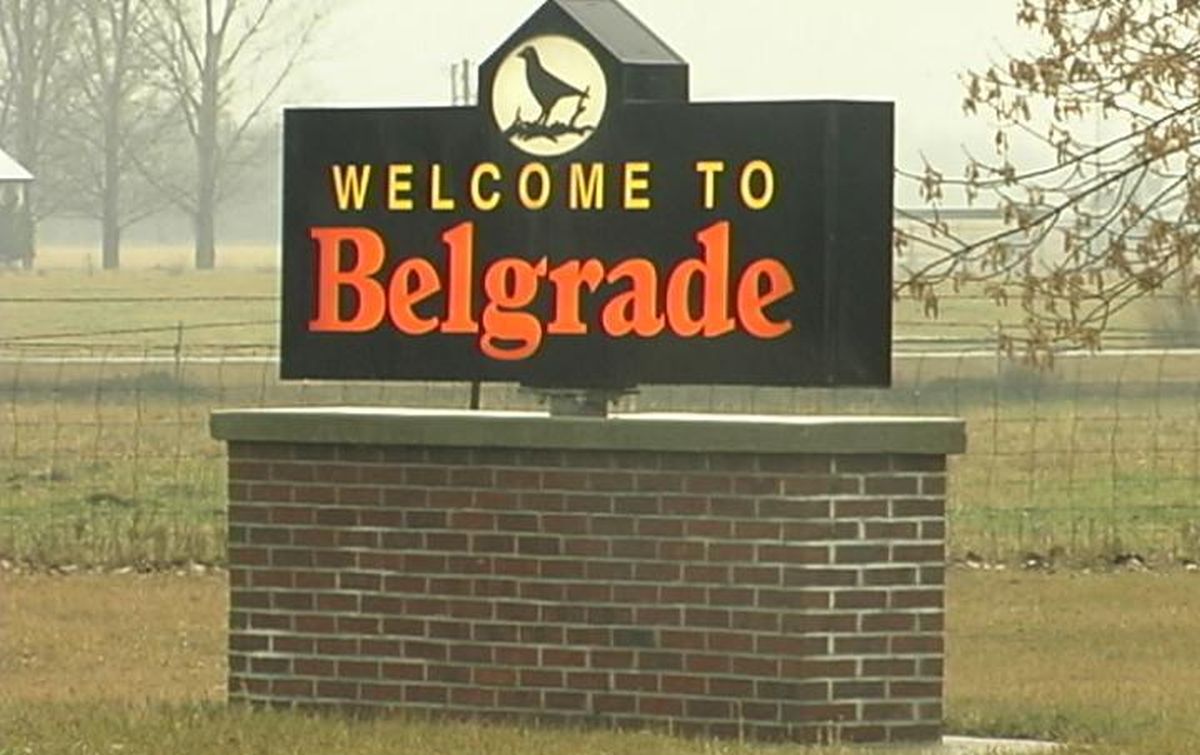
A few years ago, when the Serbian Cemetery and Museum were opened in Velký Meder, Slovakia, experts calculated that this marked the 350,001st Serbian name on the world map. That is the number of Serbian toponyms, traces, names, and designations found outside of Serbia, in other countries.
There are 194 independent countries and 70 territories in the world. Serbs live in 159 of them, but traces of the Serbian people can be found on every continent. Abroad, Serbs have been referred to and marked as Bojki, Raci, Vaci, Veneti, Serbi, Sorabi, White Serbs, Lusatian Serbs, and simply Serbs.
Serbian toponyms around the world include the names of territories, places, monuments, streets, squares, temples, cemeteries, buildings, and the names of notable individuals. Research shows that Serbs in Europe alone have 5,000 churches, cemeteries, chapels, monuments, monasteries, schools, libraries, and endowments. There are about 660 military memorials, cemeteries, tombs, and monuments in twenty countries on the Old Continent and just as many on other continents. One of the most famous Serbian memorials is the Zejtinlik Cemetery in Greece, the Serbian tomb in the forests of Jindřichovice in the Czech Republic, and the Bloody Road memorial in Norway.
Little known to the Serbian public is that after the Zejtinlik Cemetery, the largest Serbian ossuary is in Jindřichovice, near Karlovy Vary, on the Czech-German border. It was erected by King Alexander Karađorđević in 1931. It houses the remains of 7,100 Serbs and 180 Russians who perished in camps during World War I. Just three kilometers away, in a forest, there is another cemetery where about 1,600 more Serbs and 64 Russians are buried.
Serbs were brought there between 1914 and 1918. Soldiers were captured on the battlefield and then transported by railway to the camps, while civilians were taken by the Austro-Hungarian army during their campaigns in Serbia. The prisoners came from all over Serbia, with the majority from the Šumadija and Valjevo regions.

Tomáš Masaryk, the first president of Czechoslovakia, decided to halt the construction of a water supply system in Jindřichovice so that part of the land could be gifted to the Kingdom of Serbs, Croats, and Slovenes in memory of the Serbian victims of World War I. Dejan Ranđelović from Karlovy Vary maintains this memorial ossuary. For a decade, a traditional liturgy and memorial service for the Serbs and Russians who perished in this largest Austro-Hungarian camp, now in the Czech Republic, have been held. The liturgy is conducted by Russian priests and Serbian priest Srđan Jablanović.

SERBIAN KOVIN IN THE HEART OF HUNGARY
The largest number of Serbian place names is found in Slavic countries (Russia, Poland, Czech Republic), followed by friendly states (Hungary, Romania, France, North Macedonia).
In Budapest, there is a district called Little Belgrade and several towns (Szárbogárd) and settlements with Serbian prefixes (Tabán, Rácváros, Rácmecske, Srpski Kovin, Sárberki Patak).

A similar situation is found in Romania, particularly in Banat, where a large Serbian population once lived. Around twenty settlements have Serbian origins (Ohaba Serbească, Serbești, Sarbi Arad, Sarbi Magura, Serben Voda in Bucharest, Srbova in Timiș). One of the mountain peaks in the Făgăraș range is named Serbota. In the center of Timișoara is the Serbian Orthodox Eparchy, which owns the surrounding buildings.
In Poland, Serbian-origin toponyms include names like Biała Serbia, Sarbia, Sarbin, Sarbinovo, Sarbinovka, Sarbice, Sarbka, and Sarbskie Huby. North of Szarba, there is a place called Sarbievo. In the Kaszubian-Slowinski region, there is a modern town and lake named Sarbske or Sarbske Lake.

In the Czech Republic, there are 25 place names and settlements, including Vysoká and Nízká Srbská in the Hradec Králové region, Srbi in Plzeň, Srbi in the Kladno district, Mohtin Srbska, a quarter in Brno, Srbce in the Luže district, and Srpska Kamenica in Děčín.
Slovakia has places such as Srbova in the Svidník district, Osrblianka stream in the Brezno district, and Osrblie in the same district. In Ukraine, there are memorial areas called Nova Serbia and Slavenoserbia, where Serbs lived in the 16th century. Ukraine also has 14 official names of Serbian origin, including Novi Serbi and Stari Serbi in Yemilchyne district, Serbi villages in Yemilchyne and Kodyma districts, and Serbinovtsi railway station.
FIND OUT MORE IN ENGLISH:
SERBIAN CITIES AND ICONS IN RUSSIA
In Russia, there are places such as Serbilovo in Gavrilov Posad district, Serbin in Slavyansk district, Serbinka in the Nizhniy Terebuzh area, and Serbino in Plyushky district. Moscow is not only the capital of the Russian Federation but also the central location of the Serbian Orthodox Church’s representation, which dates back to the era of Tsar Ivan the Terrible, whose mother, Elena, was Serbian. It was established by his Serbian grandmother Ana Jakšić.

The Archhierarchical Council, the main cathedral of the Russian Orthodox Church in the Kremlin, houses three Serbian saint icons—Saint Sava, Saint Simeon the Myrrh-Streaming, and Saint Tsar Lazar. Russia has also erected monuments to Sava Vladisavljević and Tsar Ivan the Terrible.

Many Serbian historical figures, including Petar Petrović Njegoš, Vuk Karadžić, Mihajlo Pupin, Nikola Tesla, and Milutin Milanković, have their statues, busts, and memorial plaques in Slavic countries.

FRENCH TRIBUTE TO SERBIAN KINGS
Serbian-named monuments also exist in Catholic countries, including memorials to Bishop Nikolaj Velimirović, General Draža Mihailović, King Peter II Karađorđević, and others. In Paris, there is a monument to Kings Alexander and Peter Karađorđević, an avenue named after King Peter I, and Belgrade Street leading to the Champ de Mars.

Belgrade Street also exists in Istanbul and Munich, where Serbian Orthodox churches are located. In Switzerland, the Ministry of Diaspora of Serbia has placed a memorial plaque dedicated to scientist Mileva Marić Einstein.

SERBIAN MANUSCRIPTS IN JERUSALEM
Serbian manuscripts written by monks and pilgrims, including Saint Sava, exist in Jerusalem and on Mount Sinai. The Serbian Gospel from the 14th century, brought by Serbian soldiers during the Great War, is kept in the Dublin City Library.
When Russian President Vladimir Putin visits Serbia, he is expected to return the missing page of the Miroslav Gospel, completing this historic Serbian manuscript.
MORE TOPICS:
Source: Marko Lopušina Foto: Wikimedia Creative Commons