




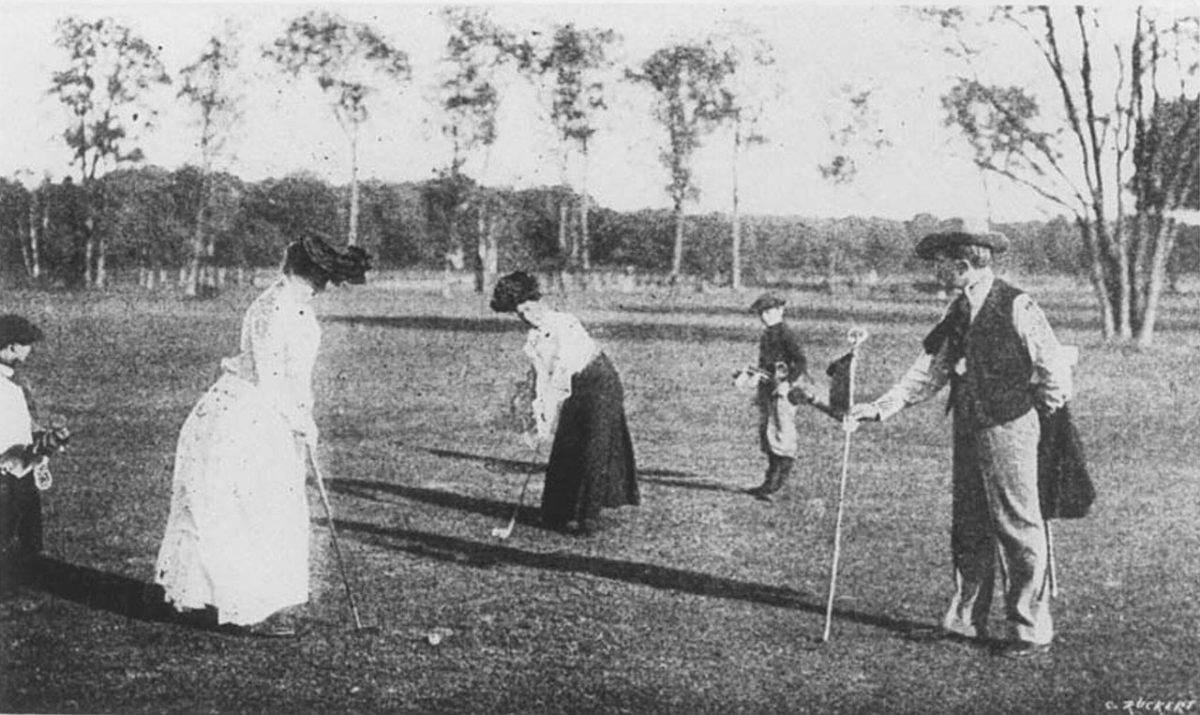
The second modern Olympic Games, held in 1900 in Paris, were remarkable in many ways. A large number of unusual disciplines were included, some of which appeared only once in Olympic history. Golf, for example, made its debut at these Games, only to be removed after the next Olympics, returning to the Olympic roster only in 2016. However, its inclusion in 1900 is historically significant for Serbia, as one of the medal winners was a woman who would later become a Serbian princess.
The story begins with a lesser-known branch of the Karađorđević dynasty. The revolutionary leader Karađorđe had two sons: Aleksa and Aleksandar. The younger Aleksandar became a prince, and all subsequent rulers of the Karađorđević dynasty are his descendants. The elder son, Aleksa, moved to Russia and became a guard lieutenant in the Russian army. He had a single son, Đorđe, also raised in Russia and also a guard lieutenant. Captain Miša Anastasijević married his daughter Sara to Đorđe, hoping to secure a future role for them in the Serbian throne.
That plan failed when the Obrenović dynasty returned to power, and Đorđe and Sara moved to Paris. Their marriage produced two sons, Aleksa and Božidar.
Aleksa married an American woman, Darija Prat, who won a bronze medal in golf representing the United States.
Little is known about the life of Serbian princess Darija Prat. Born Abigail Penkhurst, she was known as Ebi. She moved in high society from a young age and had been married twice before marrying Aleksa. Her first husband, Herbert Wright, lived with her in Cleveland for several years. She later married Thomas Huger Prat shortly before the 1900 Olympics.


The couple traveled extensively in Europe and socialized with nobility. Both were members of the Dinard Golf Club in France and were invited to participate in the Olympics for the U.S. team. While Prat did not qualify, Ebi finished third in the women’s competition, making her one of the first female Olympic medalists in history (the 1900 Paris Games were the first to feature female athletes).
The fate of the Prats’ marriage remains unclear. Thomas was reportedly dead by 1905, though some reports from the period list him as missing. In 1907, newspapers reported that Ebi sought a divorce because she “had not seen or heard from her husband for years.”
On June 11, 1913, “beautiful Ebi,” as the press often called her, married Serbian prince Aleksa Karađorđević, taking the royal name Darija. Aleksa, though a legitimate heir to the Serbian throne, had publicly declared he was uninterested in ruling after the May Coup and the assassination of the Obrenovićs.
The couple married in Paris despite strong opposition from Aleksa’s mother, who did not want an American and twice-divorced bride for her son. Darija’s wealth was rumored to cover Aleksa’s debts and may have included bringing her daughter from a previous marriage into the royal household, though this is unconfirmed.
Aleksa and Darija spent their honeymoon in southern France. They reportedly had a harmonious marriage.
During World War I, they came to Serbia to assist the country. Aleksa served as president of the Serbian Red Cross, while Darija ran a hospital. After the fall of the wartime capital Niš, they participated in the retreat across Albania, which Darija later chronicled in a book.
Prince Aleksa died on February 15, 1920, most likely from the Spanish flu. Princess Darija outlived him by 18 years, passing away in Cannes on June 26, 1938. The couple had no children, ending the senior male line of this branch of the Karađorđević dynasty.
MORE TOPICS:
Source: Istorijski zabavnik Foto: Istorijski Zabavnik