


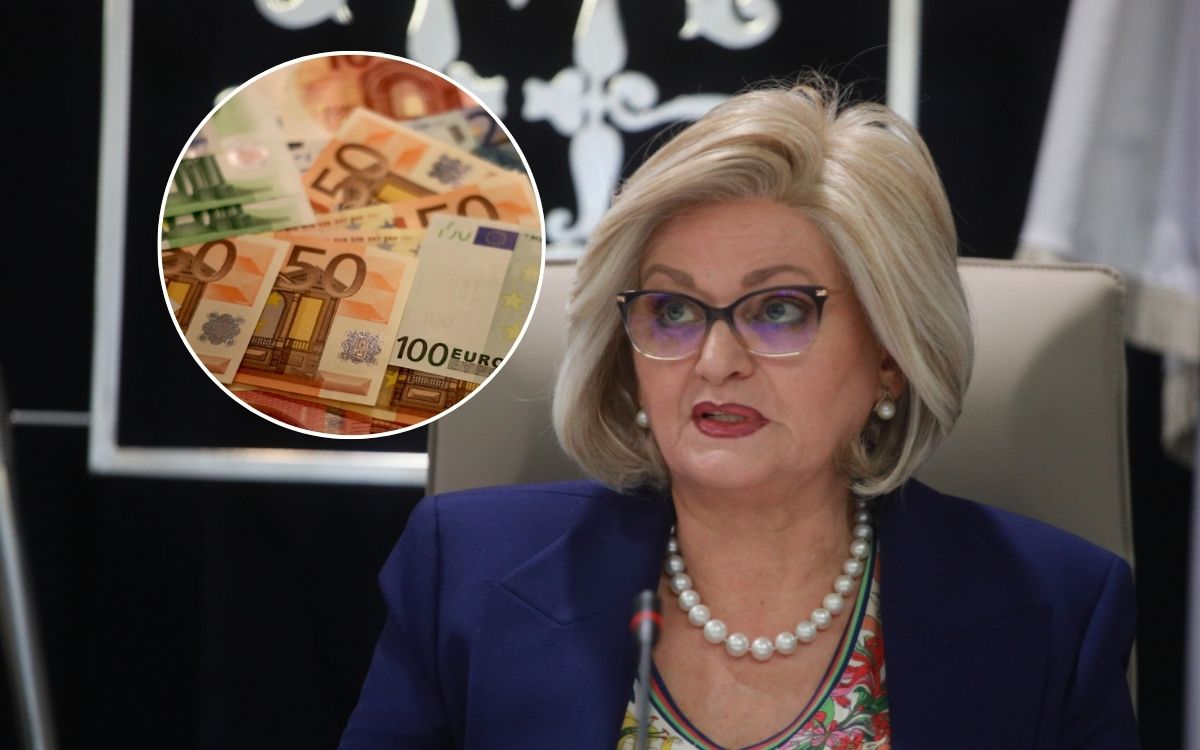
Information has been circulating on social media that it is impossible to buy euros in Belgrade’s exchange offices. Reporters from the Nova.rs portal visited several such locations in multiple Belgrade municipalities to check what is actually happening.
Over the past week, there is no doubt something has been going on with the euro. The selling rate first jumped to 118, then to 118.5 dinars, which, according to exchange office employees, was preceded by uncontrolled buying of this currency.
When asked “can we buy euros?”, we received similar answers.
Namely, employees in certain exchange offices use different maneuvers to convince citizens that they will somehow manage to sell them euros.
Thus, in one exchange office in New Belgrade, they told us that they did not have any at the moment, but asked for our phone number so they could notify us when euros become available.
“We can sell you euros, but not now, because we don’t have them. If you leave your phone number, we will call you as soon as we get some, there will definitely be something during the day,” the employee told us, emphasizing that they have been operating this way in recent days.
No euros due to huge demand
However, in another nearby exchange office, we were able to buy 50 to 100 euros, but no more.
“If you want 500, I have to check if I have that much, but I don’t think I do. Also, 1,000, 5,000, 10, or 15,000 – no chance. We don’t have that amount because ever since the euro went up, there’s been a shortage. When things calm down a bit over the next few days or weeks, there will probably be more,” the employee in this exchange office explained to us.
The situation in other parts of Belgrade is no better. In one exchange office on Bulevar kralja Aleksandra, we were told that they had only 270 euros in the register.
“There are no euros because since last week the demand has been huge. We’re practically cleaned out! People were buying euros all day until they emptied our register, now I only have 270. Maybe there will be more during the day, you never know whether someone will come to exchange, the situation varies during the day,” the employee told us.
The exchange rate in exchange offices rose last week to 118 and did not stop, so it is now 118.50, although the website of the National Bank of Serbia still states that the official middle exchange rate of the dinar is 117.39.
“People were buying euros uncontrollably last week, and that affected the exchange rate increase, and that’s why we don’t have this currency at all now. Maybe someone will exchange dinars, maybe the situation will calm down, but we can’t know that,” said an employee in one of the exchange offices we visited.
National Bank responds
The National Bank of Serbia issued a statement regarding numerous claims in public about a shortage of euros in exchange offices across the country.
We relay the statement of the National Bank of Serbia in its entirety:
“The National Bank of Serbia remains committed to stability in all segments of the financial system, the dinar-to-euro exchange rate remains stable. Belgrade, December 8 – The National Bank of Serbia, for the purpose of objective and responsible public information, points out that during the past two weeks there has been an increase in demand for foreign currency on the domestic foreign exchange market, which is partly the result of usual seasonal trends, primarily in the domestic corporate sector, but to a greater extent the result of increased demand for foreign currency by citizens after the publication of information related to the company NIS.
A large part of this demand from citizens is significantly caused by certain media articles and social media posts that have no rational or real basis, and only contribute to increased panic among citizens despite NBS statements pointing out that the stability of the financial system is not and will not be called into question.
In individual exchange offices, there has been an exclusively temporary shortage of euros due to increased citizen demand at those specific locations, which in no way means that there is any problem in terms of euro and other foreign currency supply on the Serbian foreign exchange market.
The National Bank of Serbia has all mechanisms that allow it to prevent any stronger pressures on the dinar-to-euro exchange rate, and it has proven this, both during previous periods of increased citizen demand for foreign currency during the COVID pandemic and the start of the Ukraine crisis, as well as in the current circumstances, when previously accumulated foreign exchange reserves are being used to compensate for the temporary excess demand over supply and to prevent excessive exchange rate fluctuations. We emphasize that stability has been maintained for over a decade during various challenges.
We carefully monitor all segments of the foreign exchange market, including exchange operations of both banks and authorized exchange offices, and we assure the public that there is sufficient foreign cash in the banking sector and at the National Bank of Serbia and that the supply channel of foreign cash to banks is functioning smoothly. The fact that some exchange offices lack enough foreign cash is the result of their failure to obtain it from banks. Experience from previous similar periods has shown that authorized exchange offices use this supply channel less, attempting to supply themselves mutually, and that when citizen demand increases, exchange offices hold on to their cash for their clients and raise the price (selling rate) on the exchange market. This means that there is no shortage of foreign cash but that not all supply capacities are being used.
The National Bank of Serbia also points out, for the purpose of objective and responsible public information, that the dinar-to-euro exchange rate is not and will not be threatened.
The central bank, under the managed floating exchange rate regime, uses the right to intervene by both buying and selling foreign currency in order to preserve relative exchange rate stability. Due to prevailing appreciation pressures in previous years, the National Bank of Serbia has been buying foreign currency, thus increasing foreign exchange reserves. From 2017 to the end of 2024, the NBS has net purchased 11.9 billion euros. Even in the first eleven months of this year, the National Bank of Serbia was a net buyer of foreign currency, by 145 million euros. This means that in the previous period we greatly increased the capacity to calm any pressures on the domestic foreign exchange market. In times of occasional depreciation pressures, the National Bank of Serbia carefully, thoughtfully, and prudently uses foreign exchange reserves for one of the purposes for which they are intended.
Through its supervisory and control function over the banking sector and authorized exchange offices, the central bank has sufficient instruments to prevent any attempts at illegal activity or attempts to destabilize the market.
The National Bank of Serbia will continue in the coming period to carefully monitor all factors on the domestic foreign exchange market and react if necessary in order to preserve relative exchange rate stability,” the statement from the governor’s office concludes.
MORE TOPICS:
KREMLIN THANKS TRUMP: Russia removed from list of countries considered a direct threat to the U.S.!
TRUMP TREATS AMERICANS: Free entry to all national parks on his birthday!
Author: Nova.rs; Foto: ATA Images, Pixabay