


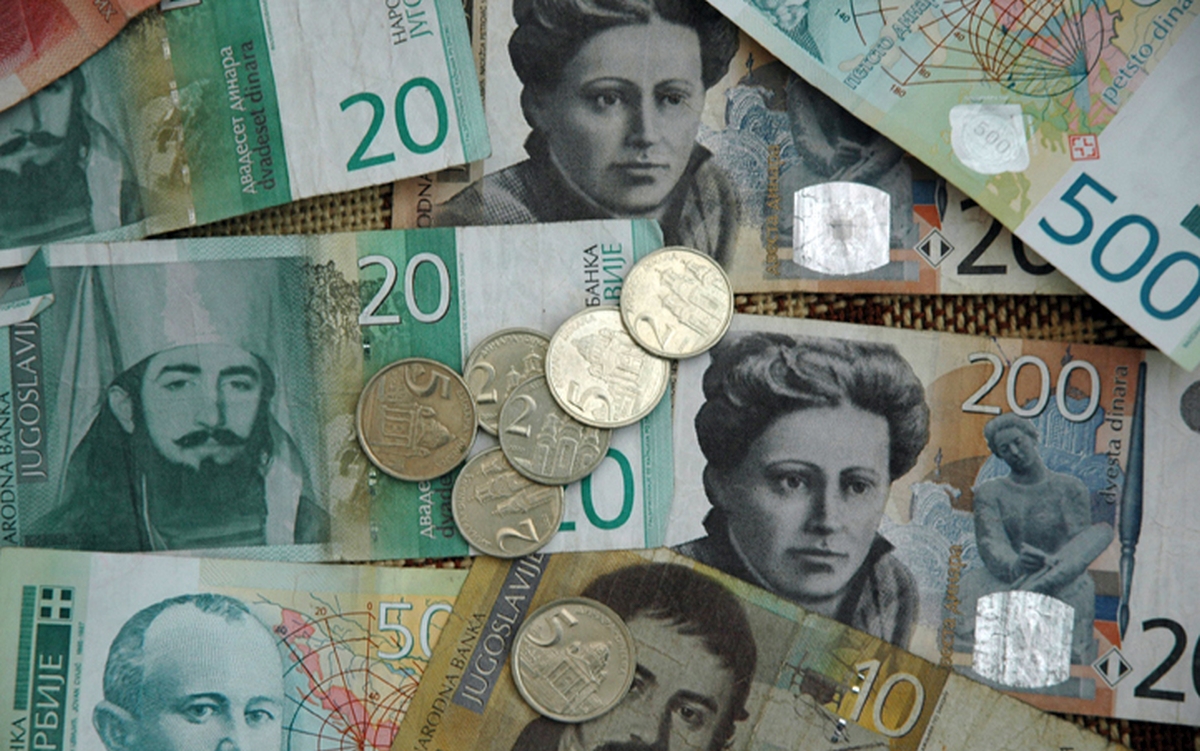
In Serbia, on this day in 1873, the dinar was introduced as a monetary unit, thereby eliminating monetary chaos and the use of more than 40 types of foreign metal money – ducats, florins, thalers…
The first mention of “Serbian dinars” is found in archival documents at the end of 1214, during the time of Stefan the First-Crowned, according to the website of the National Bank of Serbia.
However, research so far points to King Radoslav (1227–1234), who is considered the first Serbian ruler to mint his own money.
Money continued to be minted by almost all Serbian rulers until the fall of the despotate in 1459, across the territory of the Serbian medieval state, in mints located near numerous silver mines such as Brskovo, Rudnik, Novo Brdo, Srebrnica, Trepča, and others.
That money was called the dinar and represents one of the most important symbols of the independence and statehood of the Serbian state in the Middle Ages. The abundance, diversity, and beauty of that money, in accordance with the peak of the power of medieval Serbia, are expressed in the minting of the greatest Serbian ruler, King (1331–1346), and then Emperor (1346–1355), Dušan, when the Serbian state surpassed neighboring countries of that time in terms of monetary production volume.
Due to the loss of independence of the Serbian state, a large number of different foreign currencies were in use until the middle of the 19th century. During the period of Turkish rule, several Turkish money mints operated on the territory of modern-day Serbia – Novo Brdo, Kučajna, and Belgrade, the text from the National Bank emphasizes.
The name of the last type of Turkish silver money – para – is still present today as the name of the hundredth part of the Serbian dinar.
Until 1873, as many as 43 different foreign currencies were used in the territory of the Principality of Serbia.
The monetary chaos caused by the use of 43 different currencies was solved by the initiative of the then Prince Milan Obrenović, who was the first to create the convertible dinar, coins worth 10 and 20 dinars in gold, which was called milandor.
However, even later, after the First World War, during the Kingdom of Serbs, Croats and Slovenes, several currencies were in circulation – the Serbian dinar, the Austro-Hungarian krone, the Bulgarian lev, the Montenegrin perper.
The National Bank of Serbia, founded in 1884, printed the first paper money in the country – a 100-dinar banknote. This banknote was backed by gold, and according to some estimates, its current value goes up to 15,000 euros.
Initially, money for our country was made in New York and France, while coins were created in London and Paris, which was the case until the establishment of the Institute for the Production of Banknotes and Coinage in 1929.
The first printed banknote was worth ten dinars, modeled after the already existing one from 1926. This banknote featured a picture of the Monument to Freedom, by sculptor Đorđe Jovanović, which is located today in the building of the National Bank of Serbia in Kralja Petra Street.
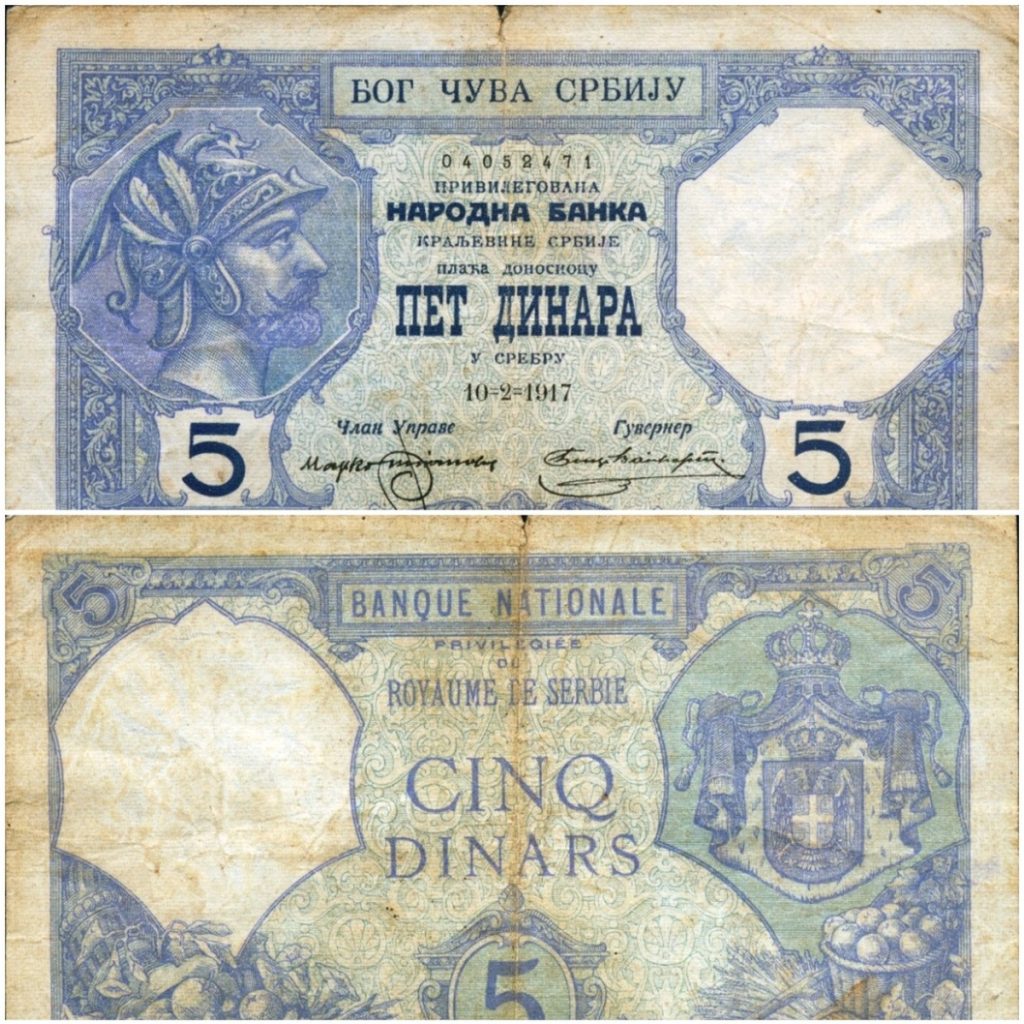
The paper for the banknotes, however, came from France and England until the Second World War, and was later made in Slovenia.
Silver money was then produced by the private mint Bošković a.d., until the king’s decision to create a state mint. Thus, the mint was built within the Institute in 1937, and the production of coinage soon began. The Institute initially owned its own power plant, water wells, and training of employees was also carried out within it.
The Institute never ceased operations during its existence, except that during the Second World War it was not used for printing state money, but served the needs of the German army.
The largest number of banknotes was printed in this place in the period from February 1992 to December 1993, when inflation in the country was as high as 34 million percent on a monthly basis. In that period, 100 banknotes of different nominal values were issued.
Beginning in January 1992, what remained of Yugoslavia suffered one of the longest hyperinflations in world history, which peaked in January 1994, when the official monthly inflation rate was 313 million percent.
Yugoslav hyperinflation lasted 24 months, only two months shorter than the Soviet hyperinflation of the early 1920s.
During this inflation, per capita income fell by more than 50 percent. People were forced to deplete their foreign exchange savings, they waited in lines at state food stores, they also spent a lot of time on foreign exchange black markets where they exchanged huge sums of worthless dinars for one German mark.
Finally, in 1994, Professor Dragoslav Avramović – a former World Bank expert, Serbian economist, governor of the National Bank of Yugoslavia, with a team of experts and a monetary reconstruction program, stopped the hyperinflation that was raging in the country.
He declared the dinar convertible and pegged it to the German mark, at a one-to-one ratio.
When the Federal Republic of Yugoslavia transitioned into the State Union of Serbia and Montenegro in 2003, the Serbian dinar replaced the Yugoslav one.
The current banknotes and coins feature portraits of people significant to the history of Serbia and the National Bank of Serbia, as well as Serbian cultural monuments.
The National Bank of Serbia issues banknotes and coinage, determines their denominations and features, and also makes decisions on putting money into circulation and withdrawing it from the same.
Did you know…
Currencies in several countries in the Mediterranean region are also called “dinar”. The gold dinar was the main coin in medieval Islamic empires. However, the word “dinar” itself comes from the silver coin “denarius”, which was used in ancient Rome. The countries that use the dinar as their currency today are Serbia, Algeria, Tunisia, Libya, Jordan, Iraq, Bahrain, and Kuwait.
MORE TOPICS:
Source: Danas; Photo: Wikimedia Creative Commons