



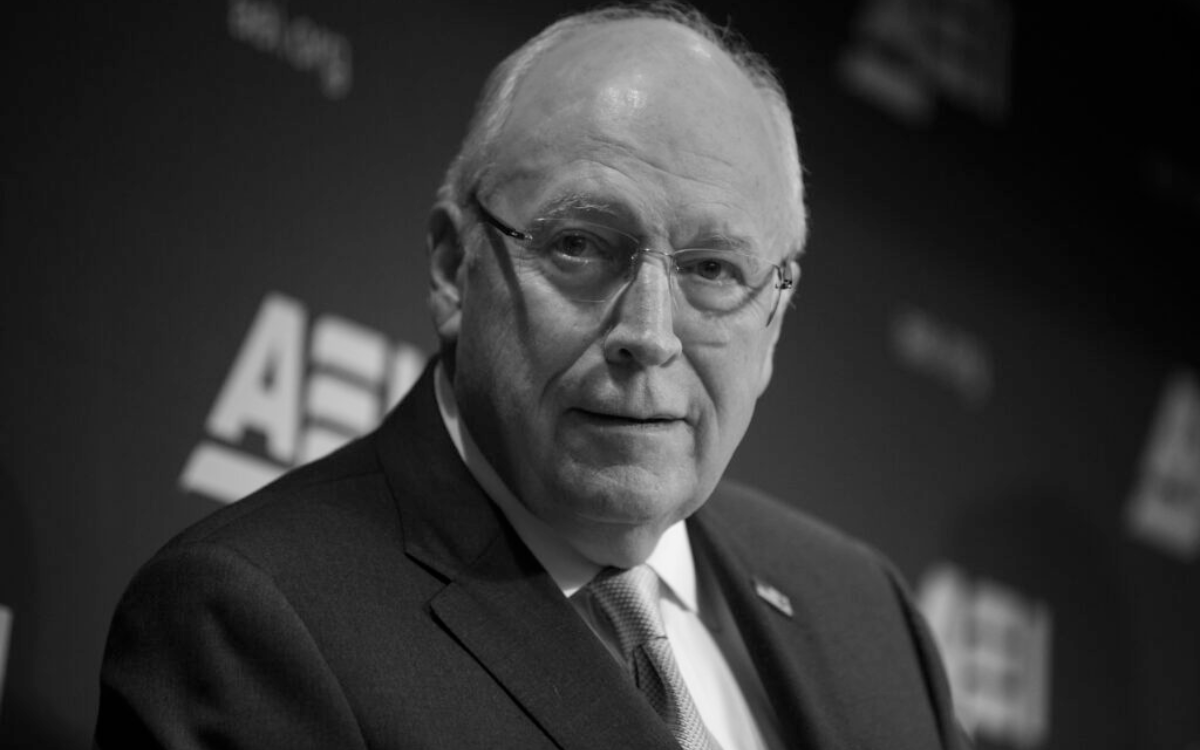
Former Vice President of the United States and close associate of former President George W. Bush, Dick Cheney, has died at the age of 84, his family announced.
The family stated that Dick Cheney died on Monday evening from complications of pneumonia, as well as heart and vascular diseases, at the age of 84.
Dick Cheney served as Bush’s Vice President for both terms, from 2001 to 2009. He is considered the main ideologue of the “War on Terror” and one of the key proponents of the US entering the war against Iraq.
As one of the most vocal supporters of the 2003 invasion of Iraq, Cheney warned of the alleged existence of Iraqi weapons of mass destruction—which were never found.
Cheney was known for his hardline views and as one of the leading Republican conservative politicians of that era. His stance on “enhanced interrogation techniques” for terrorism suspects, such as waterboarding and sleep deprivation, drew sharp criticism, with many, including the Senate Intelligence Committee and the UN, classifying such methods as torture. He was considered a staunch Republican and a conservative.
Family and Political Legacy
His daughter, Liz Cheney, was also an influential congresswoman who lost her seat after voting to impeach Donald Trump over the January 6, 2021, attack on Congress.
Dick Cheney supported her stance and stated that he would vote for the Democratic candidate Kamala Harris in the 2024 election, calling Trump a “coward” and “the greatest threat to the country ever.”
Upbringing and Early Life
Richard Bruce Cheney was born on January 30, 1941, in Lincoln, Nebraska. He grew up in Wyoming, where he later graduated from university and earned a master’s degree in political science.
During the early days of his career, Cheney worked in the energy industry and as the CEO of the energy corporation Halliburton.
During the First Gulf War in 1991, as Secretary of Defense, he led US forces in the liberation of Kuwait. Although he had previously warned that an invasion of Iraq would be “a quagmire with no exit,” he later became one of the loudest advocates of that military action.
Although he never served in the military, he was a strong advocate of US involvement in the Vietnam War.
During the Vietnam War from 1959 to 1966, Cheney received a total of five military deferments. Four were Type S-2 given to students due to university obligations, and one Type 3-A deferment he received in 1966 when his wife became pregnant.
As Secretary of Defense, Cheney led the operation to liberate Kuwait during the First Gulf War in 1991. Despite that experience, he warned then that an invasion of Iraq would be “a quagmire with no exit”—a stance he later changed.
Before returning to politics, he was the CEO of the energy corporation Halliburton, which later received numerous contracts during the Iraq War, which drew harsh public criticism.
Health Issues
Cheney had numerous health problems throughout his life—he survived a series of heart attacks and underwent a heart transplant in 2012.
MORE TOPICS:
Source:RTS, Foto: EPA / JIM LO SCALZO