


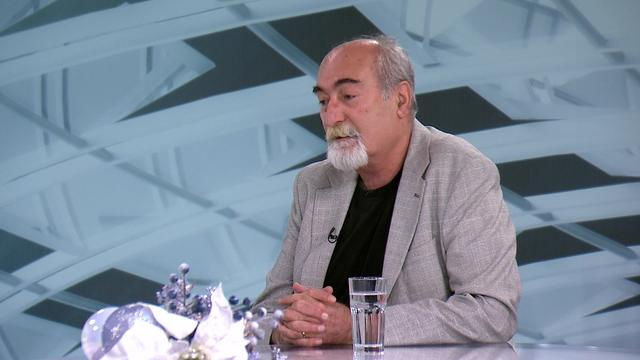
Milan Ćulibrk, the editor of the economic section at the weekly magazine Radar, assesses that in the current situation Serbia finds itself in regarding NIS, the best solution for the government is to let MOL buy NIS, but he is unclear why the state does not exercise its right of first refusal as stipulated in the contract.
“Until now, Gazprom has transferred four packages of its shares, about 12%, to other subsidiaries. Each time, the state had the right of first refusal, even when there were no sanctions in place. There was only a risk for those companies with a majority Russian stake. At no point did our state consider activating that right. Additionally, there is a provision in the interstate agreement that grants one of the signatory parties the right to react outside the contract if the energy security of the country is threatened,” points out Ćulibrk.
Commenting on Russian President Vladimir Putin’s statement that he hopes Serbia will fulfill its obligations under the contract, Ćulibrk questions why the Serbian leadership, the same one that was in power in 2014, did not invoke the provisions of that contract when it became clear that Russia would not build the South Stream, which was part of the entire package.
“NIS was essentially gifted as part of a broader package meant to guarantee the construction of South Stream, which would have provided Serbia with additional income through transit fees. That was abandoned. At that moment, it became an objective reason for you to sit down with your Russian partners and say, ‘Okay, folks, this agreement no longer holds. Let’s see what we can do. Should we increase the mining rent from 3%? In Russia, they pay seven times higher mining rent. So why do we pay 3%? On the other hand, I can’t shake the feeling that for us as citizens, it might have been better that NIS wasn’t in state hands in 2012 because I fear that some new Mića Grčić would have turned NIS into a wreck,” emphasized Ćulibrk.
According to him, it would be optimal for us to be a normal state, for the government to take a majority stake now and correct the mistake from 2008.
He also adds that he fully understands Gazprom and Putin.
“They bought it, they invested in it, and now they have a choice. They are being pressured to sell. Even if the American OFAC gives consent for it to be MOL or Abu Dhabi, the national company, that money will likely be deposited into some transitional account and frozen while the sanctions last. Now, if I were the owner and faced with the dilemma of being forced to sell something very profitable while waiting for the money when the sanctions are lifted, I would say, ‘Friend, I won’t do it.’ If I’m waiting for the money, it means I don’t have any money throughout the sanctions, so I’ll wait until the sanctions are over and then I’ll reactivate the refinery and start earning again. And I will charge for all of that. So I completely understand Gazprom and the Russian side. I just don’t understand us,” he states.
On what basis does the state plan a 3% growth?
He points out that the government plans a 3% economic growth for next year and questions on what basis.
“The deadline for negotiations with Gazprom has been extended to March 24. This means the refinery will remain idle until March 24. That’s an entire quarter. It contributes 6% to industrial production. This means there will be no growth in industrial production next year, even if it starts operating in April. There is no guarantee for that. Because even if an agreement is reached on March 24 and the ownership issue is resolved to restart the refinery, it will take at least a month to a month and a half. It’s not like flipping a switch. You press it, and voilà, there’s power; there isn’t,” he explains.
Regarding MOL’s interest in buying NIS, he says they would gain access to the Balkan market.
“When talking about MOL, people forget that MOL is the majority owner of Croatia’s INA, which had two refineries, neither of which is operational due to lack of need. MOL has one refinery in Hungary and one in Slovakia, and with those two, they have enough capacity to meet the entire market’s needs. Their interest is to buy this market,” he assesses.
He also emphasizes that Petrohemija, which supplies products to the chemical industry, plastics, and many other industries in Serbia, is constantly overlooked.
“Without Petrohemija, without the refinery, everything stops. Even if Hungarian MOL buys NIS and decides it’s more profitable to import derivatives from its two refineries, we will face serious issues. I don’t see anyone in this government considering those consequences, which are far greater in the long run than whether we can somehow get through the next few months by covering increased fuel imports. Nobody talks about the fact that increased imports of derivatives cost much more, that much more foreign currency leaves the country than when crude oil is imported, refined here, and that money remains. We will have a negative effect on the country’s balance of payments, on foreign exchange reserves, and on supply, because there are no physical means to secure all the quantities needed for the normal functioning of both the economy and the population. There aren’t enough tankers, whether rail or road, to bring in that much imported derivatives,” he asserts.
The departure of investors from Serbia
When asked why many foreign factories are now leaving Serbia, particularly in the south of the country, he cites incorrect policies for attracting foreign direct investments.
“Since 2008, when this was launched during the time of Mlađan Dinkić, due to high unemployment, a hasty decision was made to stimulate the arrival of all factories here, all foreign investors who were rewarded with taxpayer money. I know there are cases where every new job created cost about one hundred thousand euros. Money was given for those cable winders that add no value. We, as a society, gain nothing from that. On the contrary, the salaries in those factories are below the national average. They are pushing average earnings down,” he notes.
He also adds that we are witnessing the state spending over a billion euros to help Fiat come to Kragujevac.
“A few years ago, they opened the purse again and gave 40 million euros to start producing electric cars there. And what do we have now? We have the owners of Stellantis not wanting to raise salaries for employees from Serbia, from Kragujevac, above 80,000 dinars, which is 650 euros, while bringing in people from Morocco and Nepal who agree to work for 500 euros,” he points out.
He states that all the factories that left were here as long as they could pay salaries with subsidy money.
“The moment the subsidies disappeared, they closed the factory and took off. And the authorities haven’t found a better economic model in the meantime,” concludes Ćulibrk.
MORE TOPICS:
Source: N1 Foto: N1