




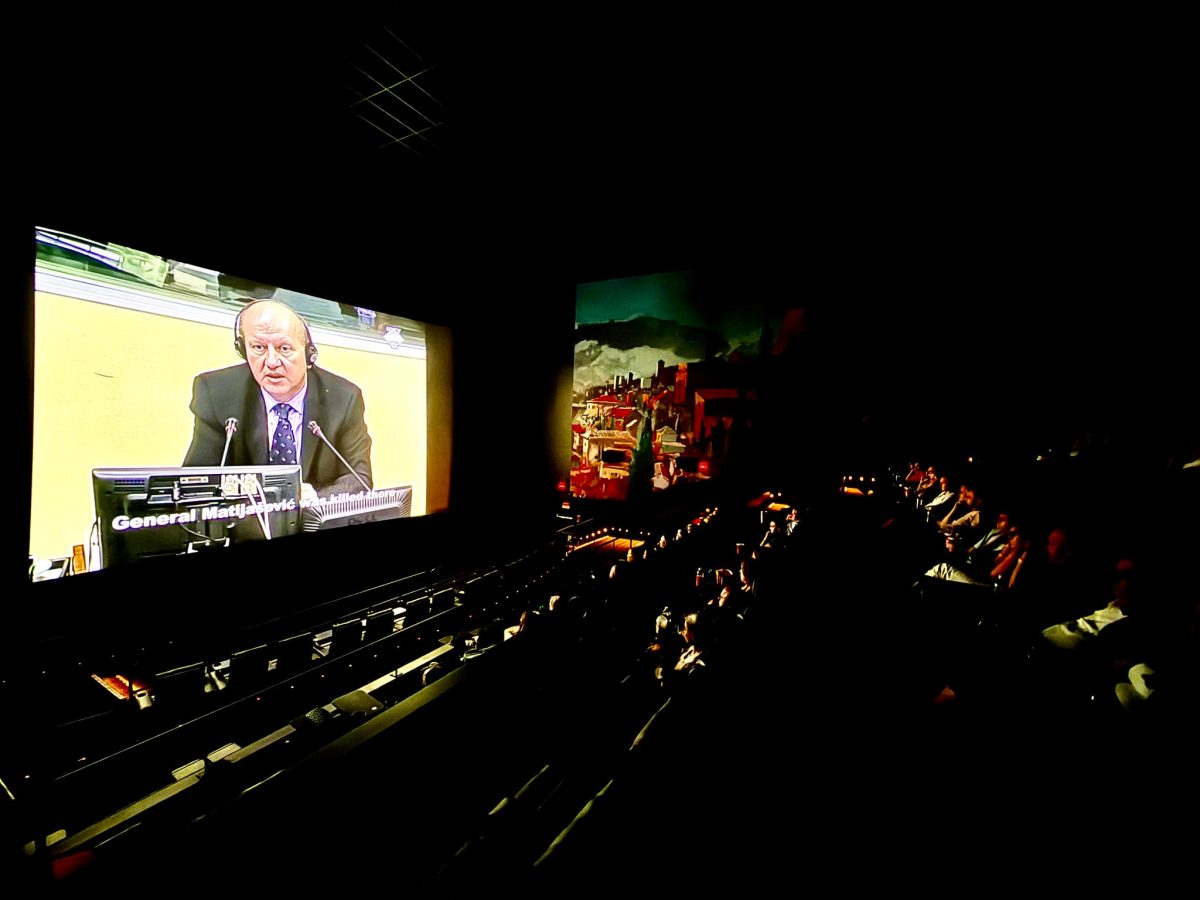
The American premiere of the film “The Witness” (Svjedok), directed by Denis Bojić, was held last night in Chicago. It is a powerful testimony to the suffering of the Serbian people during the civil wars in Slovenia, Croatia, and Bosnia and Herzegovina.
The documentary, which is full of deeply moving scenes and confessions, was filmed under the patronage of the Ministry of Culture and the Ministry for European Integration of the Republic of Srpska (RS), as well as the RS Office in Washington. In addition to the film’s author, the premiere was attended by the Consuls General of Bosnia and Herzegovina and Serbia, Tatjana Telić and Marko Nikolić, and the Head of the RS Office in the American capital, Drina Rajić.
The Film as a Dedication
The three-hour epic, which took an entire decade to prepare and film, is also a dedication to Dr. Zoran Stanković, a pathologist and former Minister of Defense and Health of the Republic of Serbia.
In the 1990s, Dr. Stanković and his team performed over 8,000 autopsies across the Balkans, starting with the war in Slovenia and concluding with the NATO bombing of Serbia.
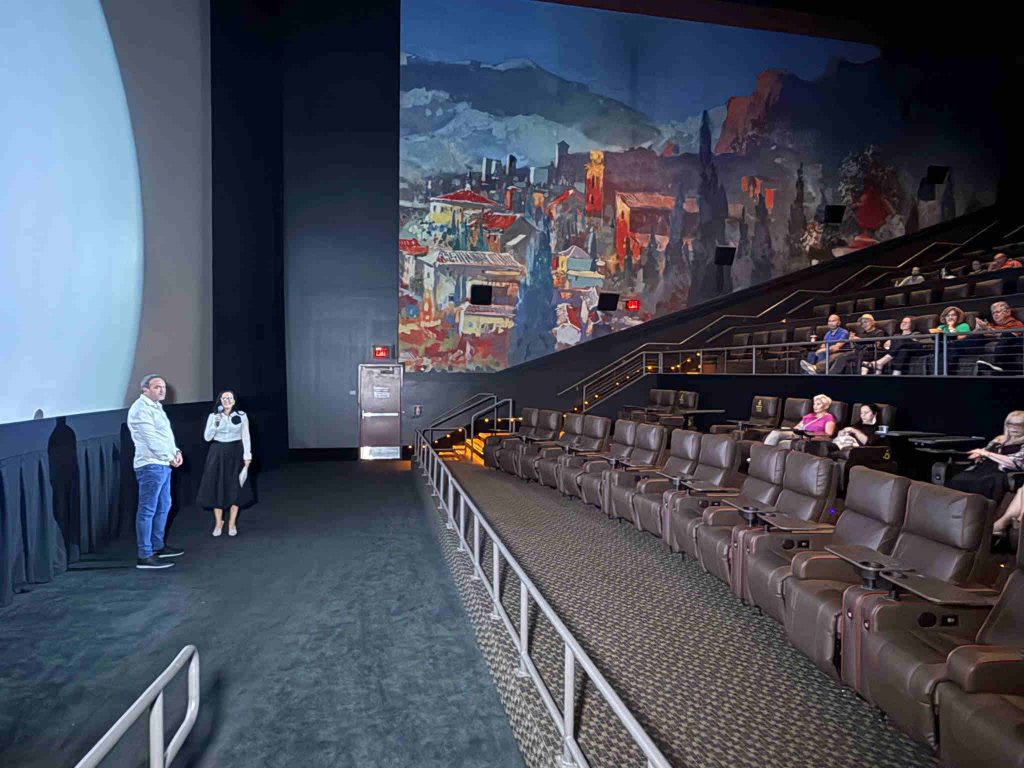
SO THAT THE TRUTH IS NOT FORGOTTEN: Movie director in front of the audience
The film is divided into several thematic sections, which bear the names of Serbian sites of suffering (Mrkonjić Grad, Šekovići, Gospić, Bosanski Brod, Zvornik, Glođansko Brdo, Jelačići, Kravica, Skelane…).
The camera initially follows Dr. Stanković, who, on his own initiative, begins to track the bloody trails of crimes, attempting to identify the victims under often impossible circumstances, and in the process revealing the sheer brutality and savagery of the perpetrators. His documentation later served as evidence before the Hague Tribunal.
Moving Testimonies
Parallel to the archival footage and documentation, the film’s authors introduce us to personal and family tragedies, bringing witnesses and victims’ families before the camera. Thirty or more years later, they recall what they experienced and survived, reflecting on the consequences and traumas that the war events inflicted on their lives.
“The Witness” is a testament that fills the gaps in collective memory but also opens the door to future coexistence in the territories of the former Yugoslavia. This coexistence, the film suggests, can only have a future if the truth about the wars of the 1990s is full and complete, and if all participants and all nations involved confront it.

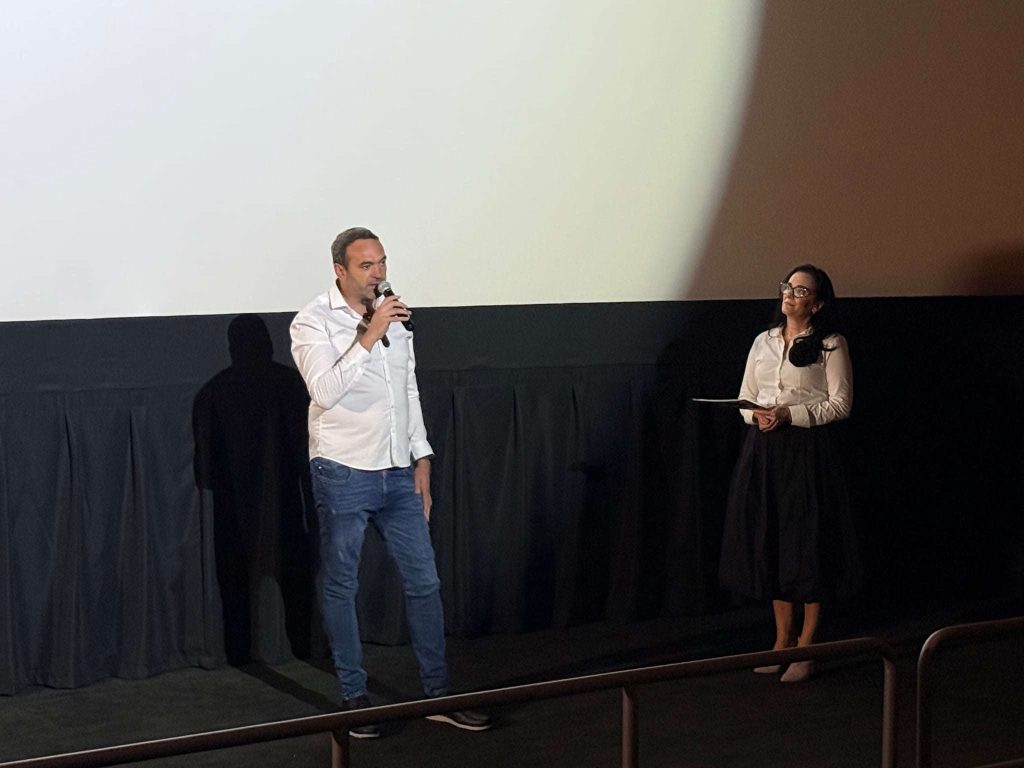
TESTIMONY ON FILM AND AFTERWARD: The Meeting of the Author with the Audience
The humanitarian message of the film also stems from the personal and professional story of Dr. Zoran Stanković, who viewed the victims not through the prism of their national or religious affiliation, but exclusively as a man and a doctor.
Hence, the final segment of “The Witness,” where the families of the victims identified by Zoran Stanković come to Belgrade’s Alley of the Greats to pay their posthumous respects, leaving a single rose on his bier, is arguably the best epilogue this difficult, yet vital and humanistic, film story could have received.
Tears and Applause
The audience, which included many whose families suffered in the conflicts of the 1990s, followed the end of the screening with tears and applause, as well as the address by director Denis Bojić.
In a statement given exclusively to Serbian Times immediately after the premiere, Bojić emphasized that his motive for making the film was to preserve and present the truth about the Serbian suffering, which had often been hidden and drowned out by propaganda over the past decades.
— “We made an effort to show both facts and emotions in this film, because facts without emotions often do not resonate significantly. On the other hand, emotions alone, without facts, lack sufficient weight. Dr. Stanković left us the facts; we obtained the emotions from the poignant testimonies. I hope this synthesis will allow this film to outlive us and remain for eternity, and judging by people’s reactions, it seems we did a good thing. It wasn’t easy to bring all these people before the cameras, but the feeling that we were doing something for the Serbian people and its history gave us the strength to persevere. And I must add that my additional motivation was the desire to tell the story of Dr. Stanković, who sadly passed away a few days before filming began.”
“The Witness” Without a Key Witness, But on His Mission
Bojić noted that Dr. Stanković’s death took the film in an unexpected direction.
— “The initial idea was to travel with Dr. Stanković through all the mentioned sites of suffering and mass graves, but then we had to change everything on the fly and be guided by what he left us, in order to find participants in the events who would testify in his place. And finally, to bring them all to his bier, to pay him the tribute he deserved, as one of the most significant figures in recent Serbian history.”
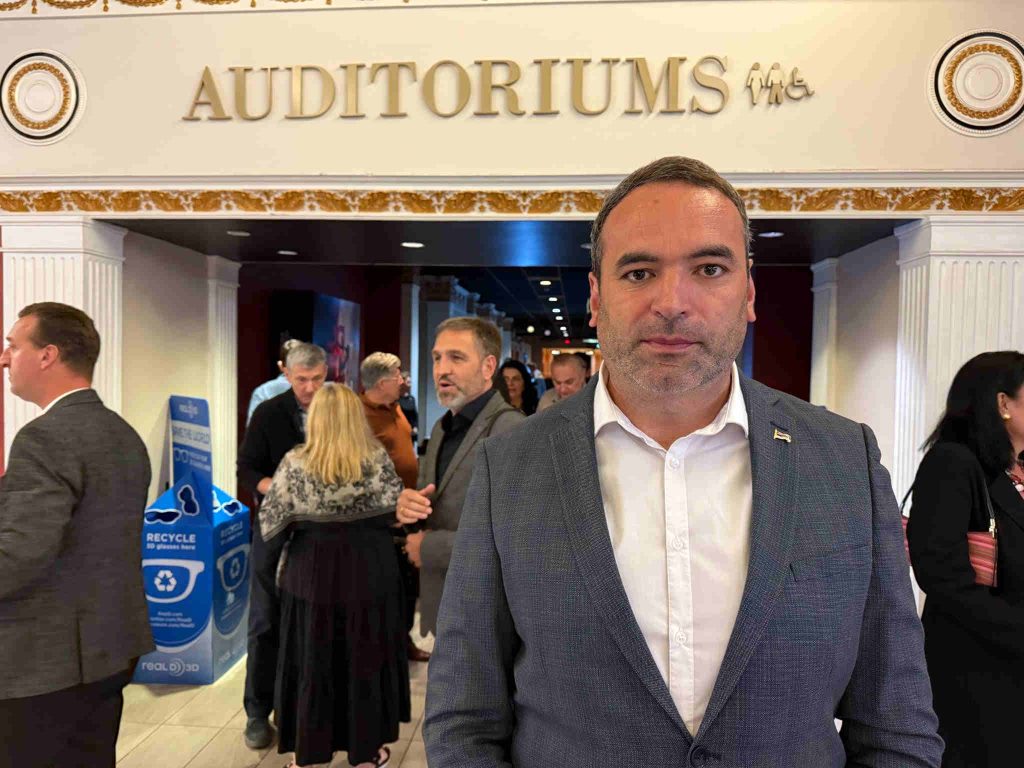
EMOTIONS AND FACTS: Denis Bojić
Bojić believes that the overshadowing of Serbian suffering by the suffering of other nations in the recent wars is a denial of the human rights of an entire people:
— “We have been denied the right to truth, to history, denied the right to be legitimate victims, denied the right to present our story on a global level. And precisely because of all this denial, pressure, and circumstances in the international public, we as a nation somehow started to think that it was assumed and that no one was interested anymore, and that we should look ahead and not look back. I believe that in order to plan the future, it is necessary to stand on a firm foundation, and that is our past, which includes these sufferings that the world, for the most part, has not heard about.”
— “That is why we are here, among our diaspora, among whom tonight the greatest number are those who fled to America precisely because of what happened to them in the war, where they were tortured, killed, and driven out. The war is an integral part of our lives, and its oblivion will not lead us anywhere, partly because all our neighbors in the Balkans still insist on their victim status, and we must not be silent but must insist on reciprocity and the recognition of our victims—both among those neighbors and at an international level, in as many countries as possible that decide the global course of events. We are not asking for anything that is not ours and for which we do not have evidence.
He believes that even though 30 years have passed since the end of the war, it is not too late for the truth to be presented and acknowledged.
— “It’s never too late; it just requires a great deal of hard work whose results will not come immediately. Some nations, like the Armenians, managed to get recognition for the crimes committed against them in Turkey 100 years later, through declarations adopted in several European and world parliaments.”
A Single Platform for All Victims and Crimes
— “After this film, my team and I continued working on a platform about the suffering of the Serbian people throughout the former SFRY, where all interested parties will be able to find all information, evidence, testimonies, and statements in Serbian and English. We believe this could be a great contribution to the recognition of Serbian victims outside of Serbia. Of course, for this to happen, we all need to work on it and help the truth reach as many people as possible. We must also not forget our children, the next generation, to whom we must pass on all knowledge about our tragedy and tragedies.”
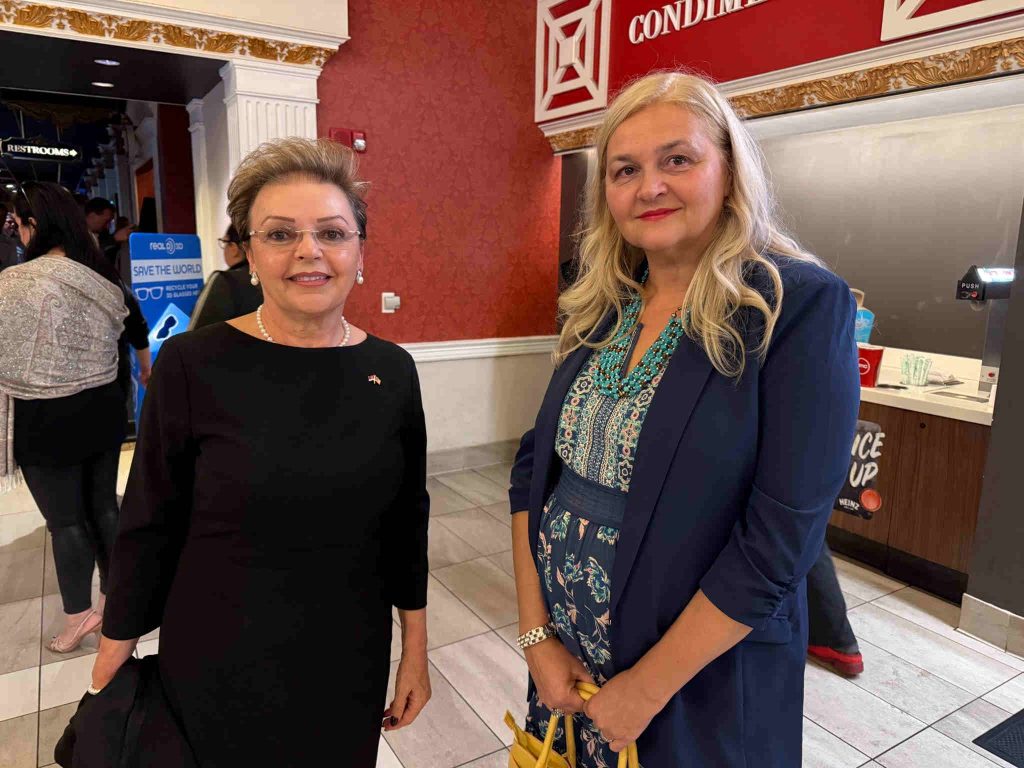
SUPPORT FROM THE REPUBLIC OF SRPSKA: Drina Rajić, Head of the RS Office in Washington (left)
The Consul General of Bosnia and Herzegovina, Tatjana Telić, met the end of the film with strong emotion and tears.
— “I think we are all charged tonight, and after these difficult scenes, my first emotion is a feeling of injustice, because this film speaks about crimes against the Serbian people that are absolutely unknown to the world public, and the scenes from the Hague Tribunal that reveal that the evidence of these sufferings was never taken seriously and analyzed, only intensifies that impression. All congratulations to the director, the film crew, and the government of the Republic of Srpska that stood behind this project. I hope and believe it is important that the film and these poignant testimonies are seen by as many of our people as possible, as well as by members of other nations around the world.”
Diplomatic Perspective: Humanity and the Culture of Remembrance
Despite the difficult scenes, she believes the film carries a humanistic dimension:
— “It is difficult to forgive and forget some of these cruel crimes, especially from the perspective of family members, but the Orthodox faith teaches us not to motivate our children with evil but with the moral lesson to always distinguish people from monsters and establish good relationships with the former, regardless of their nationality. That, in my opinion, is the message of this film, which widely opens the door for coexistence in the Balkan area, but only with the acceptance of crimes and victims from all sides of the conflict that is behind us.”
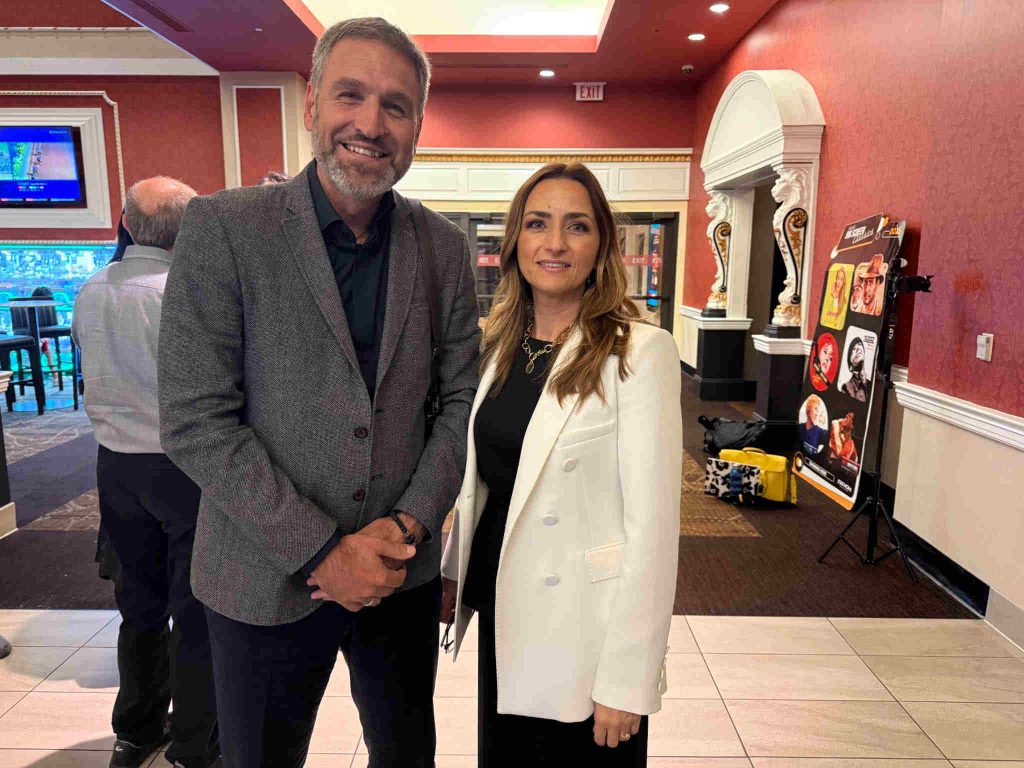
NO MONOPOLY ON THE TRUTH: Marko Nikolić and Tatjana Telić, Consuls of Serbia and Bosnia and Herzegovina
The Consul of the Republic of Serbia in Chicago, Marko Nikolić, also spoke about the importance of the culture of remembrance:
— “That is the cause of our suffering and our cross. Today is Krstovdan (Exaltation of the Cross), and in that context, it is a good day for showing such a film. The turnout, unfortunately, is not large, which can also be attributed to the lack of a culture of remembrance, and our awareness of the suffering of our people, which is continuously repeated throughout history as a consequence of our quick forgetfulness and the absence of building a community on fundamental values. I hope this is a good reminder and warning that regardless of all differences, there are things around which we must all gather.”
— “Only truth can be the foundation of reconciliation, so we are all obliged and called to bear witness to it in a dialogical atmosphere, but it must not be neglected or relativized. In that sense, I believe that every promotion of truth is conciliatory. No one has a monopoly on it, but they should also.
Article & Photo by: Antonije Kovacevic