




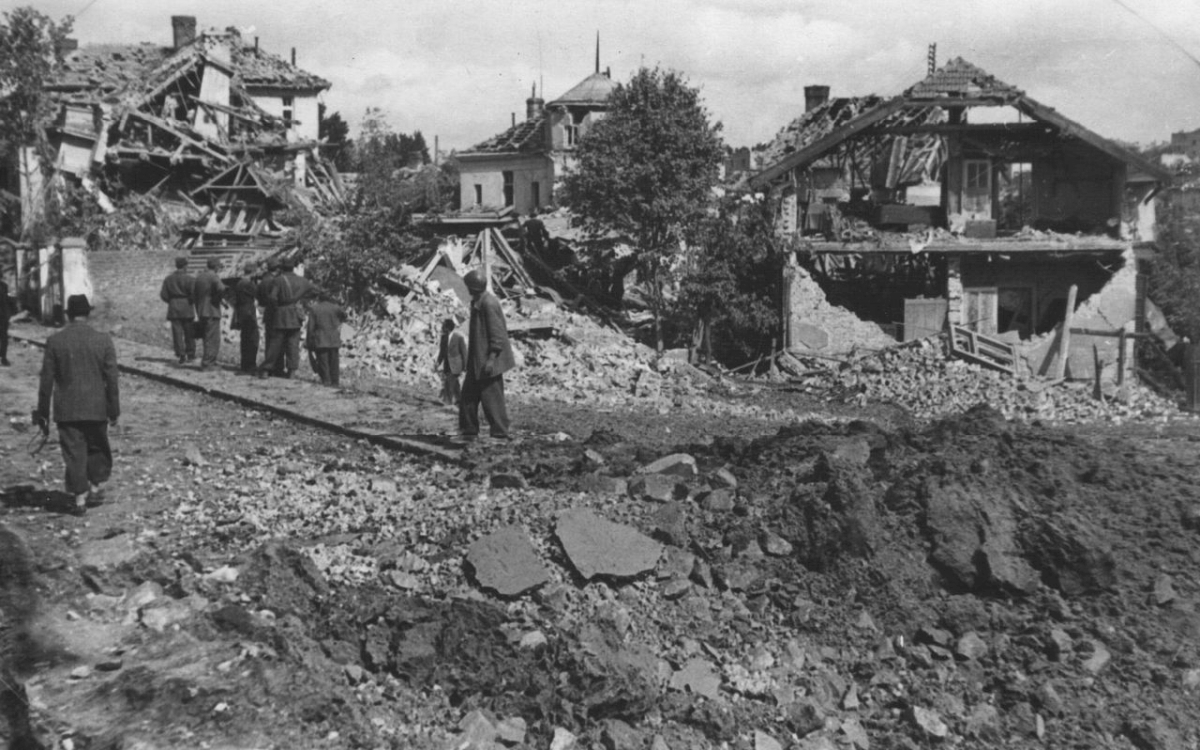
On April 16, 1944, 600 bombers took off from Foggia in southern Italy. It was a Sunday, it was Easter, and it was the day Belgrade was draped in black. It was a day that would be remembered as Bloody Easter 1944.
At 11:56, the sky above the Serbian capital was filled with Allied B-17 planes under the command of the 15th U.S. Air Force. Belgraders waved at them, thinking they were returning from battles with German troops.
Just a moment later, the first explosions rang out, and horror wiped the smiles from the faces of people in the streets who were desperately trying to find shelter. Thousands never reached safety from the 2,739 tons of bombs the Allies dropped on the city.
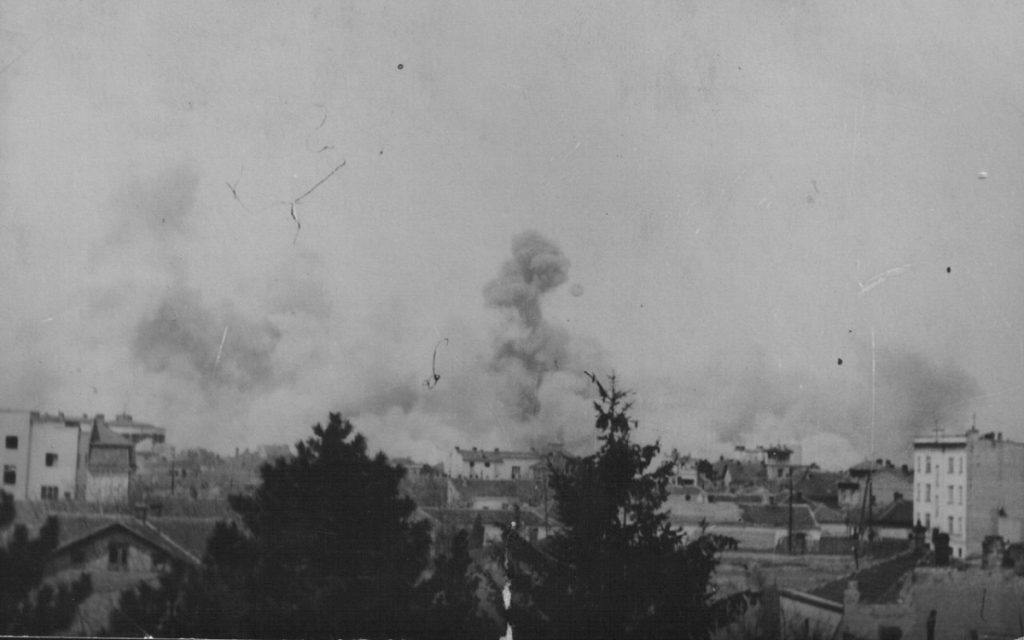
Bombs Also Fell on Military Targets
Instead of bombing the oil refinery in Ploiești, Romania, to cut off the German army’s fuel supply, the “flying fortresses” brought death to Belgrade. Victims were everywhere.
In the war diaries of the U.S. Air Force that day, the following was recorded:
“Mission to Ploiești aborted due to heavy cloud cover over the target. Secondary targets in Belgrade attacked—airport, marshalling yard, and aircraft factory. A total of 178 crews filed reports. More than 500 tons of bombs dropped. Two planes lost: B-17 ‘El Diablo,’ serial number 42-32065 from the 99th group, William Headrick pilot, 2 captured, 8 killed; and B-24 ‘Little Jesus,’ serial number 42-52395, from the 461st group, hit by anti-aircraft guns, crashed near Belgrade, pilot Lieutenant Floyd W. Woodard.”
Officially, legitimate targets included the Belgrade-Sava rail lines, Zemun airport, the Rogožarski and Ikarus aircraft factories, the Danubijus, Zmaj, and Teleoptik factories, Zemun railway station, and the airport.
However, in addition to these targets, on Bloody Easter 1944 bombs fell on the maternity hospital “Queen Marija” in Krunska Street—today the Student Polyclinic—on Bajloni Market and its surroundings, where 200 people lost their lives, as well as on Kalenić Market.
Palata Albanija was bombed, and the shelter inside it was hit, killing everyone inside instantly. At the same time, Terazije was practically leveled.
Targets included the Technical and Law faculties, several hospitals—among them one housing recuperating Serbian prisoners from Germany.
The Church of Alexander Nevsky, the Central Hygiene Institute, the Children’s Hospital, the Pediatric Dispensary, the Infectious Disease Hospital, the Home for the Blind, the Orthopedic Institute, the State Home for Boys, the State Home for Girls, and two homes for Serbian refugee children from the NDH (Independent State of Croatia) were all hit.
“According to reliable information from the Supreme Command of the Yugoslav Army, 1,457 bombs were dropped on Belgrade on the first and second days of Orthodox Easter. A total of 687 buildings were destroyed, and on April 20, 1,161 bodies were found in the rubble. The number of seriously wounded was 1,468,” stated a radiogram sent to London on April 21.
The actual number of victims has never been determined. It is speculated that between two and twenty thousand were killed. What is known with certainty, somewhat ironically, is that a total of 382 German soldiers died during Bloody Easter.
In terms of casualties and material damage, Bloody Easter was comparable to the German bombing of Belgrade on April 6, 1941, and the consequences were visible even 70 years later.

Why Did the Allies Bomb Belgrade?
To this day, the full circumstances leading to the Bloody Easter in Belgrade are unclear. There is much speculation about who requested and wanted Belgrade to be subjected to such a heavy Allied bombardment. Some claim it was done at the request of Josip Broz Tito, others say it was Draža Mihailović, and a third group points to Winston Churchill.
Interestingly, official documents from the Balkan Air Force, which bombed Belgrade and other Serbian cities 11 times in 1944 under British command, are still marked “Top Secret.”
On the other hand, British intelligence officer Michael Lees, who was in the Jablanica district in 1944, once stated that “Stalin surely laughed heartily as Allied bombers killed Serbs on behalf of his protégé Tito.”
This version is supported by the fact that on the day of Bloody Easter, the BBC reported that the Allies had bombed Belgrade at the request of Marshal Tito.
“In early April 1944, Churchill summoned Brigadier Fitzroy Maclean, his envoy to Tito, and Vladimir Velebit, who had been Tito’s liaison officer—first with the Germans, then with the British. They arrived at General Wilson’s headquarters, commander of the Mediterranean, on April 15, and the very next day Belgrade was bombed for the first time…
Coordination was established between the Balkan Air Force, headquartered in Bari, and the missions at the Supreme Headquarters of the People’s Liberation Army of Yugoslavia (NOVJ) and the main republican headquarters, who sent their bombing proposals to Maclean and Tito for approval,” stated Miloslav Smardžić, author of the book Bloody Easter 1944.
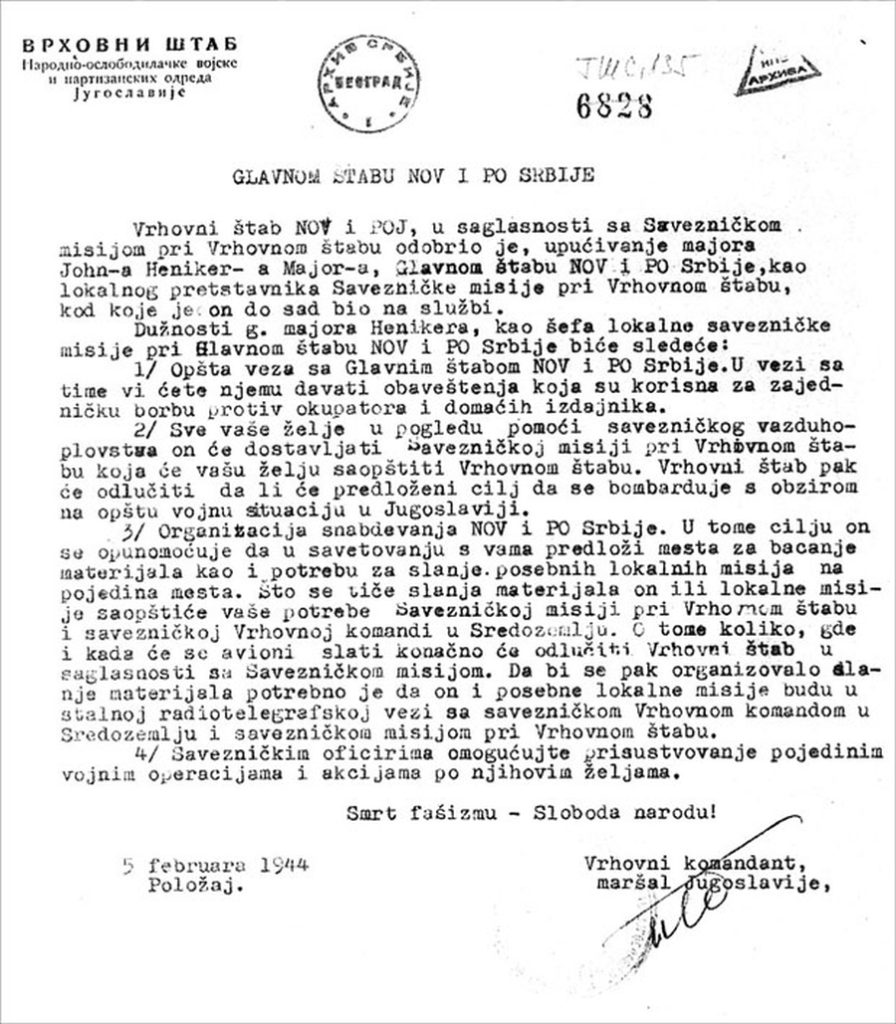
On the other hand, the bombing of major military targets in Serbia had been requested earlier—by the Yugoslav government-in-exile and Draža Mihailović’s army in 1942 and 1943. In April 1944, they claimed to have suggested a list of bombing targets in Belgrade to the Allies, with approval allegedly given by Slobodan Jovanović, then Vice President of the government-in-exile.
All in all, it remains uncertain whether the full truth will ever be known.

Monument to the Victims of Bloody Easter 1944
The memorial cemetery for victims of the Allied bombing of Belgrade on Easter, April 16, 1944, was erected in 1966 at the New Cemetery.
The cemetery was designed by architect Milica Momčilović. According to her concept, 15 marble plaques are placed on 11 walled concrete mounds that resemble trenches in which the victims were initially buried. Special plaques bear the names of 313 identified victims and information about 78 unidentified men, 71 women, and 16 children.
MORE TOPICS:
Source: 011 Info; Foto: Wikimedia Creative Commons