




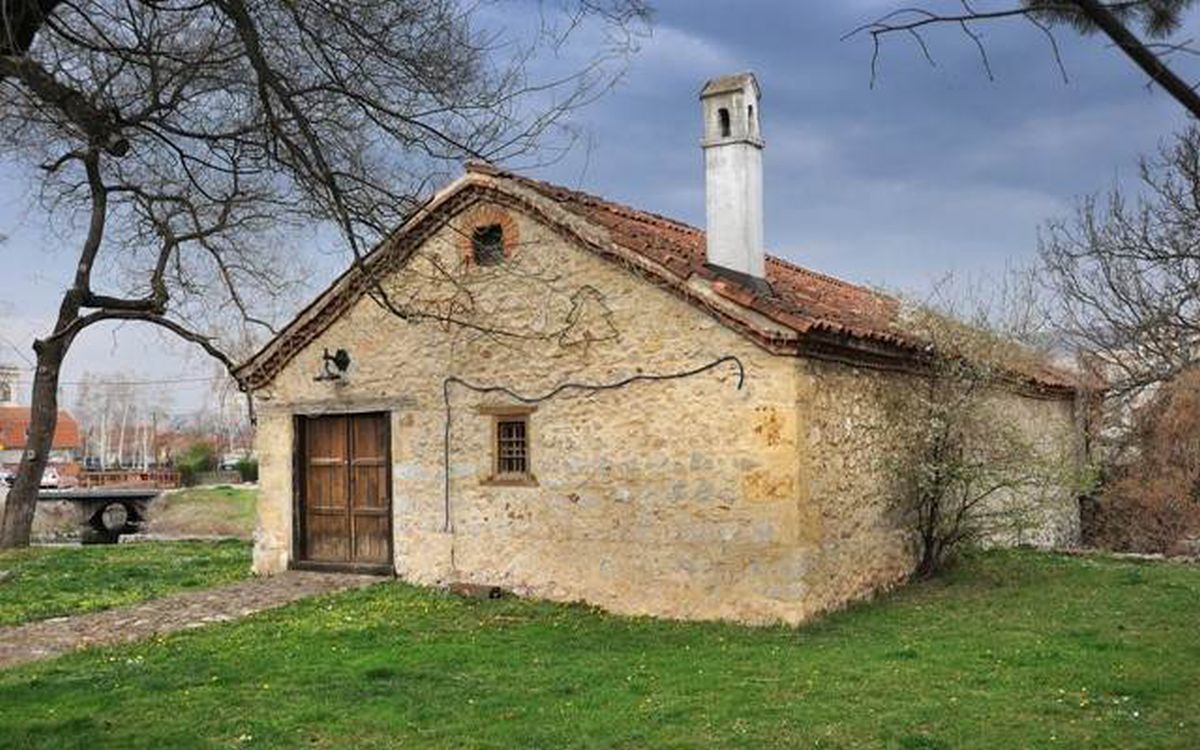
The old watermill in Despotovac, known as the monastery watermill, represents a valuable architectural achievement from the first half of the 19th century.
Many watermills in Serbia were once an integral part of rural architecture and landscape. One of these watermills, which was historically very important to the villagers around Despotovac, is the old watermill. This watermill is a unique example of traditional construction from the first half of the 19th century and represents a significant monument to the past of the Pomoravlje region.
As a guardian of Serbian identity and tradition, the old watermill was a place where Serbian culture and history were created. Little is known about it, but what is known is enough to fill several pages of Serbia’s cultural history.
History of the Watermill
The old watermill is located in the center of Despotovac, in a park-like setting, and is the only remaining watermill in the town. Surrounded by picturesque nature with a stone-slab pavement, the watermill is largely preserved and has essentially retained its original authentic appearance.
But how did the idea for its construction even arise?
The idea for building the old watermill emerged in the 1830s to supply flour to the residents of the surrounding villages and the monks. The watermill was jointly built by Prince Đorđe and the Staić family, one of the wealthiest families of the 19th century from Kovanica.
The exact year of the watermill’s construction is unknown, but this watermill is mentioned in the list of monastery property from 1836. Based on this historical data, it is assumed that the watermill was built in 1835, as there was a dispute at that time regarding the method of payment.
In that year, Manasija Monastery purchased one half of the watermill from Prince Đorđe of Svilajnac with funds from the Serbian Government during the abbacy of Isaija Stoišić. In the period from 1830 to 1840, during the first abbacy of Isaija Stoišić, a khan with a shop, rooms, a cellar, and a stable was built in the immediate vicinity of the watermill; it was demolished in the early 1950s.
The watermill operated continuously until the 1960s, but during that period, it changed several owners. Manasija Monastery was also forced to sell its part, but despite this, the old watermill is still known as the monastery watermill.
Architecture of the Watermill
The old watermill in Despotovac was built in a simple, traditional architectural style of the first half of the 19th century. The watermill acquired its current appearance in 1855, when Evgenije Simonović, the abbot of Manasija, renovated the watermill and added another winnowing machine.
Inside the watermill, there were once six, but only four wooden winnowing machines have been preserved to this day. According to older locals, the watermill had an open hearth and a room for the miller where he could spend the night.
The exterior of the watermill is built of crushed stone with specially worked corners of regular sandstone blocks. The roof structure is covered with tiles, while the exterior walls are plastered with dressed mortar.
How the Old Watermill in Despotovac Was Declared a Cultural Monument?
The old watermill in Despotovac proudly bears its age and successfully withstands the test of time. It was designated as immovable cultural property – a cultural monument – by a decision of the Government of the Republic of Serbia in May 2001.
After the watermill ceased operation, an inevitable process of its deterioration began, until 1996 when extensive renovation and refurbishment works were carried out. The original authenticity of the traditional old watermill has been preserved and presents a completely original image of Serbian tradition and culture.
Today, the facility’s user is the Cultural Center “St. Stefan, Serbian Despot,” which organizes literary evenings and theatrical performances.
The unique and enriched cultural content contributes to the sustainable development of the town and presents both the ethnological values of the watermill and the cultural events of the town.
The old watermill in Despotovac has regional significance in historical, architectural, and ethnographic terms. Enriched with the historical story of the wealthy Staić family, the architectural features of traditional building, and Serbian culture, the old watermill is a cultural jewel of both Pomoravlje and Serbia.
MORE TOPICS:
BAD NEWS FOR BIDEN: Former president diagnosed with progressive prostate cancer, spread to bones!
MYSTERIOUS MISS V: How a wealthy Canadian woman ended up fighting for Serbia in WWI! (PHOTO)
WONDERFUL ROMAN BRIDGE ON GOLIJA: 30,000 eggs were needed to build this monument! (PHOTO)
Source: National Geographic; Foto: Zavod za zaštitu spomenika kulture Kragujevac