




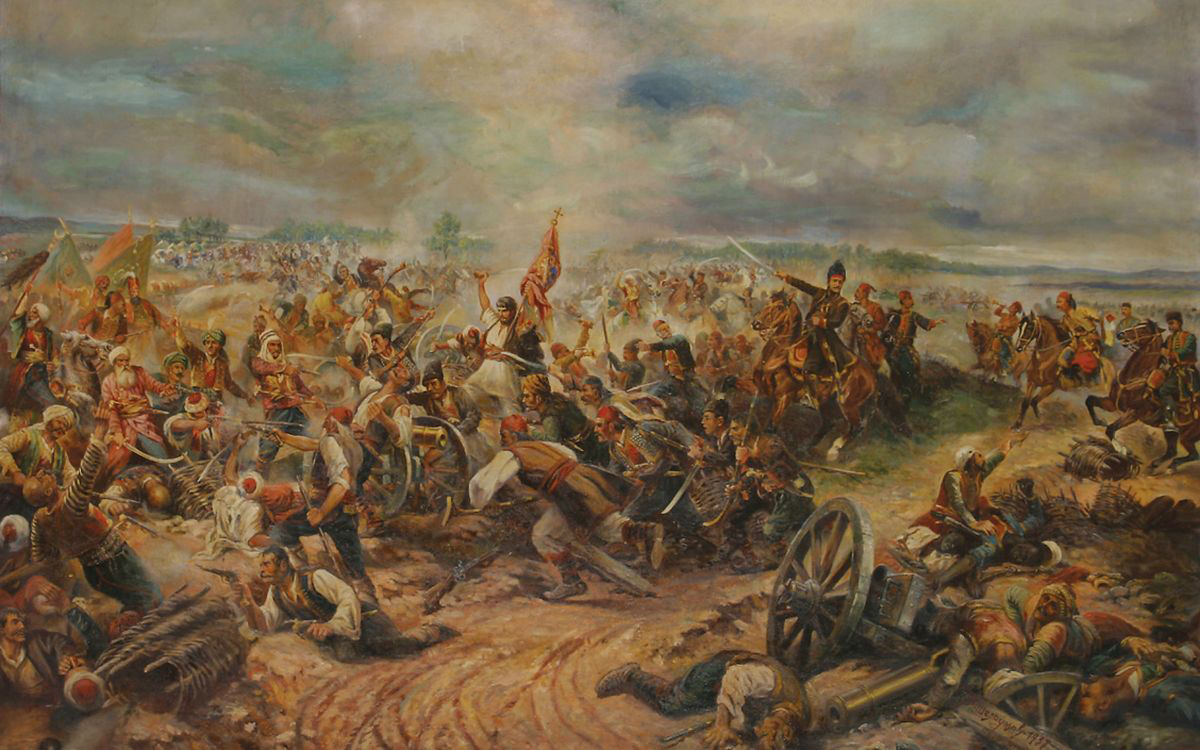
After it was announced at the Assembly of Uprising Chieftains in Smederevo at the end of 1805 that the uprising would spread to all neighboring Turkish territories and that refugees from the surrounding unliberated areas would be accepted among the insurgents, at the beginning of 1806, by Karađorđe’s order, an insurgent fortification was built in Deligrad to defend the southern Morava direction.
The Deligrad fortification was located halfway between Aleksinac and Ražanj, at the entrance to the Đunis gorge, between the Drenovački stream and the Morava River, where the Constantinople Road passed.
Initially, only one trench was built, but eventually there were nine around cleverly arranged earthen fortifications, consisting of four bastions for cannons and two iron gates. All fortifications were well supplied with food, water, ammunition, and four cannons removed from the Smederevo fortress, so they could withstand a long siege.
This fortification was a huge obstacle to the Turkish advance down the Morava, and the enemy knew it. That is why Ibrahim Pasha, commander of the Turkish army, ordered an attack on Deligrad on June 16, 1806.
Battle for Pride
Around 6,000 Turks clashed with 5,000 insurgents under the command of Petar Dobrnjac. The fighting lasted several weeks, but both the trenches and the Serbian fighters held out.
At the beginning of September, a detachment of troops under the command of Stanoje Glavaš finally arrived to help them. By the end of the battle, 55,000 Turkish soldiers had fought against 37,000 Serbian fighters.
Reinforced, the Serbs managed to break through the blockade and force the Turkish army to retreat towards Aleksinac. After this victory, the Serbian insurgents launched a counteroffensive. Exactly 213 years have passed since that fateful day and magnificent victory.
This victory of Karađorđe’s insurgents echoed far and wide. A people whom a good part of Europe had hitherto considered barbaric and had little understanding for their desire for freedom defeated the powerful Ottoman army and continued their organized resistance.
The great struggle of the Serbian people for final liberation from Turkish rule thus began. The enemies realized that the Serbs would not be easy to deal with. European powers understood that this Balkan country, however small it might be, could still be counted on.
MORE TOPICS:
Source: Dnevno.rs; Photo: Wikimedia Creative Commons