




Every year around the world, about 2,500 completely new species of fungi are discovered. One of the first species added to the growing list of fungi in 2026 comes from Serbia.
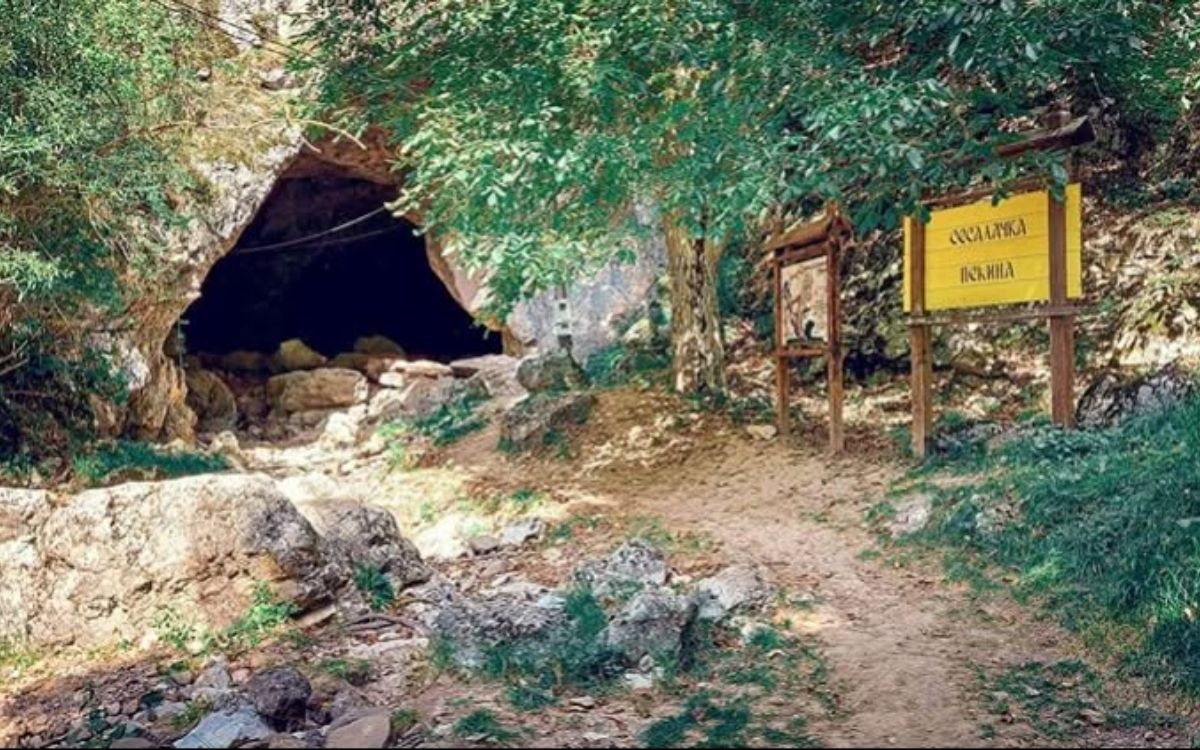
In the Sesalačka Cave near Sokobanja, scientists from the Faculty of Biology of the University of Belgrade, led by Dr. Željko Savković, discovered a new species of microfungus. After detailed analysis and months of verification, the scientists officially described the new species, and their work was published on January 3 in the international scientific journal Microbiology Research.
The name of the microfungus was inspired by the popular superhero Batman, and it was named Gamsia batmanii.
“It got this name because it was isolated from a bat. The idea to name it after Batman came from our colleague Dr. Miloš Stupar, a senior research associate in the same field. It is humorous at the same time, but also alludes to the ecology of this species,” explains Dr. Željko Savković, the lead author of the study and a senior research associate in the fields of algology and mycology at the Faculty of Biology.
Cannot Be Seen Without a Microscope
The discovery is even more significant because Gamsia batmanii is an organism invisible to the naked eye and differs substantially from the mushrooms we most often encounter in forests or kitchens.
“Although they have a similar cellular structure, the difference lies primarily in size. Fungi that we can pick by hand are called macrofungi or macromycetes, while microfungi, or micromycetes, usually cannot be seen without a microscope,” explains Dr. Savković.
Although inconspicuous, these miniature members of the fungal kingdom are far more numerous than macrofungi—both in terms of the number of species and the number of individuals. Precisely because of their microscopic dimensions, their discovery and study represent a particular scientific challenge.
“Only about 10 percent of all fungi are mushrooms, while the vast majority are microfungi. Their biodiversity is still poorly understood, and many species are difficult to isolate in the laboratory because they require specific cultivation conditions. Despite the challenges, due to their importance for nature and society, scientists invest great efforts to discover as many species of microfungi as possible, and contributions also come from our faculty,” says Dr. Savković from the Faculty of Biology.
However, Gamsia batmanii not only comes from the insufficiently explored world of microfungi, but also from insufficiently explored ecosystems—from cave darkness.
“Caves are hotspots of biodiversity, but they are also very poorly researched due to their great isolation from other ecosystems.”

How the Discovery of a New Microfungus Happened
The path from a bat to the publication of a new microorganism in an international journal involved several stages: field research, laboratory work, complex DNA analyses, and checking databases of already named species…
According to Dr. Željko Savković, it all actually began back in 2024. At that time, a team from the Faculty of Biology dealing with animal ecology—scientific associate Dr. Jelena Burazerović, master biologist Marija Jovanović, and PhD student Sara Arsenijević—went to the Sesalačka Cave to study the local bat population.
“As a team dealing with microorganisms, we came up with the idea to take swabs from the skin of bats to see which microorganisms live on them,” our interlocutor reveals. “In the laboratory, we isolated the collected microorganisms, inoculated them onto special microbiological media, and cultivated them at a temperature of 4 degrees, imitating the cold conditions inside the cave. Somewhere around July 2025, among a large number of isolated microorganisms, we discovered colonies of this new species, Gamsia batmanii.”
But the research was only just gaining momentum…
“Even with the help of a microscope, it is very difficult to determine in detail which species is in question,” emphasizes Dr. Željko Savković, adding that this is why so-called molecular analyses must be performed.
This means that the DNA of each organism must be isolated and sequenced.
“Only when we obtain sufficiently informative sequences of a certain gene can it be determined whether that species exists in the database. If there is no similar data about that gene in the database, then we are probably talking about a new species. Of course, the species mostly has to differ from others under the microscope as well, but this is not always the case with microorganisms.”
The microfungus Gamsia batmanii successfully passed all these tests, suggesting that a revolutionary moment occurred in the laboratory of the Faculty of Biology: a species previously unknown to science was discovered, and the finding was accompanied by mixed emotions.
“I was thrilled, but since I had never before had the opportunity to describe a new species for science, I also felt a certain amount of anxiety about whether my colleagues and I would be able to describe it and publish it,” the interlocutor recalls.
In the meantime, the anxiety has subsided, and the microfungus named after Batman has been scientifically described.
The New Fungus Is Probably Not a Pathogen
In cave habitats, fungi can have different roles: they can be decomposers and contribute to nutrient cycling, be food for other species, live in symbiosis with certain organisms, or be pathogens of various animals.
So which of these is Gamsia batmanii?
According to Dr. Željko Savković, for now it is not known what the ecological function of this microfungus is, as more extensive studies are needed.
“However, given that it can grow at low temperatures, around 4 degrees, but cannot grow at 37 degrees, which is the body temperature of a bat, we assume that it is not a pathogen. It may be a transitional species, a so-called transient, or it may be in some kind of symbiotic relationship with the bat, or it may have ended up there completely by chance… At the moment, we cannot say this with certainty.”
MORE TOPICS:
Source: Blic; Foto: Bojan Jeremić
 Add Serbian Times as your Google source