




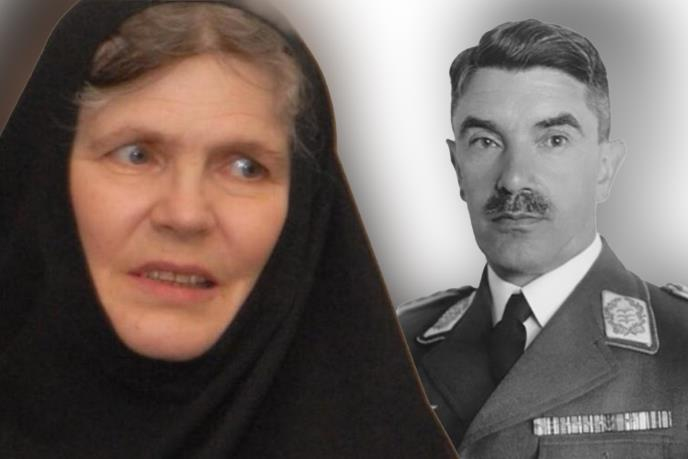
Upon discovering that her grandfather, Alexander Löhr, commanded the Luftwaffe forces that leveled Belgrade in 1941, Sibila Löhr chose a life of repentance and service within the Serbian Orthodox Church (SPC).
Born into a prominent German aristocratic family, she is now Mother Jovana at the Soko Grad Monastery near Ljubovija, within the Diocese of Šabac.
“I have lived in Serbia for 30 years—my spiritual homeland”
Despite her lineage, Mother Jovana says she has never experienced anything but warmth from the Serbian people.
“Even though everyone knows I am a descendant of General Alexander Löhr, in the three decades I have been a nun here, I have never experienced a single unpleasantness. No one has ever looked at me crossly or said an unkind word. Rather, I feel an extra warmth, as if this people of great soul wants to say: ‘We know you aren’t to blame, feel free. We love you!'”
The Words of Patriarch Pavle
Mother Jovana explains that for a long time, the weight of her heritage felt like a burden until she heard the healing words of the late Patriarch Pavle:
“A man cannot choose the time or place of his birth, nor his parents or his nation. But it depends on him how he will act: whether as a human being or a non-human.” This realization led her to embrace Serbia as her “spiritual fatherland,” a place she felt predestined to find.
The “Victory of the Soul”
She recounts being raised in a Protestant evangelical family where her first religious teacher spoke of the Serbs with profound respect. He told stories of the 5,000 “living Serbian skeletons” (POWs) in Germany in 1945 who, instead of seeking revenge against the Germans for the “100 Serbs for one German soldier” execution policy, showed mercy to German children and shared their food.
“That was the greatest victory: the victory of the heart and Christian love,” she notes.
Her Journey to Orthodoxy
Mother Jovana highlights three “happiest days” of her life:
- The day she converted to Orthodoxy.
- The day she took her monastic vows, changing her name from Sibila to Jovana.
- The day she received Serbian citizenship. “Holding that ID card was more exalted to me than a diploma from Oxford or the Sorbonne,” she recalls.
Who was Alexander Löhr?
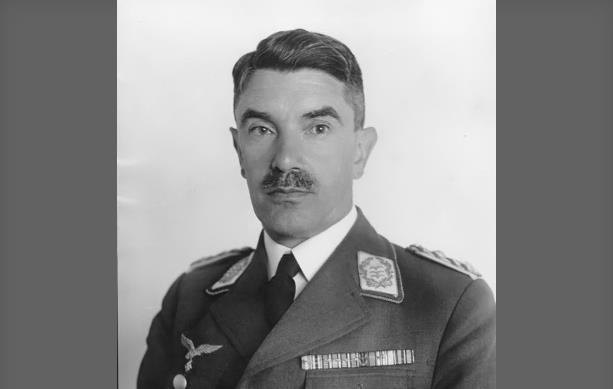
The man whose sins she seeks to atone for was a high-ranking Luftwaffe General-Colonel. On April 6, 1941, he issued the order to bomb civilian targets in Belgrade for the first time in history, resulting in approximately 6,000 deaths. He is infamously remembered for the command: “Target their library, so their seed [culture] may be destroyed!”
Ironically, Löhr had deep ties to the region. Born in the Romanian Banat to a Russian Orthodox mother, he grew up speaking multiple languages and attended high school in Pančevo (present-day Serbia). After the war, he was tried in Yugoslavia for war crimes and executed in Belgrade in 1947.
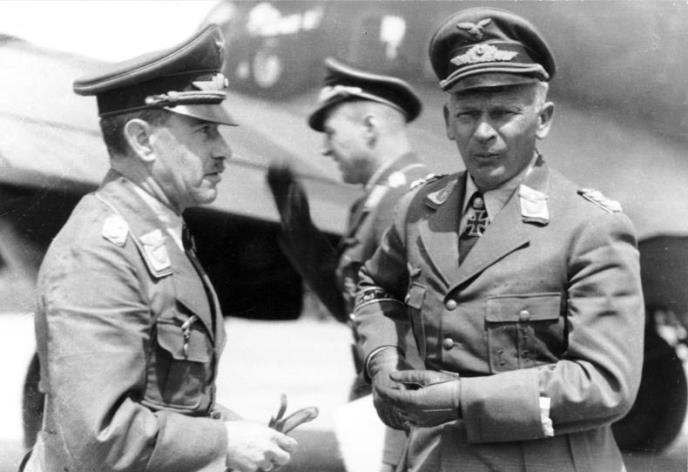
Alexander Löhr (Left) and Wolfram von Richthofen: Generals of the German Luftwaffe directly responsible for Operation Retribution
Key Contextual Summary:
- Soko Grad Monastery: A significant spiritual center dedicated to St. Nicholas, built on the site of a former Turkish fortress. It is a place specifically dedicated to repentance and memory.
- Repentance as a Path: Mother Jovana’s story is often cited in Serbian media as a powerful example of the Christian concept of individual responsibility versus collective guilt.
- Cultural Ties: Her mention of Goethe, Bismarck, and Vuk Karadžić highlights the deep, albeit often tragic, historical entanglement between German and Serbian cultures.
Would you like to know more about the history of the Soko Grad Monastery or the specific humanitarian work Mother Jovana is involved in today?
Text: Novosti/Politika Photo: Novosti, Wikimedia
 Add Serbian Times as your Google source