




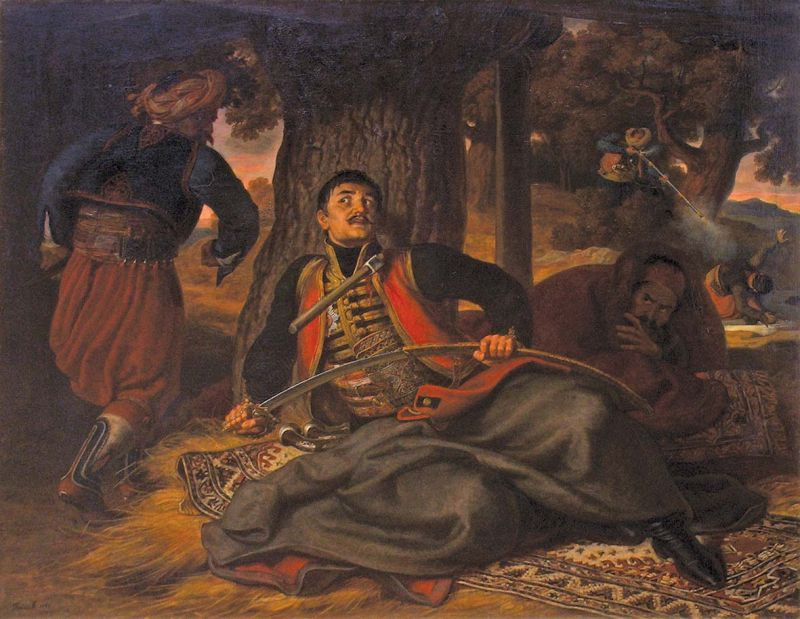
The murder of Karađorđe and his Vlach scribe Naum Krnar in Radovanjski lug near Velika Plana, on the night between July 24th and 25th, 1817, at the order of Prince Miloš Obrenović, was carried out by Nikola Novaković, also known as Crnogorac, but the organiser was Vujica Vulićević, Karađorđe’s godfather and a man of trust.
One can only speculate about Vujica’s motives — it may be that his participation in all of this was pure opportunism, more precisely money and ingratiation with Prince Miloš, or it may be that he acted in accordance with the interests of Serbia, as he saw them.
Karađorđe, namely, was in collusion with the Greek Hetairia, he wanted to start a general Christian uprising in the Balkans, while Miloš did not want that at all, perhaps reasonably thinking that the Serbian people would not survive the collapse of such an undertaking. Or Miloš simply did not want to lose the ruling primacy and the title he had acquired.
Branded as a traitor
It is certain only that with what he did, Vujica entered Serbian history through the back door and remained forever marked, or rather branded, so much so that many today refer to his case as an act of epic betrayal, but also to the fact that among Serbs, godparenthood is not always a sacred thing.

RADOVANJSKI LUG: The oak tree under which Karađorđe was killed
And no matter what positive things you say about him, it cannot change that general image and impression. But still, one should be historically correct and state that there are also things with which Vujica Vulićević served the Serbian people.
The village of Azanja near Smederevska Palanka was considered the largest Serbian village from 1887 to 1950; a certain Vulić, the son of a man who brought the family from the area around Priština, had a son Dušan, called “Đuša”, in that village in 1771, and then a younger Vujica in 1773. At the time when the First Serbian Uprising broke out, they were merchants, and Đuša was particularly successful.
The death of a famous brother and the first conflict with Karađorđe
Since Đuša was considered a patriot even before the uprising, a smart and brave man who cared about the national cause, the people of the Smederevo nahija chose him as their voivode after Orašac. He quickly became a man whom Black Đorđe trusted, until his death in 1805 — today Đuša has a street in the centre of Belgrade.
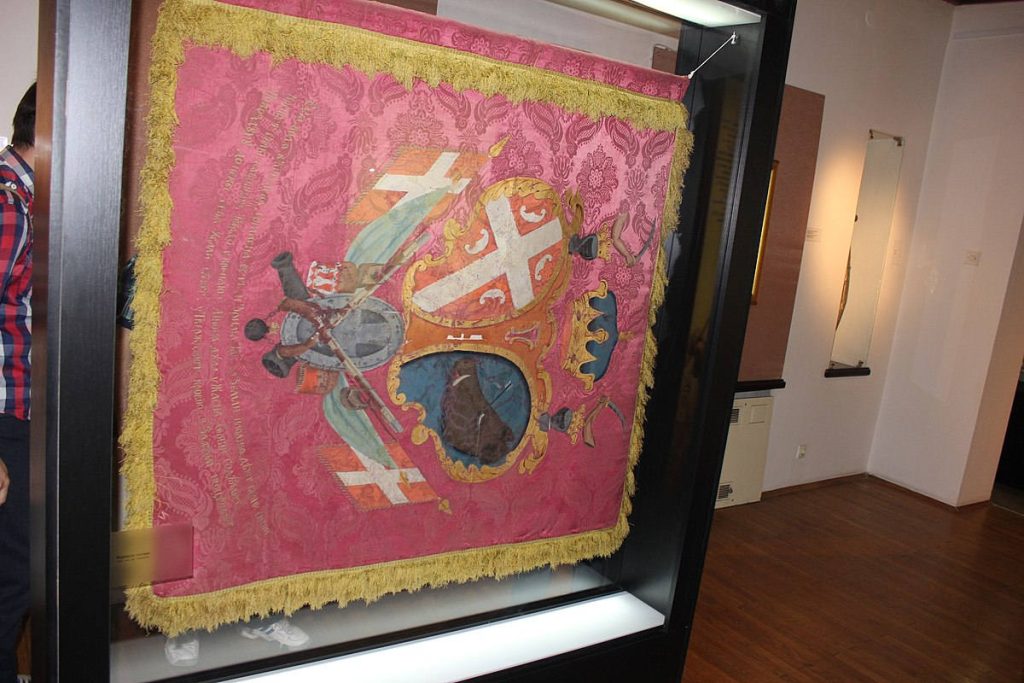
FLAG OF KARAĐORĐE’S INSURGENTS: The Vulićević brothers were in the front ranks
The people of the nahija chose Vujica as the new voivode after that, despite Karađorđe’s disapproval, which Milan Đ. Milićević anecdotally describes in his “Memorial of famous people in the Serbian nation of the newer era” from 1888.
Namely, after Đuša’s death, the leader came to Kolari and told the people of the nahija to choose a new voivode (democracy at work), but when they chose Vujica, “black, skinny, unsightly”, the leader said: “What on earth, do you want him for a voivode?”, and sent them to think again.
He only accepted when they returned from the new deliberation with the same man.
A voivode to be an example, a hero in battles
Despite such an inglorious beginning, Vujica proved to be one of the best voivodes, and a very fair, good administrator, among the smartest. He was also considered a brave warrior: he personally led the Smederevo people in the campaign to Belgrade, to Timok, to Drina and to Deligrad, and he was such that Hajduk Veljko, not only served under him, but also respected him the most of all the voivodes. This is the reason why he became Karađorđe’s godfather.
The collapse of the uprising in 1813 found Vujica in Deligrad, and Milićević mentions in the book that it is said that he held out against the Turks there for five weeks after the fall of Belgrade, after which he himself crossed the Danube. After a short stay in Bessarabia, he returned to Serbia in the midst of the terror, and was one of the main initiators of the Second Serbian Uprising in 1815.

HERO IN BATTLES: The trenches of the insurgents from the Battle of Deligrad
“The people will not give up their weapons!”
Milićević also cites an anecdote from that period. He says, when Marašli Ali-Pasha arrived with the army in Ćuprija, where the Serbs had a trench on Belica, and told the insurgents to lay down their weapons, Vujica came out, took out his pistols from his belt, gave them to the Turkish envoy and said:
“Here are my pistols! Tomorrow I will come to the honorable vizier, and let him kill me with those same pistols of mine, but the people will not give up their weapons!”
On August 12, 1815, in the Jošanica monastery, he compiled the “Instances”, which were sent to the Porte in Constantinople, and in which all the evils and violence that the Turks committed against the Serbs after the collapse of the First Serbian Uprising are listed; on September 27, together with Prince Miloš, he co-signed a letter addressed to the Ecumenical Patriarchate, where they asked the patriarch to appoint archimandrite Melentije Nikšić as bishop in the Šabac eparchy.

CONQUEST OF BELGRADE: Vujica was also among the conquerors (Picture: Katarina Ivanović)
With Jovan Obrenović, Miloš’s brother, Vujica stayed in Istanbul in the spring of 1816, where he begged the Porte for those privileges that were guaranteed to the Serbs by the Treaty of Bucharest in 1812.
Then comes what he is most remembered for – the treacherous murder of Karađorđe, the cutting off and preparing of his head, and sending it to the sultan in Istanbul.
In a Turkish prison
After that, Vujica ruled the Smederevo nahija as the nahija’s prince. On Mitrovdan in 1820, he went on a new mission to Istanbul, the fifth and largest one that Miloš had sent to the capital of the empire, with the aim of further expanding Serbia’s rights. But while they were there, the Greek uprising broke out in 1821, so the Serbian question became secondary to the Ottomans.
Moreover, under the pretext of wanting to protect them from the enraged mob in the streets (which was indeed carrying out pogroms against the Greeks), the Turks threw our entire delegation into prison, holding them hostage, so that it would not occur to Prince Miloš to join the Hellenes. They were imprisoned for several years (Vujica learned to read and write there), and during that time, a lot changed in Serbia.
In Vujica’s absence, the Smederevo nahija was ruled by his son Petar, and very badly so — with his behaviour, he only contributed to the flare-up of Đak’s rebellion against Miloš in 1825. Vujica, having returned, found himself not only politically completely isolated and irrelevant, but even abandoned by his own family.

Miloš’s letter and death in poverty
He spent the last years of his life, and he died on March 11, 1828, in the village of Grčac, in great poverty: Milićević mentions that the cause of this was his refusal to return a certain letter to Miloš, which he had once received from Miloš, because of which he fell into disfavour. If this is true, it was certainly about a compromising letter.
From this, it can be concluded that there is quite a lot that Vujica Vulićević did for us.
Among other things, with an extraordinary example of Christian repentance.
The repentance church near the place of Karađorđe’s death
Namely, Vujica was haunted by the sin committed in Radovanjski lug, and there is physical evidence for this – the repentance church that he built. He repented and showed it publicly – like a rare Serbian statesman and politician, among whom, as we already know, there were quite a few who did not go to God pure and innocent.
The church was built in 1818, which we know from the inscription on the icon of Saint George and the engraving on the log, to the left of the entrance to the church, and is only three kilometres as the crow flies from Radovanjski lug, the place where the life of the “father of Serbia” was taken. Until 1954, it was a parish church, when it was converted into a women’s monastery.
It used to be a mandatory destination for school excursions: all those who went to Radovanjski lug would also visit Vujica’s endowment.
MORE TOPICS:
Author: Marko Božič Photo: Wikimedia Commons, Wikipedia