




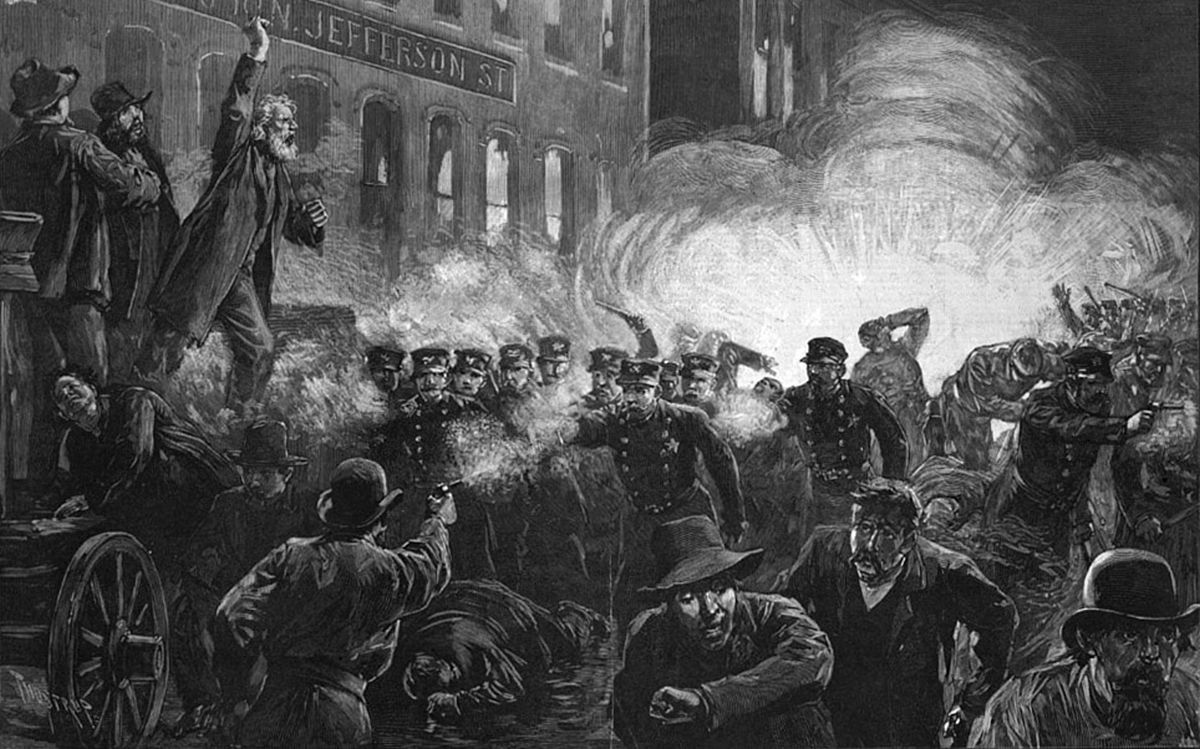
In remembrance of the day when workers in Chicago began their fight for an eight-hour workday through strikes and protests, the world marks International Workers’ Day – May Day. In Serbia and the region, the tradition is to head out at dawn for the “prvomajski uranak” (May Day dawn picnic) in nature, while trade unions organize protests. Parades are also held worldwide. May Day is a public holiday in Serbia, with May 1st and 2nd being non-working days.
Labor Day is celebrated on May 1st, the anniversary of the 1886 Chicago labor strike and protests where workers demanded an eight-hour workday. On May 3rd, a conflict erupted between unionized workers and strikebreakers. Police intervened, and four union members were killed.
The following day, anarchists organized a demonstration at Haymarket Square. An unidentified individual threw a bomb, killing seven and injuring 67 police officers. Eight anarchists were arrested, charged with murder, and sentenced to death, despite the lack of conclusive evidence against them.
At the first congress of the Second International in 1889, it was decided that a large-scale demonstration would be held the following year on May 1st to commemorate the Haymarket affair in Chicago and as a form of struggle for workers’ rights.
The Second Congress of the Workers’ International decided that from 1890 onwards, demonstrations and strikes would be held worldwide on May 1st as a form of class struggle, which gained massive momentum by the late 19th and early 20th centuries.
In many European countries and American cities in 1890, workers took to the streets demanding an eight-hour workday, just as in Chicago. Riots broke out in Germany when police intervened in the protests, and in many cities, demonstrations were held despite government threats to disperse the participants.

Labor Day in Serbia – From Bans to Dawn Picnics
The celebration of Labor Day in Serbia has come a long way – from a ban that workers defied with protest marches, work boycotts, and rallies, through May Day dawn picnics, to the mandatory observance introduced by Josip Broz Tito in 1945. Celebrating this holiday represented a struggle not only for workers’ rights but also for political rights and freedoms.
The Decree on the Proclamation of May 1st as a State Holiday, signed by Josip Broz Tito, was published in the Official Gazette of the Democratic Federal Yugoslavia on April 24, 1945:
“May 1st is declared a state holiday. State authorities, state and private institutions, and enterprises will not operate on that day. All shops must be closed on May 1st.”
The celebration of the holiday in Serbia began earlier – in 1893. At that time, at eight o’clock, workers gathered at the “Radnička kasina” (Workers’ Casino) in Makedonska Street, carrying red ribbons with the inscription “Workers of all countries, unite!”
Year after year, the movement grew, with more and more people appearing at the celebrations. Among the representatives of the socialist movement were Vasa Pelagić and Dimitrije Tucović, among others. The beginning of the 20th century was marked by a ban on processions in certain parts of the city, while the color red became a symbol of the movement.
By the end of the 1930s and 1940s, work stoppages and demonstrations were organized, constantly emphasizing the demands for the country to prepare for resistance against fascist aggression. Demonstrations were also held during the 1941 occupation at the call of the Communist Party of Yugoslavia.
It was only after the Second World War that Labor Day was officially recognized and completed its journey from prohibition to obligation.
Over time, it became a custom in Serbia and the region to go out at dawn on that day for the May Day dawn picnic.
MORE TOPICS:
DUTCH WOMAN RAISED 72 CHILDREN: She moved to Doboj 30 years ago and started the most humane mission!
Source: RTS, Foto: Wikimedia Creative Commons/RTS
 Add Serbian Times as your Google source